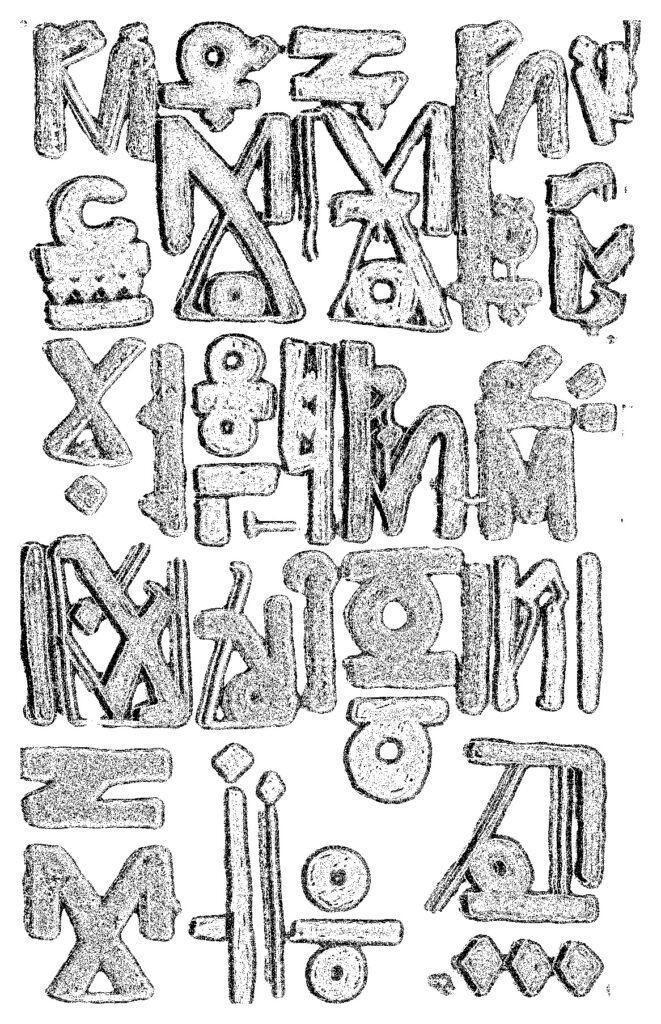
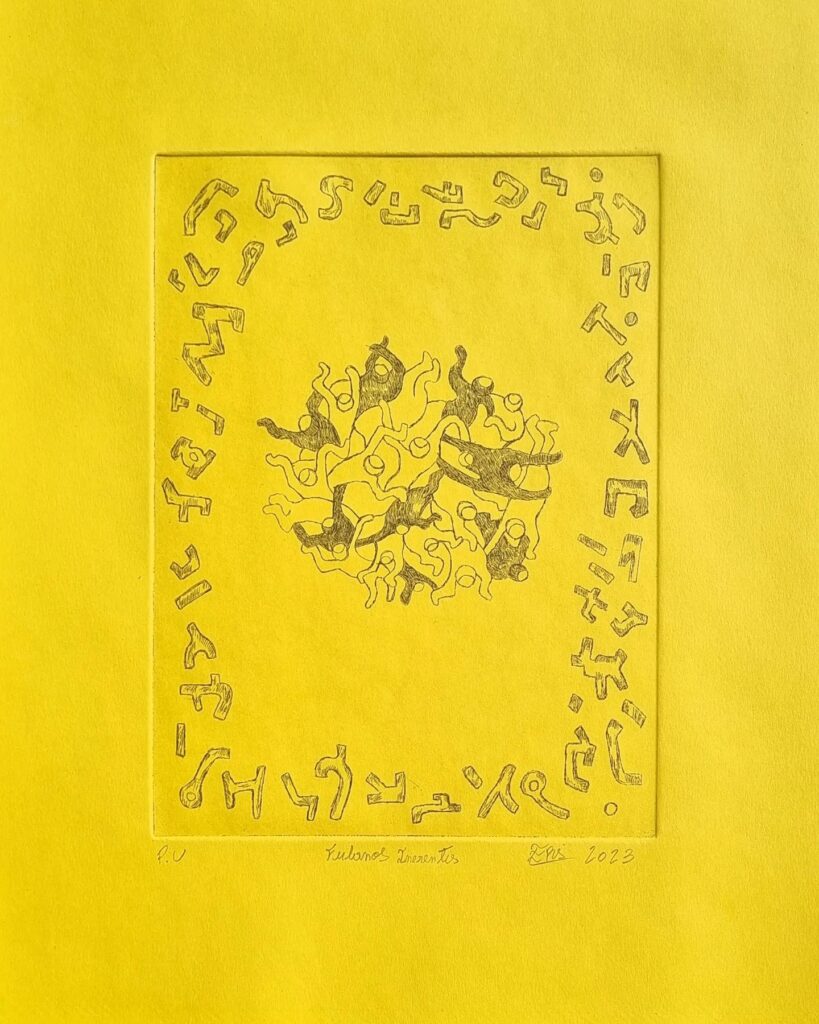
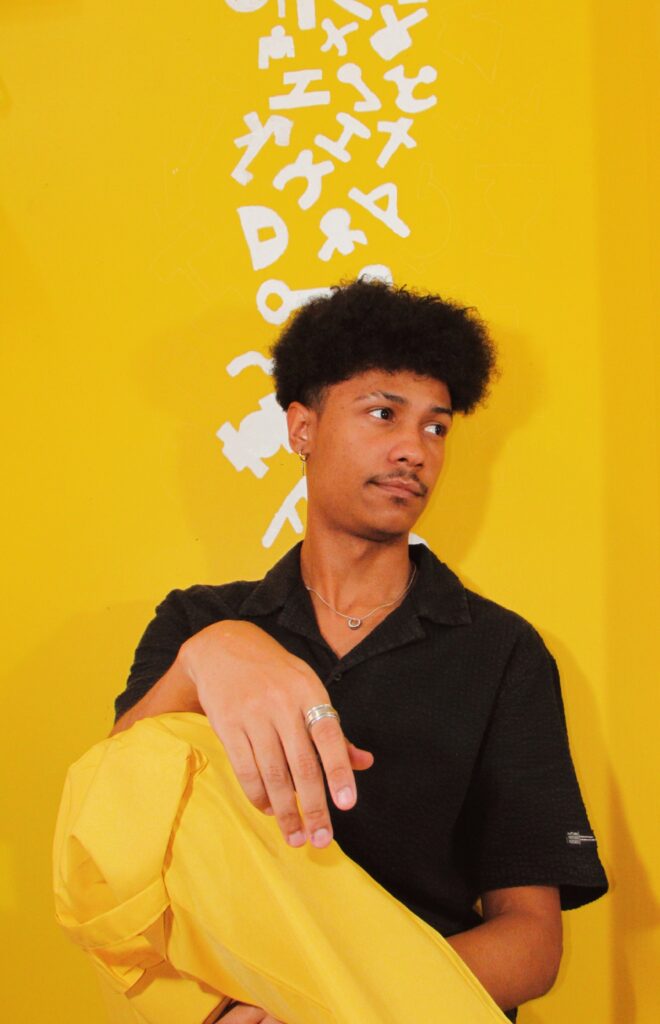
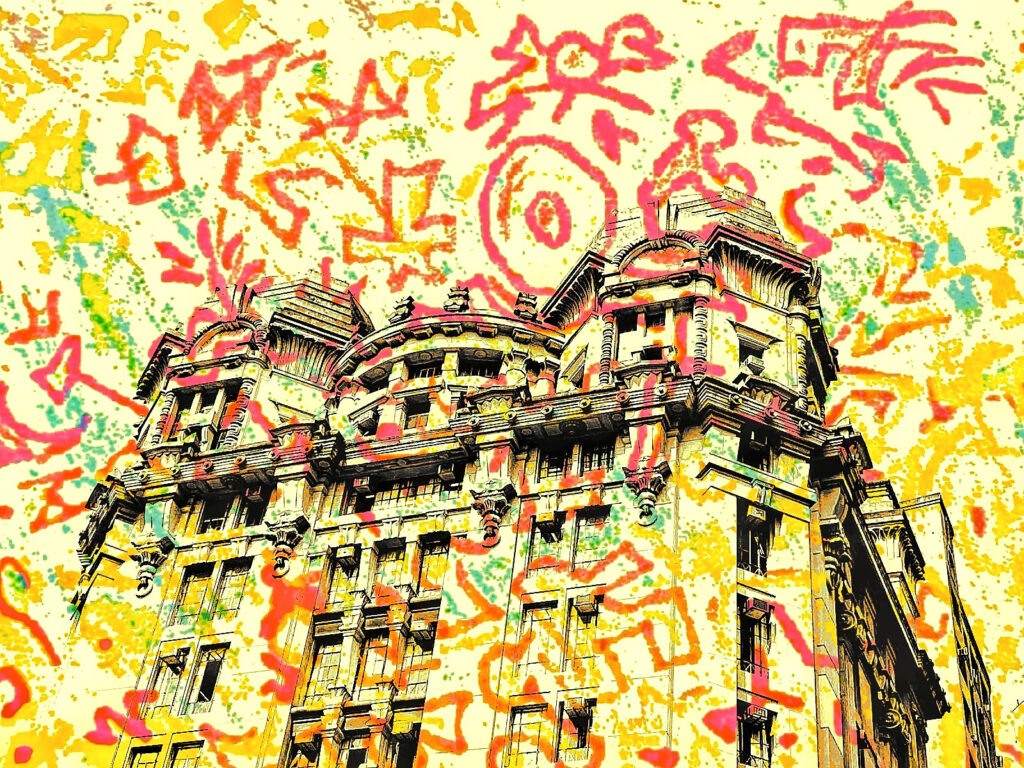
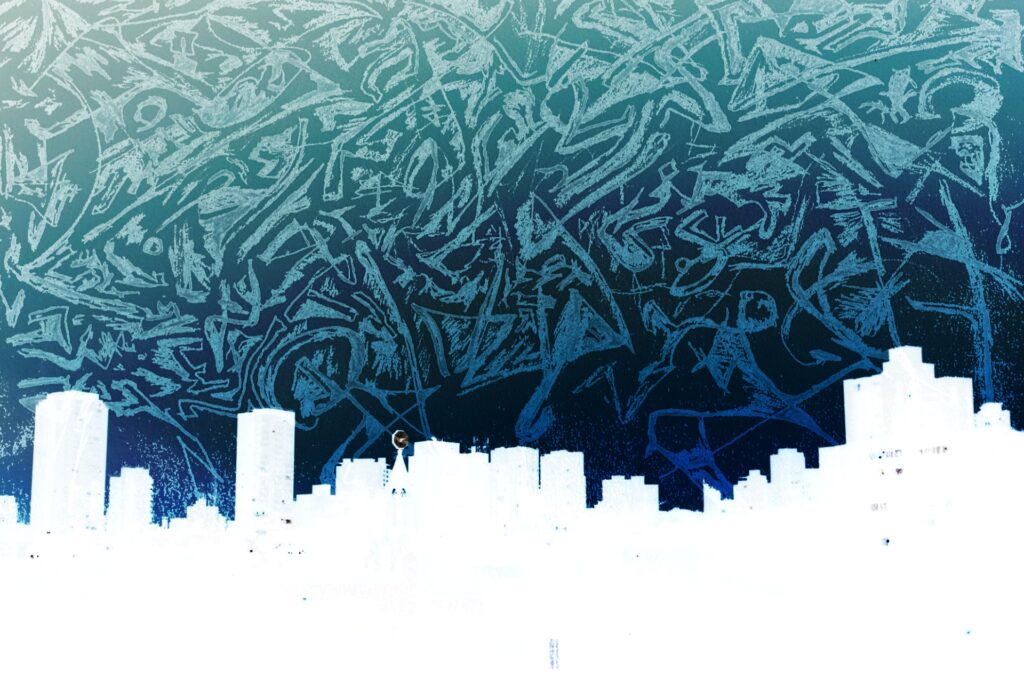
In his works, Enzo Arcad explores an artistic repertoire that combines abstract strokes and urban photography with research focused on typography, urban art, and memory. Inspired by his experiences and observations of the metropolitan capital, Arcad incorporates striking visual elements from the urban environment, such as pichação and graffiti. These graphic records, often stylized and indecipherable to the common eye, reflect the perpetuation of a visual language in the streets. As an observer and artist, he leads the public toward a primordial writing originated from the image, allowing each individual to decode it in a personal way. This subjective approach creates a reflection on contemporary language, highlighting how images evoke unique and collective meanings.
How did your journey into the art world begin?
I have always had an affection and a desire for drawing—from sketching on restaurant napkins while waiting for food to drawing at school to pass the time until recess. But it was actually during my final year of high school (2019-2020), at the start of the COVID-19 pandemic when time seemed to stretch into endless days. Sadly, I lost a schoolmate to depression and I returned to practicing portraits to send to friends; I received many compliments and messages of gratitude. I realized that art was something I could do, whether for money or passion, but mainly because there is always something new to explore and research after living through days that felt identical. I wanted to dive in completely, so I decided to enter Belas Artes (FEBASP). From there, I began to understand and create my own art and engage with others, making contacts and learning about techniques and the reality of the art world.
What themes do you prefer to explore in your works?
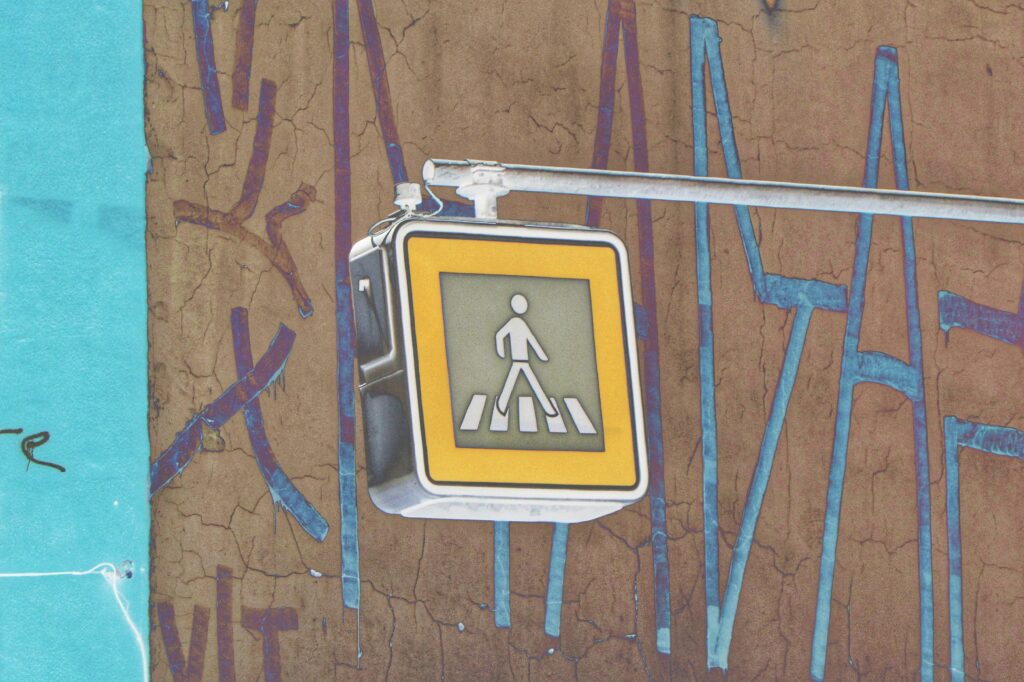
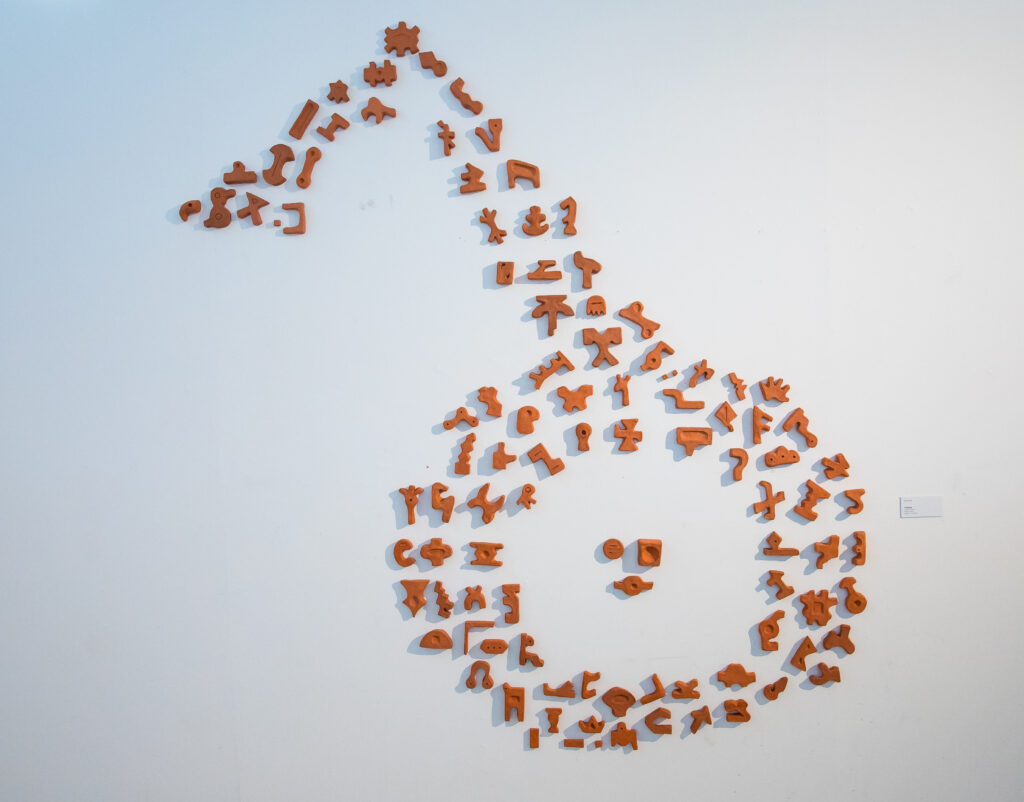
I like to work with urban themes—urban landscapes, people, records, and memory. It is in the street that you access your work, leisure, and friends, and it was there that I accessed the arts. I am curious to learn more about music and sounds, so much so that I ended up doing an Undergraduate Research project on soundscapes. I love painting and drawing with gestures, markings, scribbles, and colors. Because of the simple drawings I did as a child, I began to work with the theme of simplicity; for instance, how a "stick figure" human form talks to my childhood while drawing on napkins, which led to research on the history of human writing. I also work on color and light in digital photography, where I merge original photographs of a specific setting with their negative image, mixing positive and negative to transform them into a "neutral photography" approach. I have many plans and research paths to explore—thankfully, I am only 21.

What materials and techniques do you use most often?
Since I received a digital camera from my brother, I am always taking photographs. It used to be more portraits of people, then it shifted to natural and urban landscapes, and today I use interventions both before and after taking the photos. I merge them with painting, graffiti, and collage, generally basing them on the urban environment and the people who live there. I also had contact with clay/ceramics in college; the fact that the material is moldable and expands into the three-dimensional always caught my attention. I enjoyed working with this material so much that I think I’ve already made at least 200 ceramic pieces, and honestly, I’m going to make more. In painting, I like to mix different techniques and paints, from acrylic and gouache to oil paint, in addition to frequently using spray paint.
Who are the artistic influences that have impacted your work?
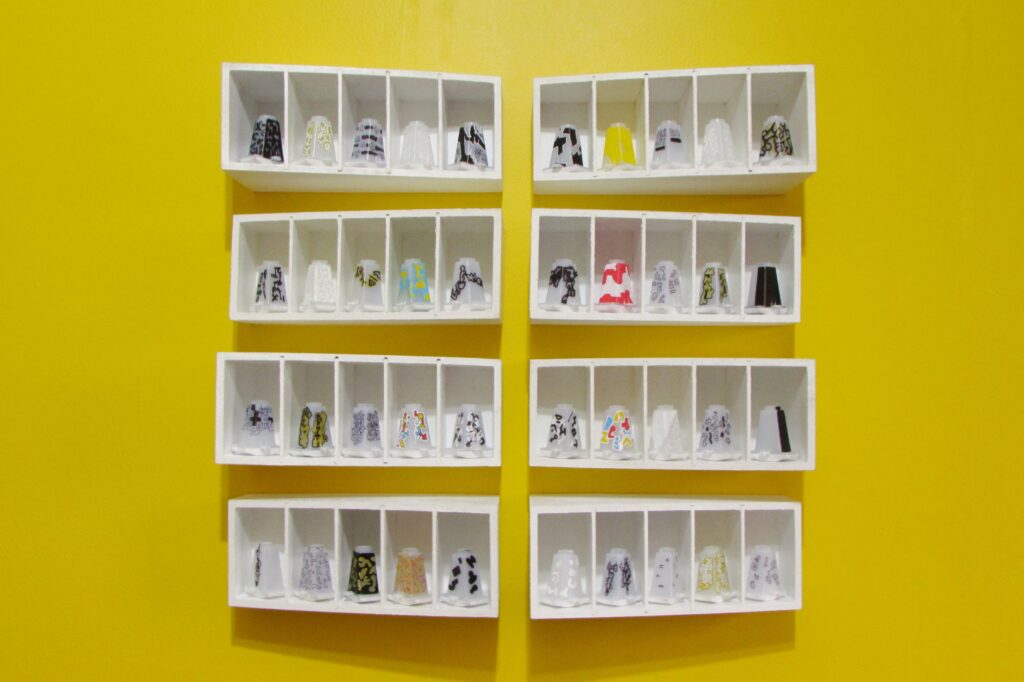
Because of my research into the language of writing, I became fascinated by the work of artists like Alexandre Orion, Augusto de Campos, Luiz 83, Mira Schendel, and Keith Haring—the latter being the gateway for my artistic references. Inspired by his simplified representation of human figures, I discovered that Keith Haring sought an accessible and universal visual language. This style facilitated the communication of complex themes—like love, equality, and social struggles—in a way that was understandable to the public, both on the streets of New York and in galleries. Inspired by him, I seek to transmit vibrant energy and a sense of connection through simple, dynamic figures. This approach was explored in other personal works, such as Monóculos (des)lembrancinhas (2023), where I relate these "naive" drawings to a past of which I have no conscious memory. My memory retrieval begins around age 9, so the work explores an inaccessible, forgotten past, while today I can record the "now" for future access through photographic viewfinders (monóculos) featuring photos and stick figures that evoke that lost childhood.
Have you participated in any notable exhibitions that you would like to share?
The first exhibition outside of the academic environment is always going to be one of the most memorable; it was the entry point for making contacts with galleries and established artists with long trajectories. I had the honor of exhibiting along with three other artists at Lateral Galeria. Being the only one who didn't yet have a direct relationship with the gallery and being a student, I was a bit nervous, but over time I realized I needed to improve many things—not because I received criticism, but because of the privilege of exhibiting and talking with artists and gallerists who encouraged me and emphasized the rapid growth I was experiencing. It’s not everyone who gets to participate in their first exhibition as an invited artist at age 21. I am always grateful for the opportunity I had and for the exhibitions to come, as this is only the beginning.