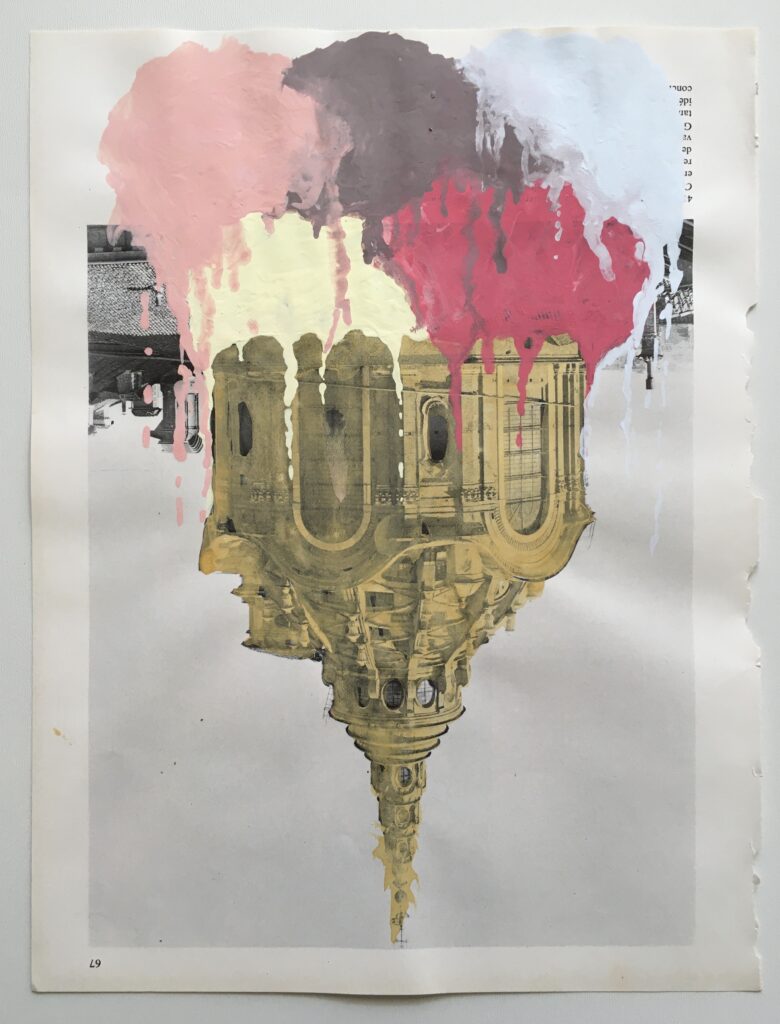
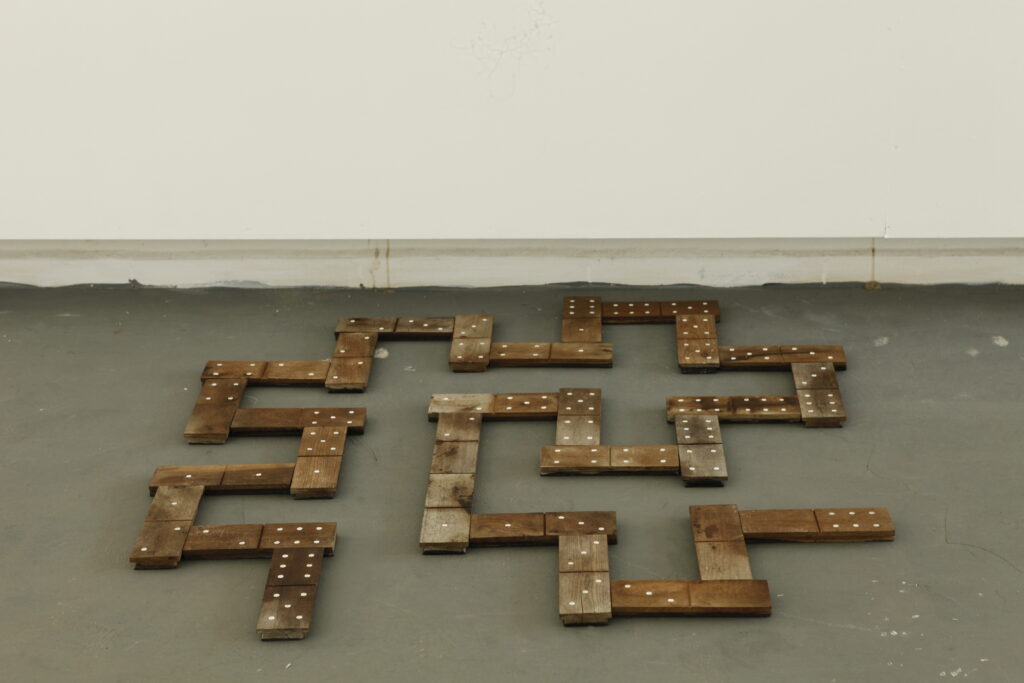
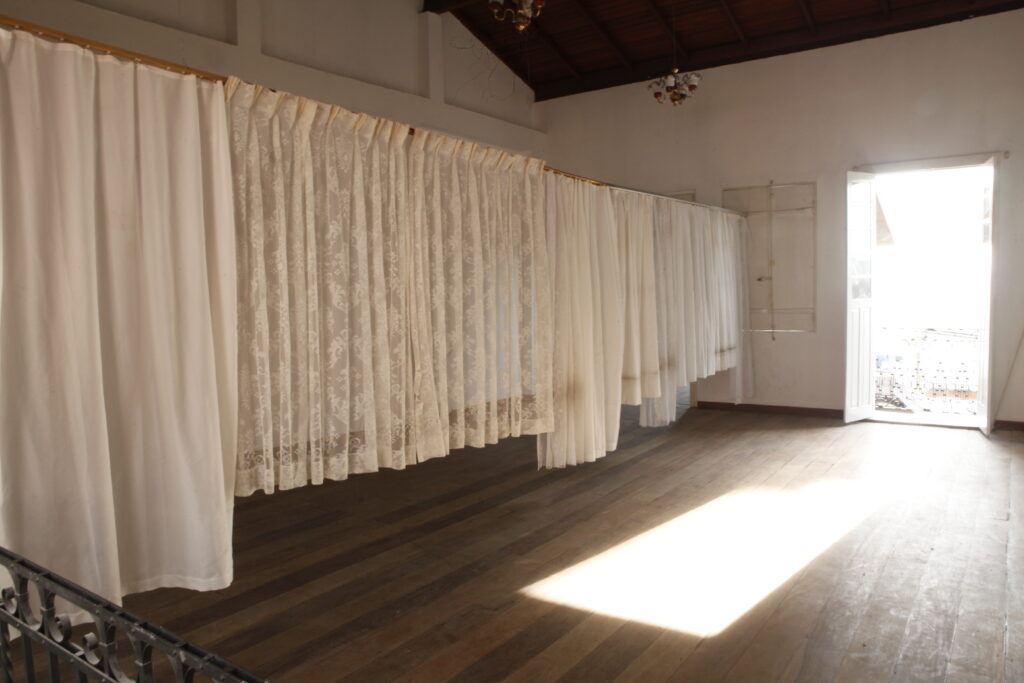
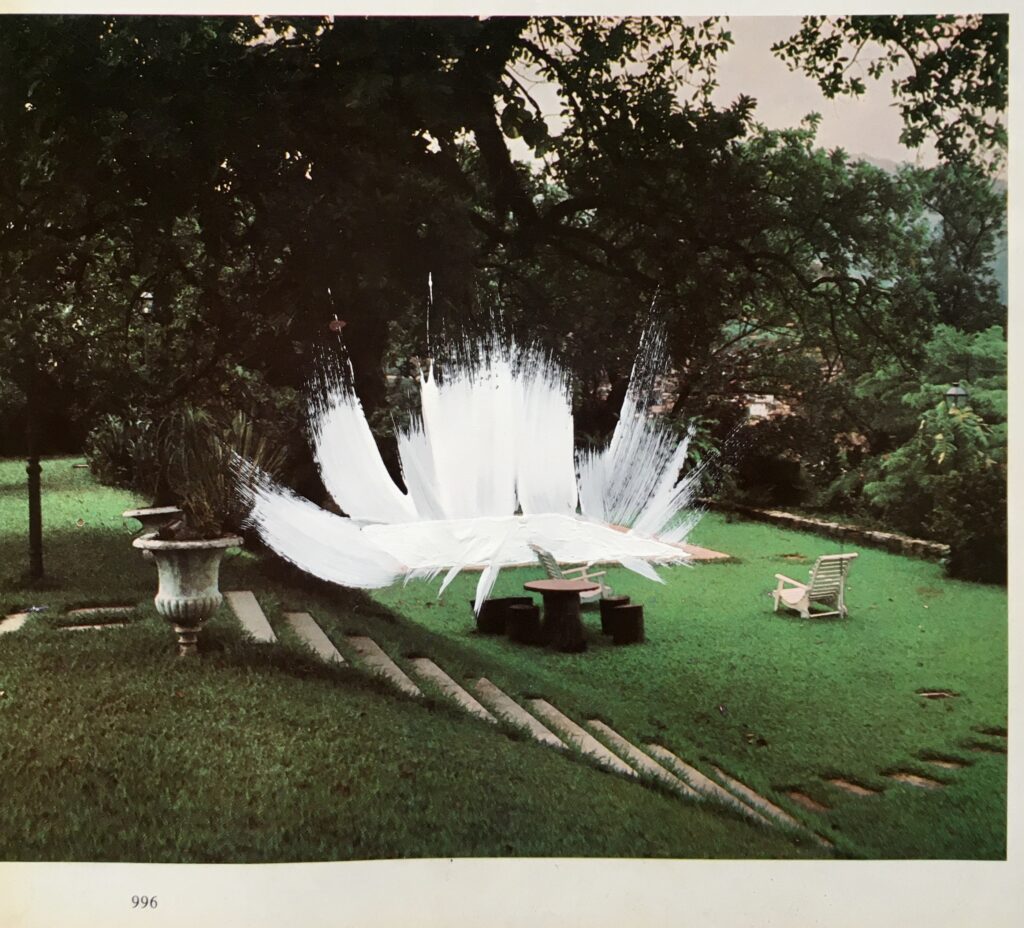
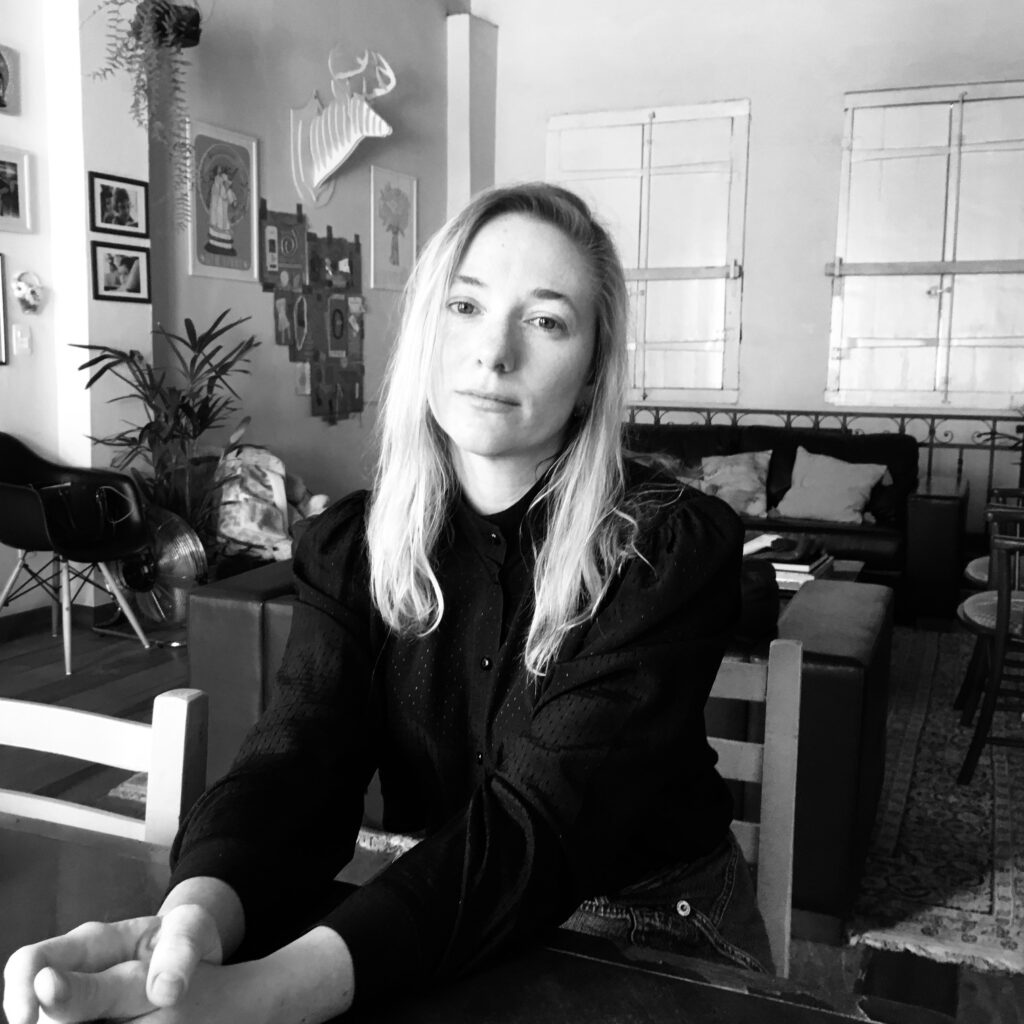
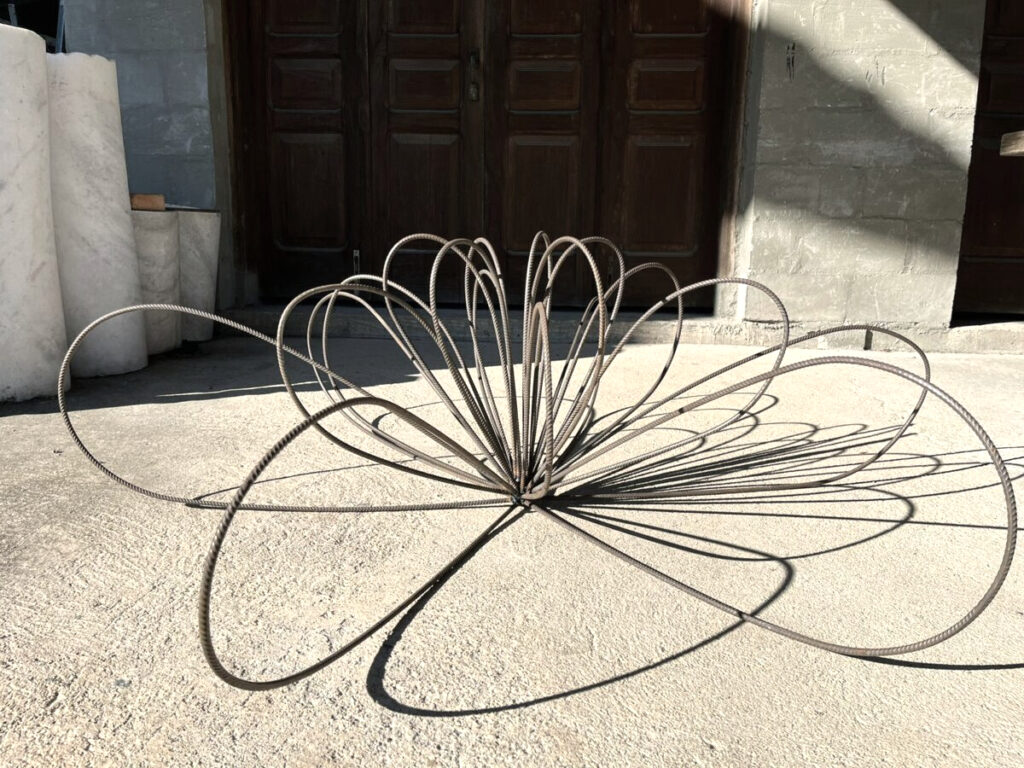
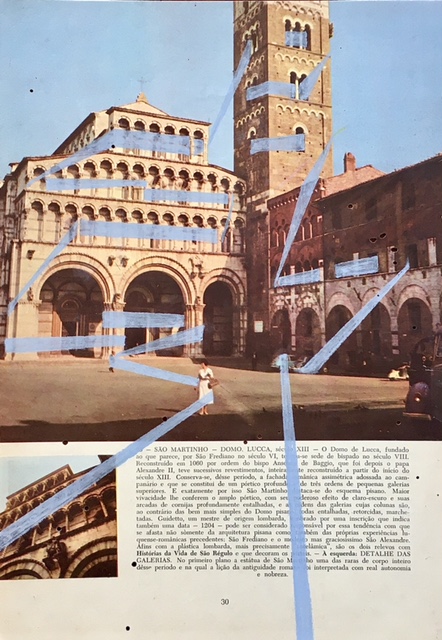
Bruna Granucci is a filmmaker by training (University of Southern Santa Catarina) and a visual artist by predilection—a craft she honed through the practice of building sets, costumes, and props for cinematic projects. Based on the island of Florianópolis, SC, her multifaceted production spans analog collage, embroidery, experimental video, and installation projects. Across these diverse media and experimentations, she seeks to establish a dialogue with her social and political surroundings and personal experiences, materializing the subjectivity of her thought through the investigation of everyday materials and objects. She has participated in collective exhibitions in Santa Catarina and São Paulo, and her first solo exhibition was awarded by the BADESC Cultural Foundation in 2019. In 2023, she founded an independent art space called Galeria Mínima.
How did your journey into the art world begin?
I discovered myself as a visual artist through the constant process of creating and inventing sets, costumes, and props for cinema projects, eventually becoming an art director. However, cinema, in a way, could not satisfy my need to elaborate on certain concepts and experiences. In this sense, visual arts embraced my desire to investigate materials and concepts that sparked my interest and weren't necessarily "useful" for a specific end, like a film project. In this journey as a visual artist, my dive is deep and highly intoxicating; I am driven by the desire to rummage through what I have inside and make that "creature" rise into materiality.
What themes do you prefer to explore in your works?
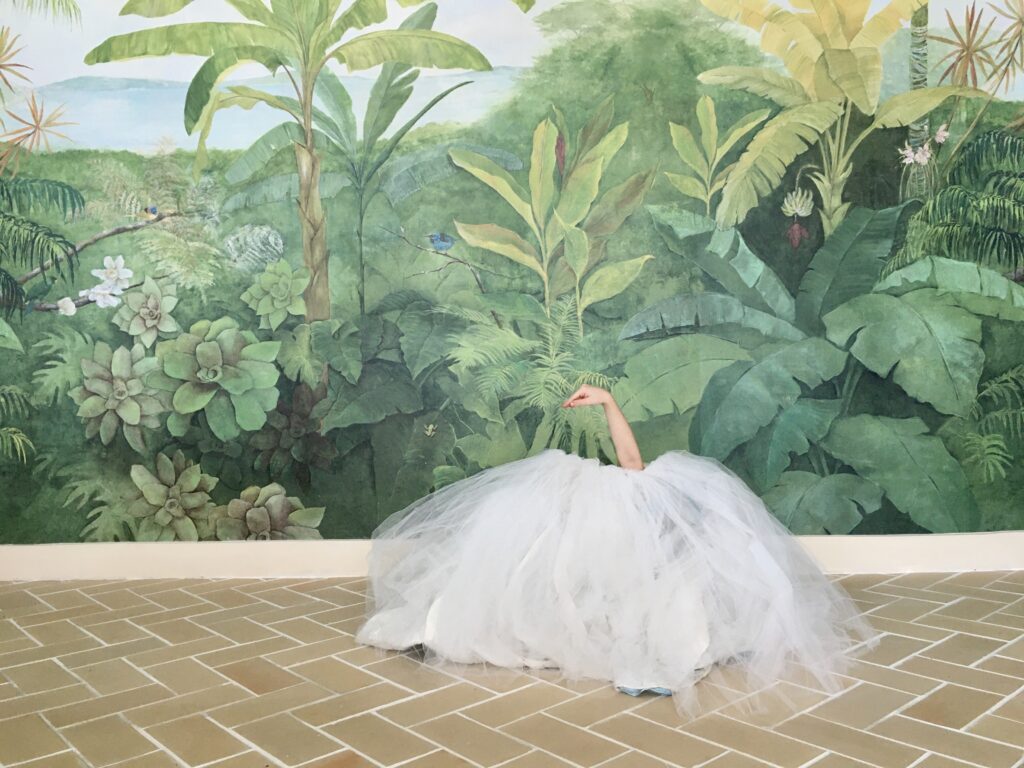
In my research, I seek to blur the boundary between domestic life and my artistic practice. The daily chaos of mothering, taking care of the house, and producing is the very condition of my exercise as an artist. My work is crossed by daily household tasks. During the repeated path of taking my daughters to school, I always passed by the same abandoned lots overgrown with weeds. From observing and collecting these plants and their form of occupation, I developed a concept I call corpo-mato (bush-body), joining another artist who is also a mother. In it, we relate this marginal plant to the female body in a tireless movement of resistance and strength. The word "marginal"—that which is on the margin—reflects on non-standardization or that which does not fit within imposed patterns. As a woman-mother-artist, I feel I am on the margin, and within my research, I seek to extrapolate this line that separates artistic making from domestic making.
What advice would you offer to artists just starting out?
The artist is a worker like any other; we are not made of a different, better, or more sublime material. A portion of what we do is indeed linked to subjectivity, but the other step—the artistic "making," the act of spending your life's time working in the studio—is just as important. To me, the artist is a courageous figure who opens a drawer full of ideas and sketches and gives them shape, even if it leads to nothing. This "nothing" is, in fact, everything to the artist. If we are never recognized, at the very least we had the pleasure of the process, the journey, and the artistic work in the studio—and in that, we have already won!