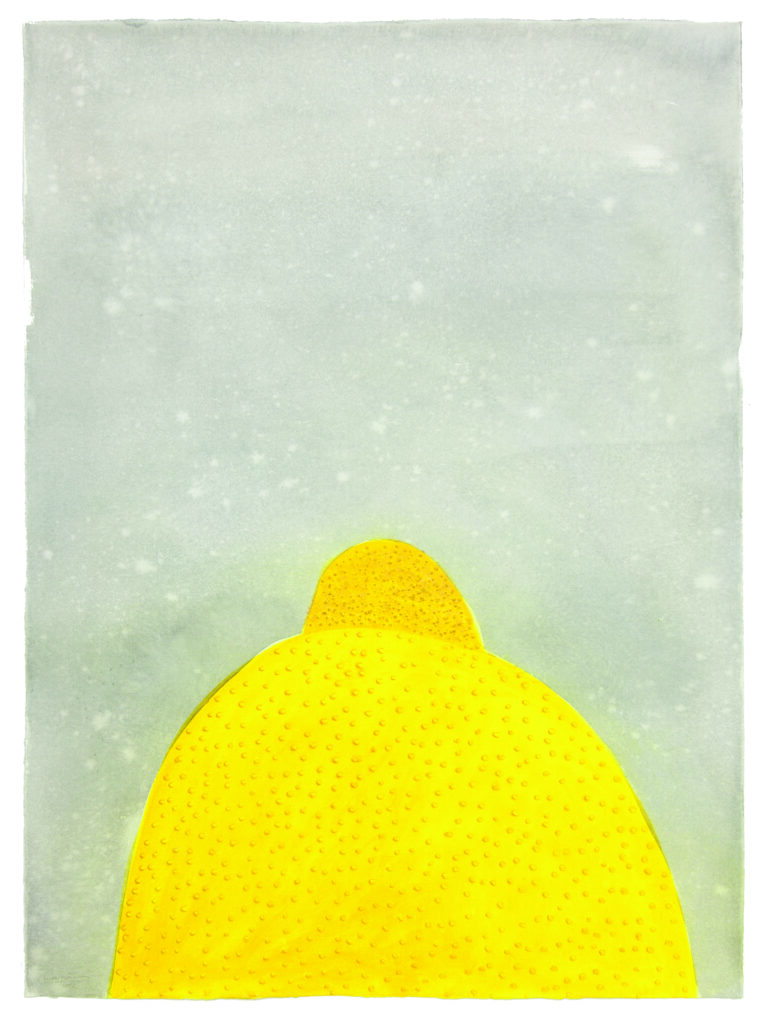
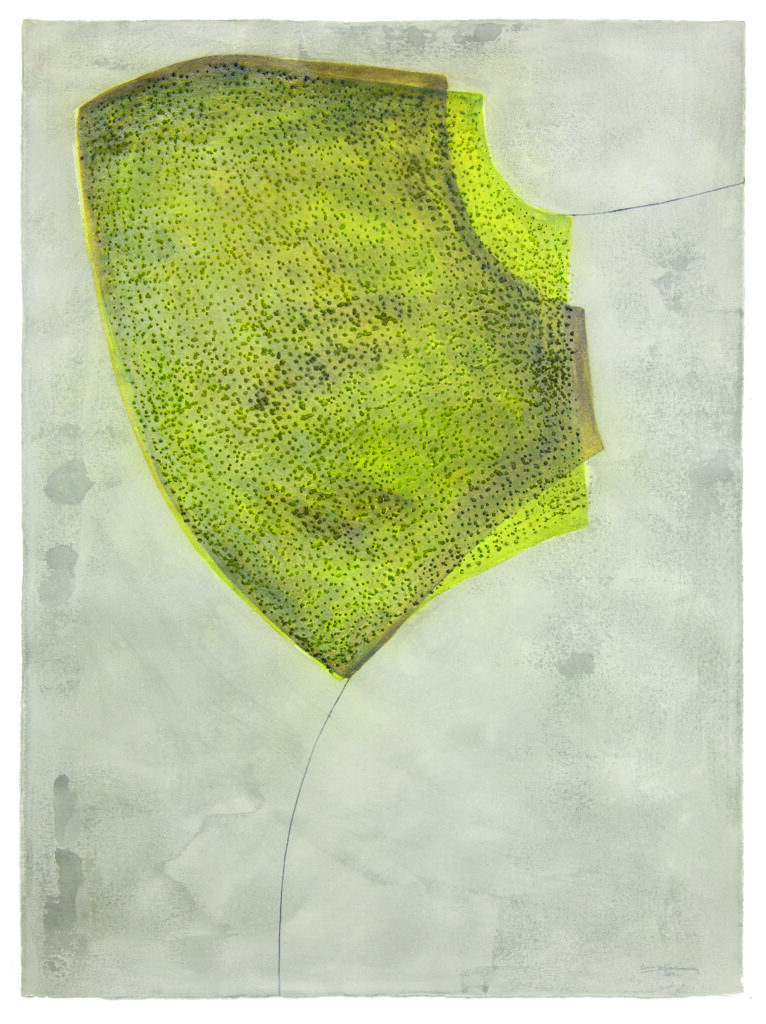
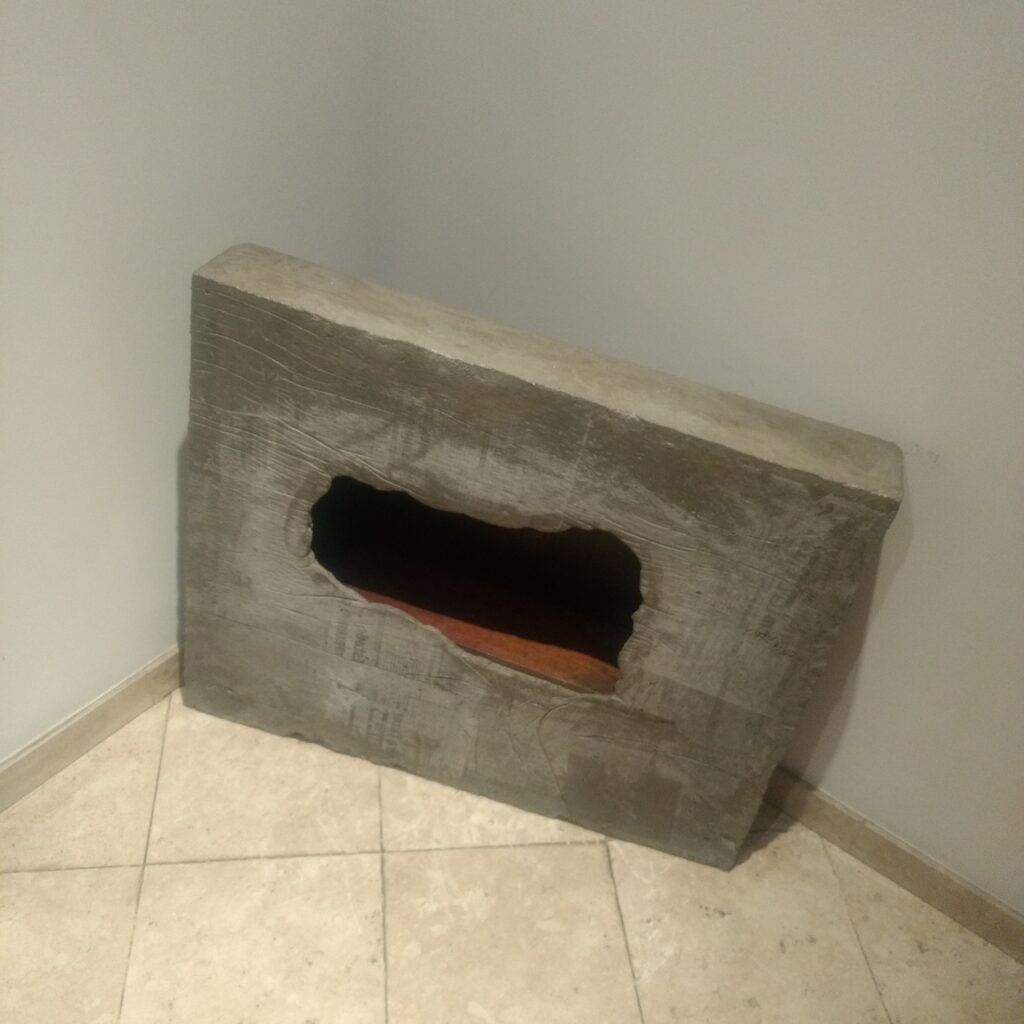
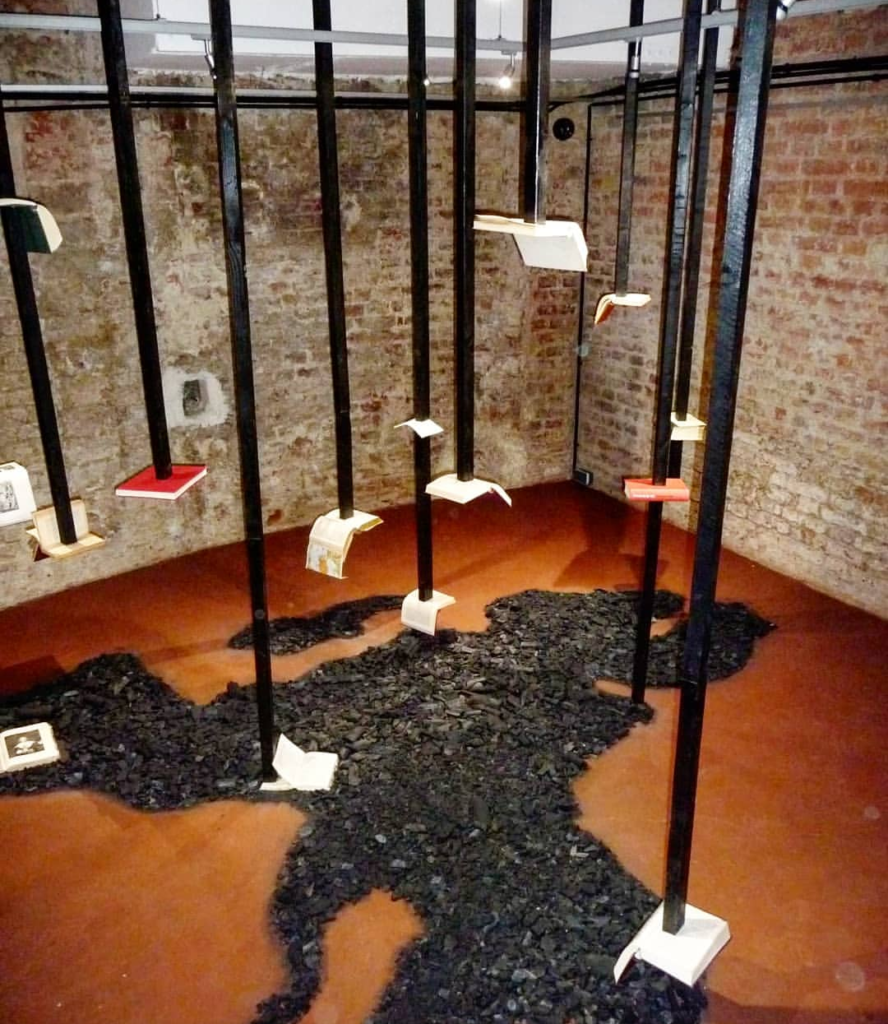
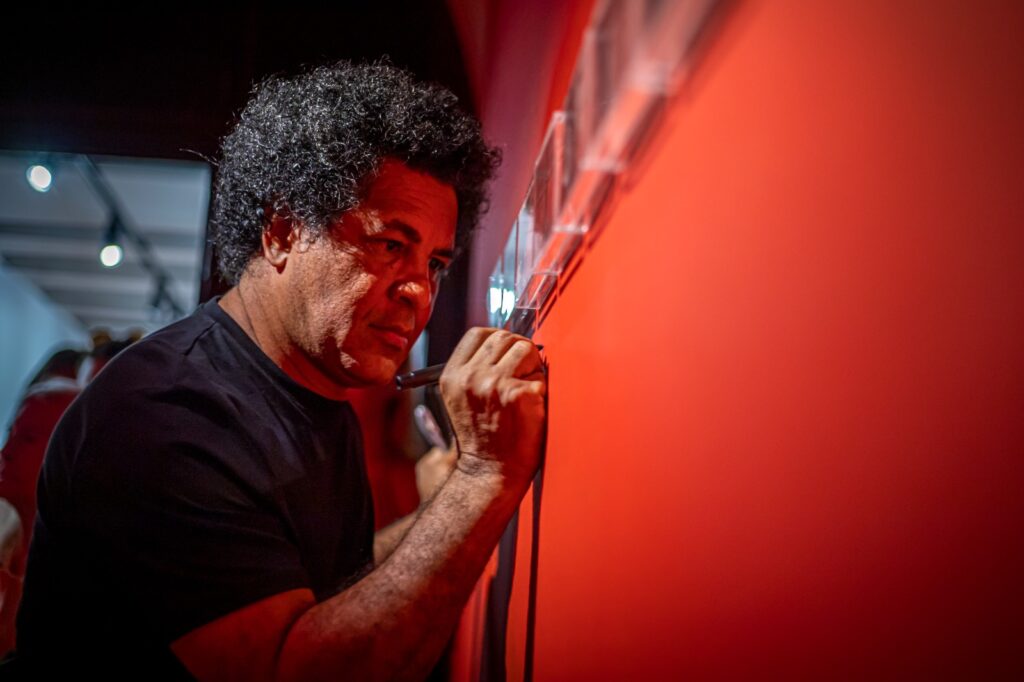
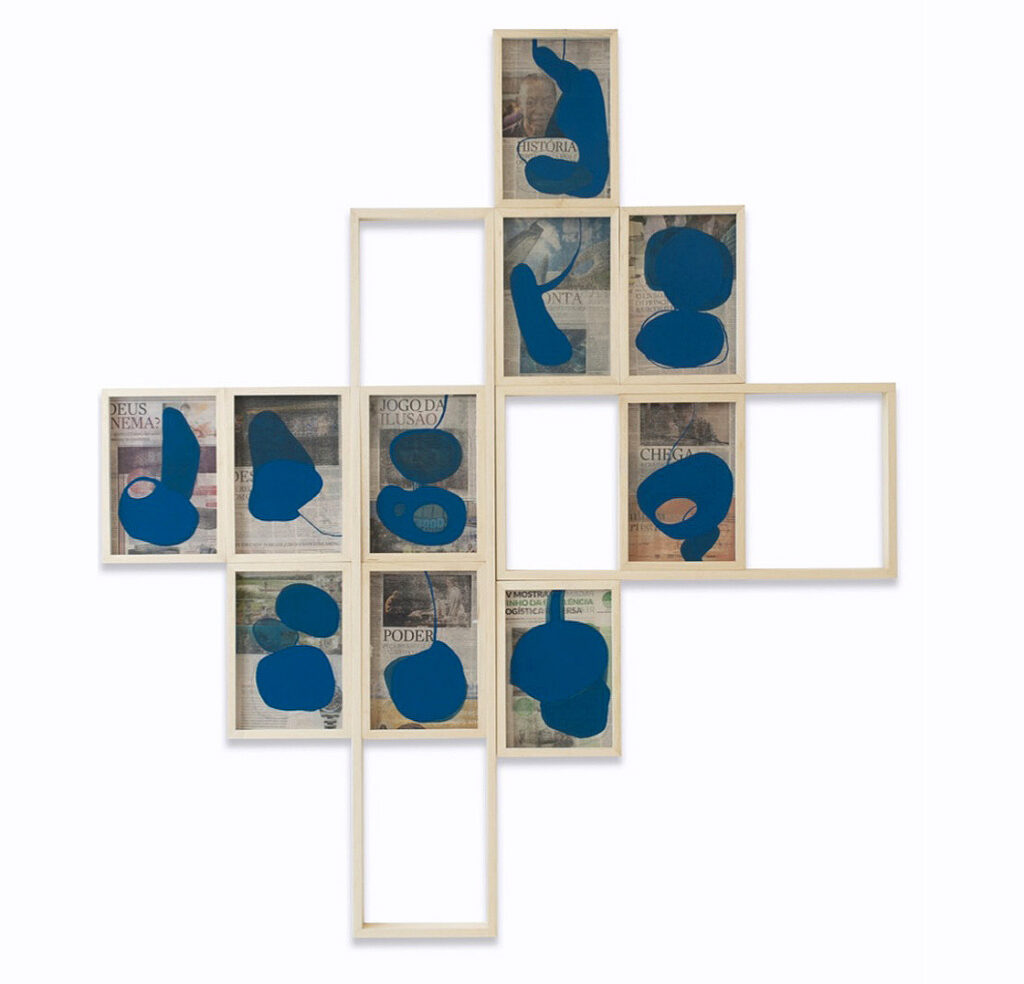
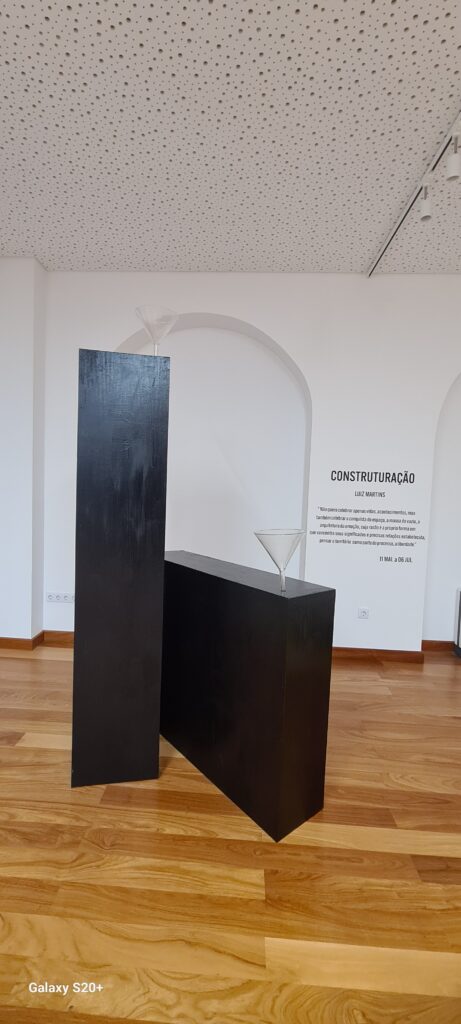
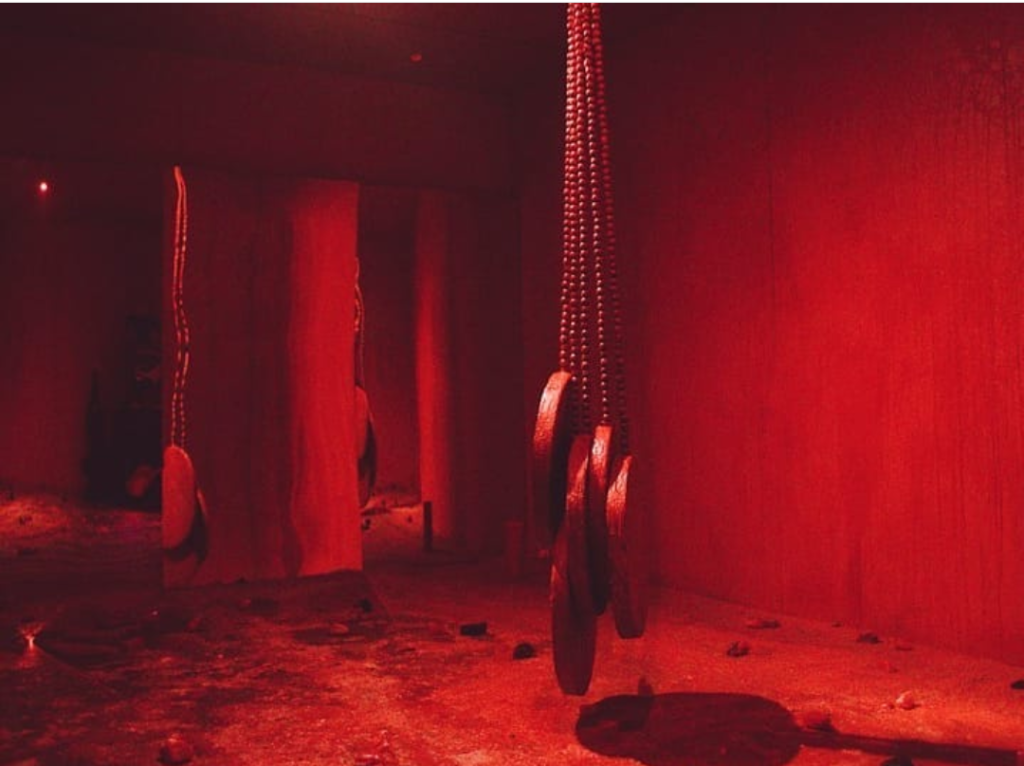
In my work, I try to lead the artistic process toward paths of rediscovery—of meanings and moments that are essential to understanding the body of the work. These concepts of signs and elements present in the act of creation are the central points, the backbone of my thought. I want to feel the weight of carved wood combined with the vigor of forged steel, aged and worn by the present time, paper, and concrete. I create paintings that refer to an archaeology of time; in my sculptures, I try to model the mysticism in which the material is contrasted in sequences of wooden structures veiled by concrete. Through this combination of matter and structures, I seek to lead to a common knowledge: the encounter of signs with the present. It is a balance of intolerance, a balance of matter—steel, wood, and concrete. Residuals of history, of urban architecture, and of man with his memory.
How would you describe your artistic style?
In the freedom of thought and creation, my work does not develop through the constraints of styles, but rather through knowledge, research, and discovery in the formation of the individual as matter, and of matter as an element that occupies space.
What themes do you prefer to explore in your works?
My work meets research through Brazilian archaeology and anthropology.
What are your sources of inspiration?
Brazilian rock art and the history of enslaved people.
What materials and techniques do you use most often?
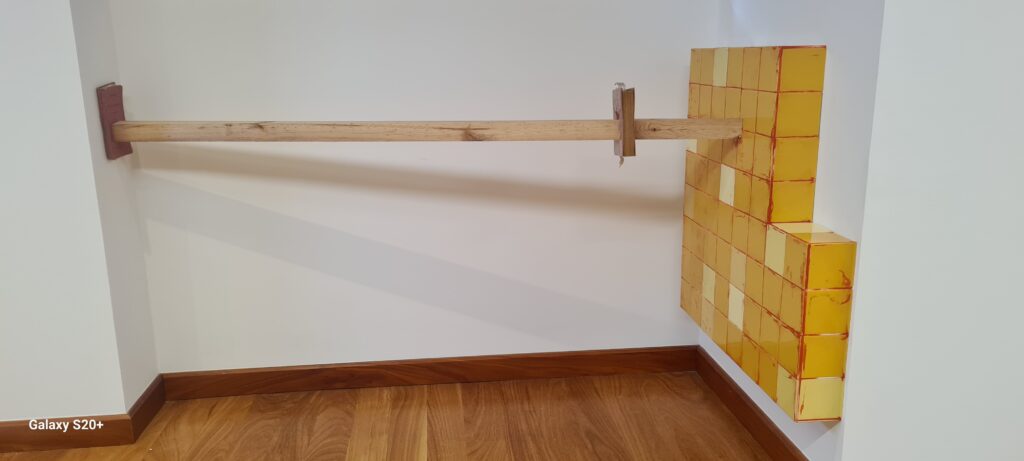
Drawing, performance, and sculpture, utilizing materials such as India ink, stone, metal, and wood.
How do you stay up to date on trends?
By researching history. An artist who thinks about trends is a dead artist.
What is the role of the artist in today's society?
To be an artist.
Have you participated in any notable exhibitions that you would like to share?
All of them... if they weren't notable, I wouldn't have done them.