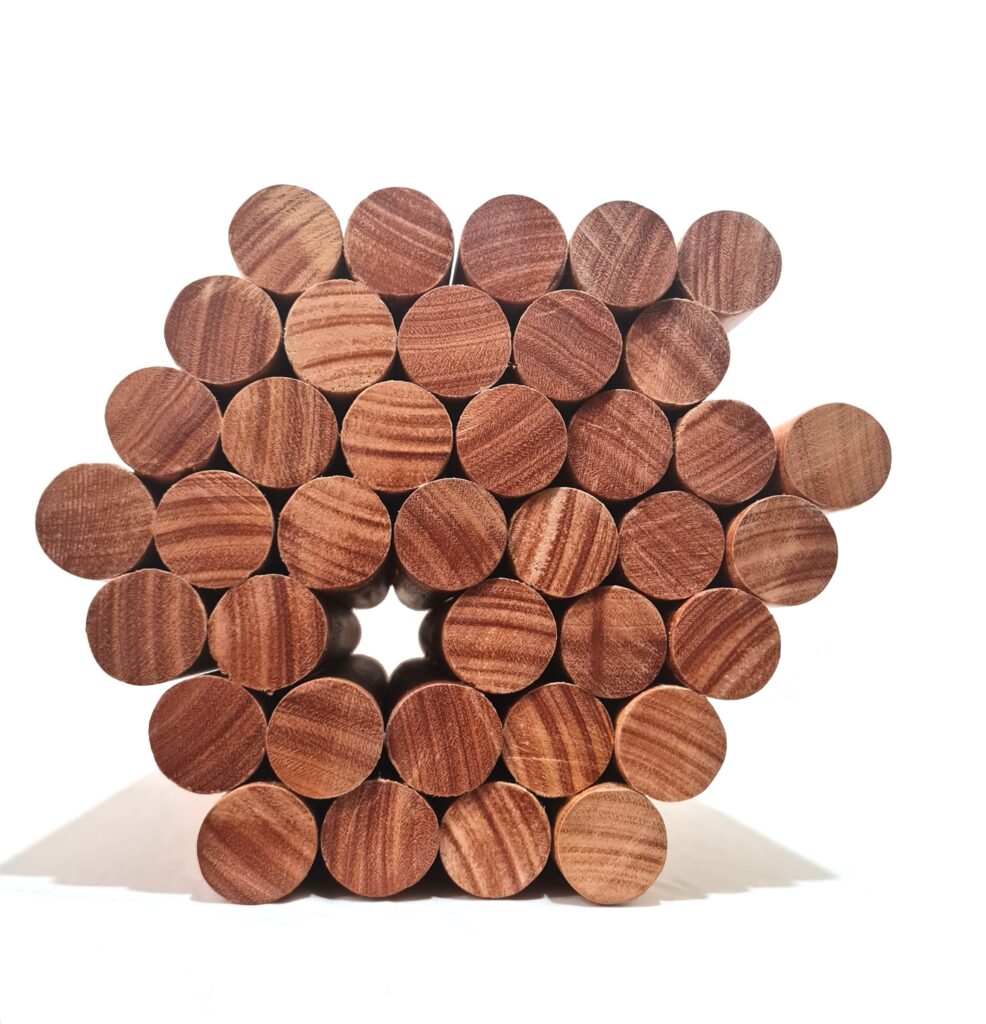
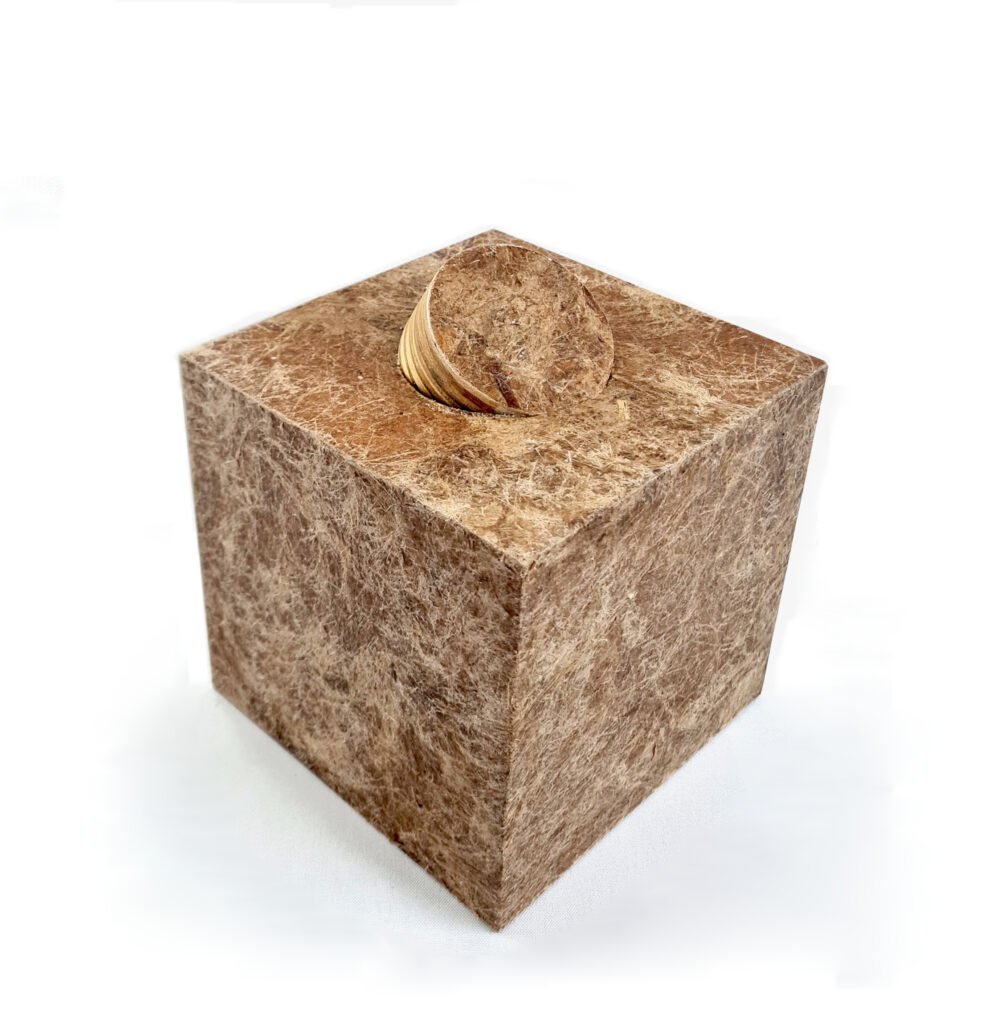
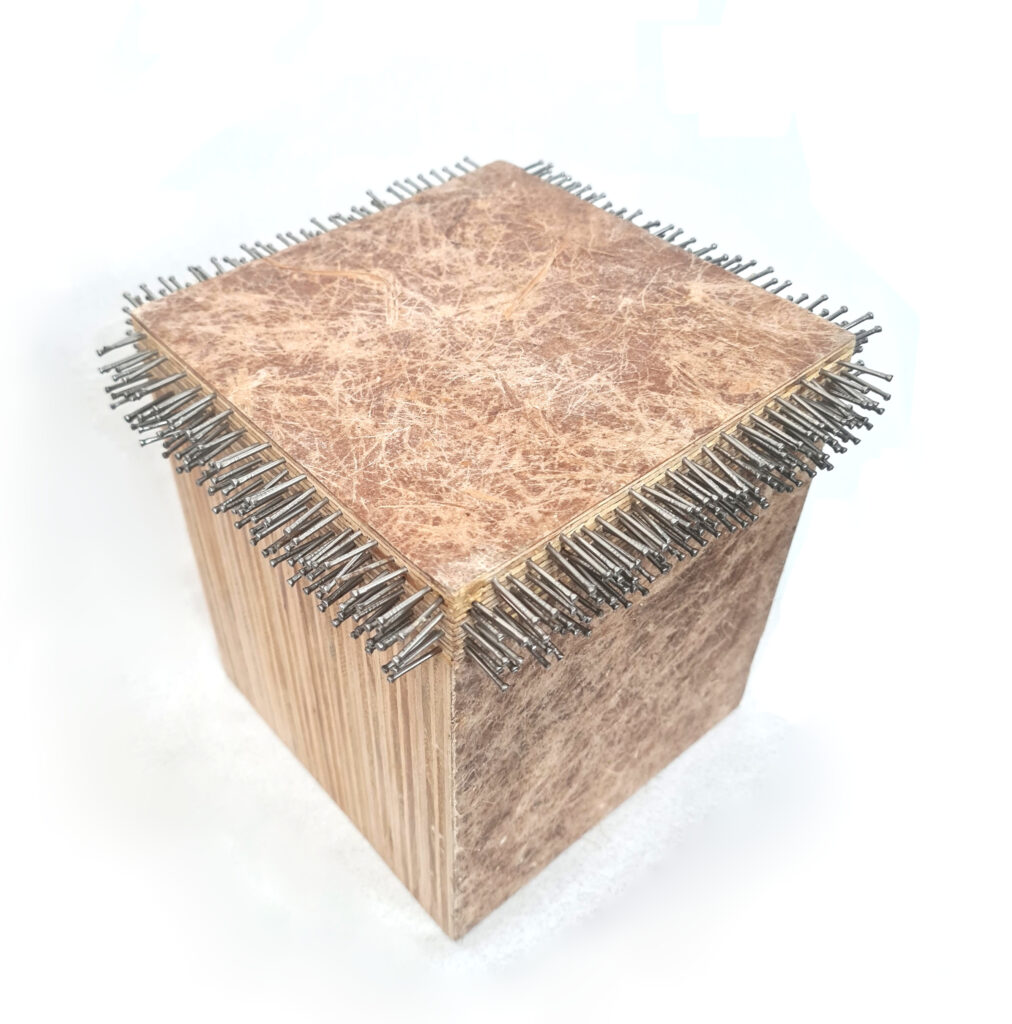
Krika Paskim holds a Bachelor’s degree in Sculpture and Painting from the Centro Universitário Belas Artes de São Paulo. She expanded her expertise in Urban Interventions, researched Installation art, studied artistic processes with curator Caru Albuquerque, and participated in the II Artistic Residency at Edifício Vera.
Her works have been featured in solo and collective exhibitions at the Oswaldo Goeldi Biennial, the Memorial da América Latina, the Curitiba Biennial, and the Municipal Palaces of Atibaia, Mairiporã, and Itu. Internationally, she was selected for the XIV Florence Biennale in Italy and the 4th Edition of No Name in Mexico City. Her artistic practice is grounded in the observation of daily life, utilizing objects that provoke new perceptions and inquiries. Geometry is a recurring theme in her work, where she explores the interaction between mathematical precision and the imperfections of the human condition.
How did your journey into the art world begin?
I began my artistic journey as a child, participating in drawing and craft courses encouraged by my mother. Despite this early interest, I initially chose engineering as my profession. However, realizing that this career did not meet my aspirations, I decided to leave it behind and rediscovered art through a clay modeling course. This first practical contact with sculpture sparked a strong interest in three-dimensionality and the expressive possibilities of materials. Motivated by this experience, I decided to deepen my knowledge and entered the Belas Artes de São Paulo, where I earned a degree in Sculpture and later in Painting. During my undergraduate studies, I explored a variety of techniques and materials, which expanded my artistic vision. Since then, I have been in a state of constant development, updating my knowledge and seeking new ways to express my ideas through art.
What themes do you prefer to explore in your works?
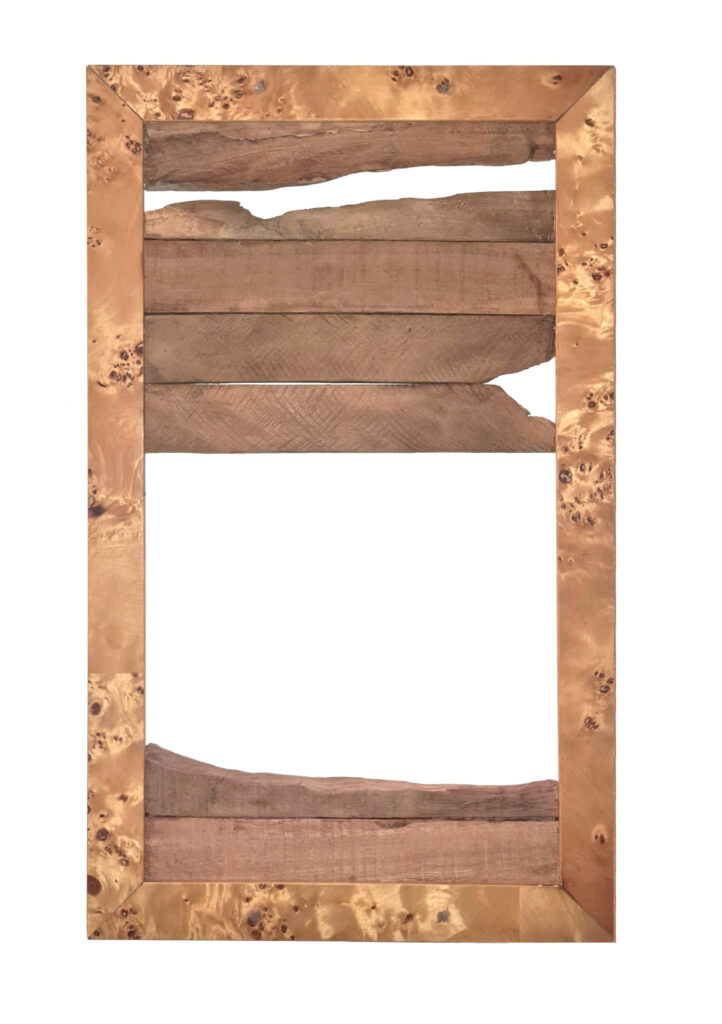
Geometry is the central theme of my work, symbolizing both mathematical precision and the fragility and complexity of human execution. By using geometric shapes and patterns, I seek to show how these structures—though theoretically perfect—always present small imperfections when executed manually, reflecting my creative process.
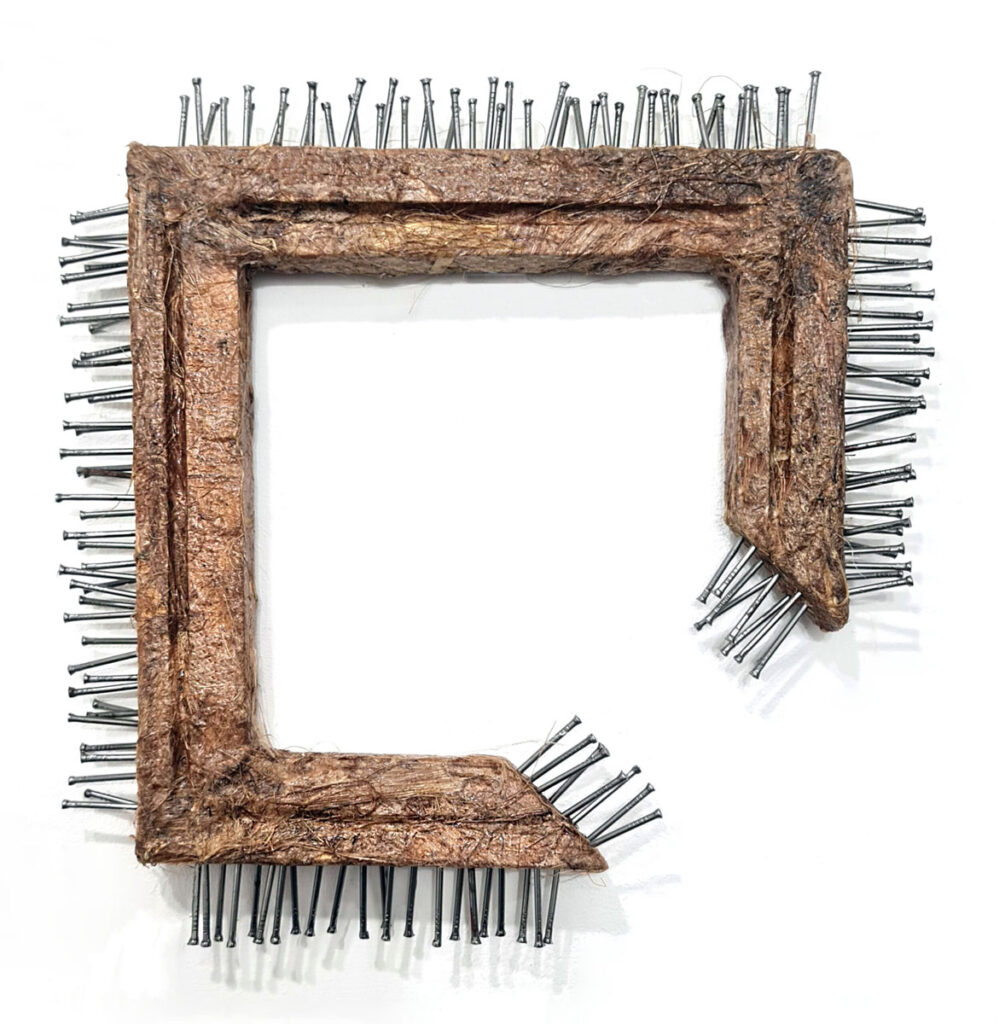
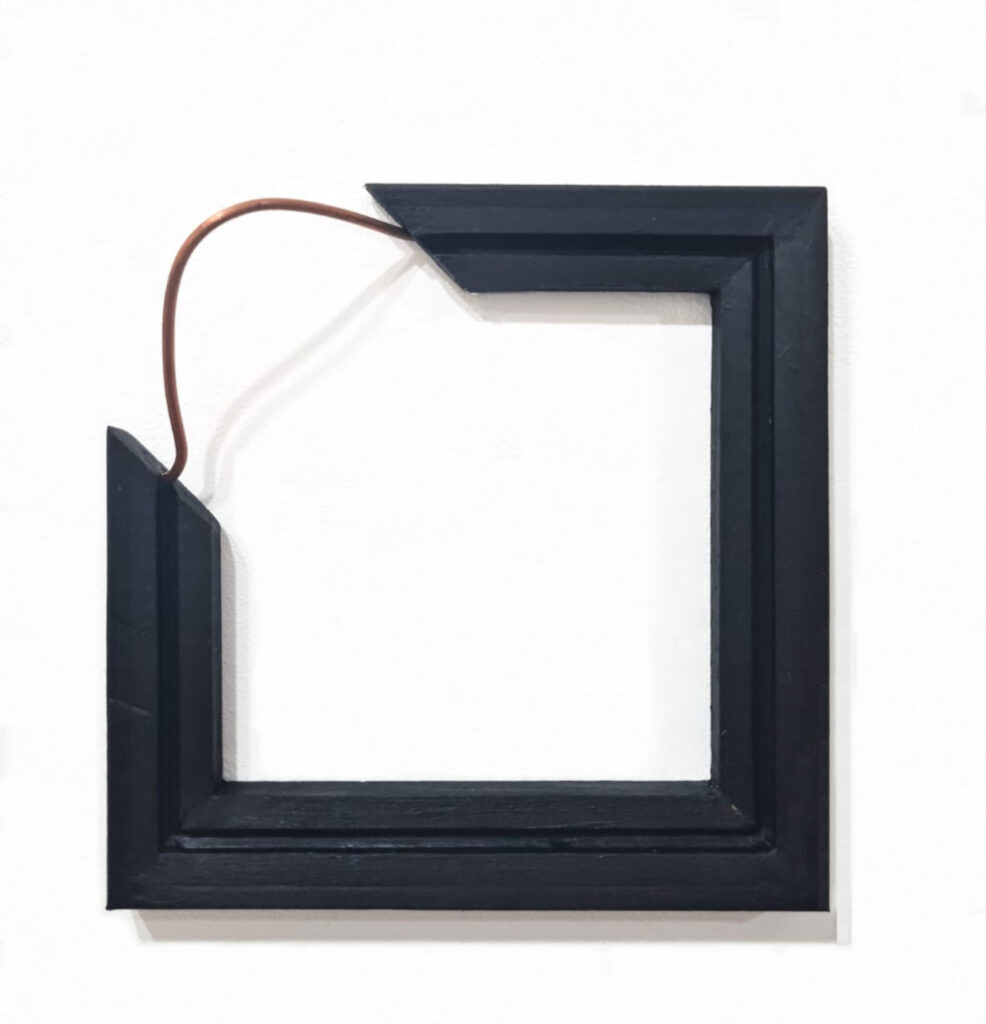
This interaction between mathematical exactness and human imperfection reflects the constant search for balance amidst the chaos in which we live. The choice of common and familiar materials, such as nails, wires, and frames, reinforces the everyday character of the works. When removed from their utilitarian functions, these elements acquire a new visual and conceptual presence, transcending their origins. Symmetry is often interrupted, and tactile elements provoke an immediate sensory response, intensifying the tension between geometric control and the organicity of the matter. My themes explore this continuous tension between order and disorder, the common and the uncommon. Through this, I seek to encourage the observer to reconsider their perception of materiality, structure, and the imperfection of the human condition itself.
What is your creative process like?
My creative process resides in any artistic manifestation where I can transform a chosen material into something that explores its properties and original function. On many occasions, although I start with an intention, it is chance and errors that frequently bring innovation to my work. When something goes differently than expected, it is in that moment of failure that new possibilities emerge, forcing me to look at the object differently and revealing paths I might never have explored. Error, then, becomes a creative tool that is never discarded, allowing the unpredictable to become an integral part of my process.
What are your sources of inspiration?
My sources of inspiration are intrinsically linked to the observation of daily life, whether inside my own space or outside during walks through the city of São Paulo. The city, with its movement and architecture, carries nuances and stories that attract me and connect me to the present. Many materials I use are collected from waste or disuse; I often shift these elements into an artistic context, exploring their properties in a simple and direct way, often in their raw state. This perception triggers internal questions: What do I really see? Am I observing the exterior, or am I part of the environment I created?
It is at this meeting point between the gaze and the object that forms and materials reveal new possibilities. In this relationship between geometry and raw nature, I discover a balance between control and the unforeseen. This dialogue generates a sense of continuity where the boundaries between myself and the world around me dissolve, allowing my work to manifest this fusion.
What materials and techniques do you use most often?
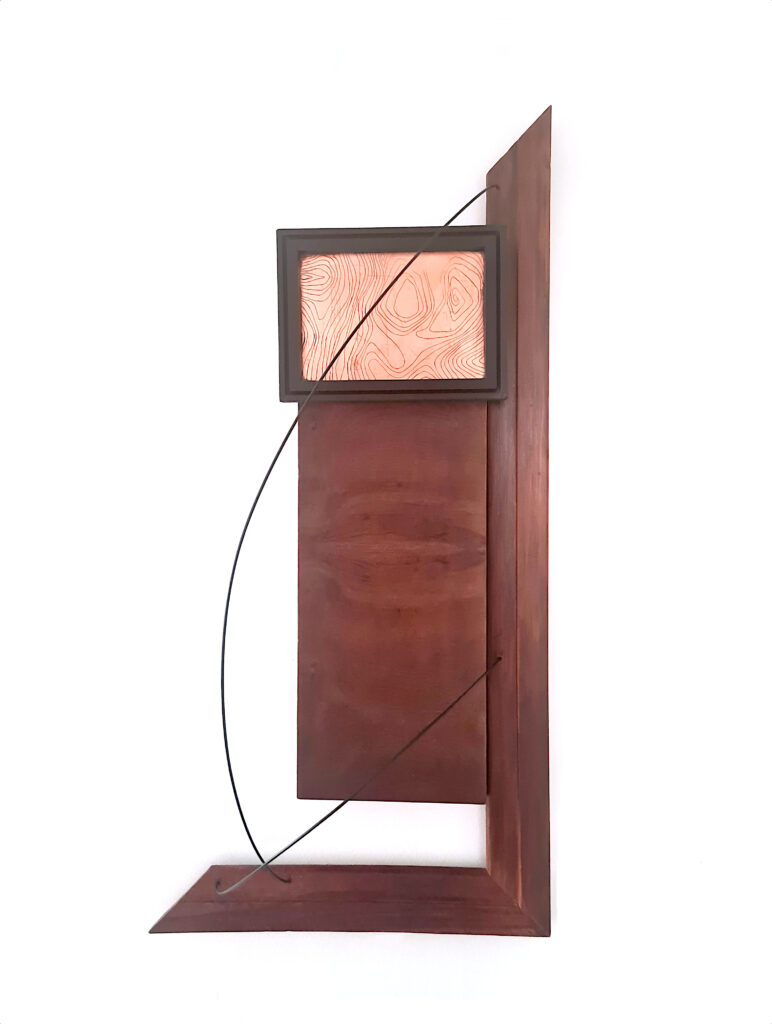
The materials I currently use are basically wood, frames, wiring, nails, and pigments—including objects that are discarded or in disuse. I also use banana fiber, recycled papers, and interlinings. In many compositions, the frame is the central element that delimits and organizes the space, suggesting a new perception of what is inside and outside of it. Techniques vary according to the chosen materials, such as collage and the joining of different materials in a single composition.
What is the meaning of art in your life?
Art, for me, is one of the few expressions that brings a "restless well-being"—a state where fulfillment is completely satisfying one moment and, in the next, dissolves into dissatisfaction. It is like reaching the end of an artistic process and feeling that the created form is satisfying, only to realize shortly after that it no longer transcends. This constant oscillation is the essence of my creative process, an infinite search that keeps me in motion and transformation.
How do you stay up to date on trends?
To stay updated on industry trends, I constantly seek to participate in courses and artistic residencies, where I explore new techniques and exchange ideas with other artists and curators. Additionally, I visit exhibitions and use social media, observing images from everyday contexts to see how different people reinterpret the world around them. This habit of searching and learning allows me to broaden my references and continually renew my creative process, inspiring me to find new ways of perceiving and exploring materials.