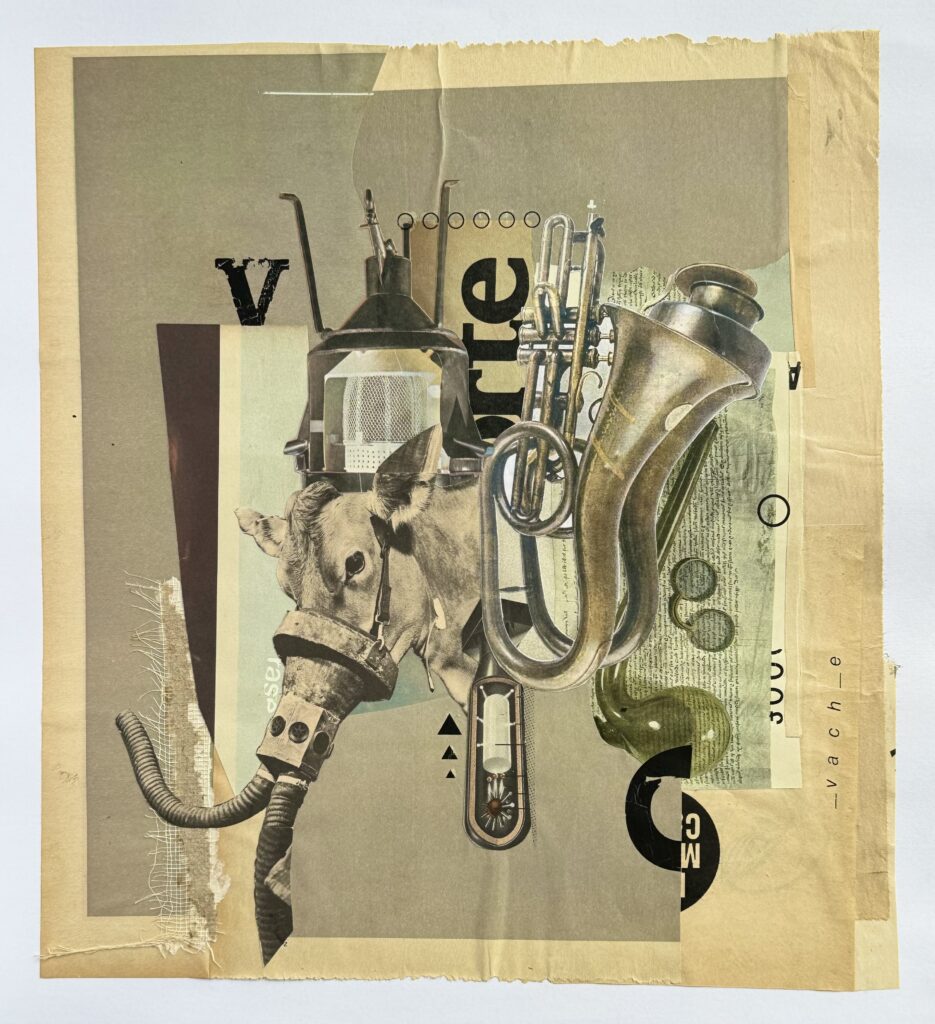
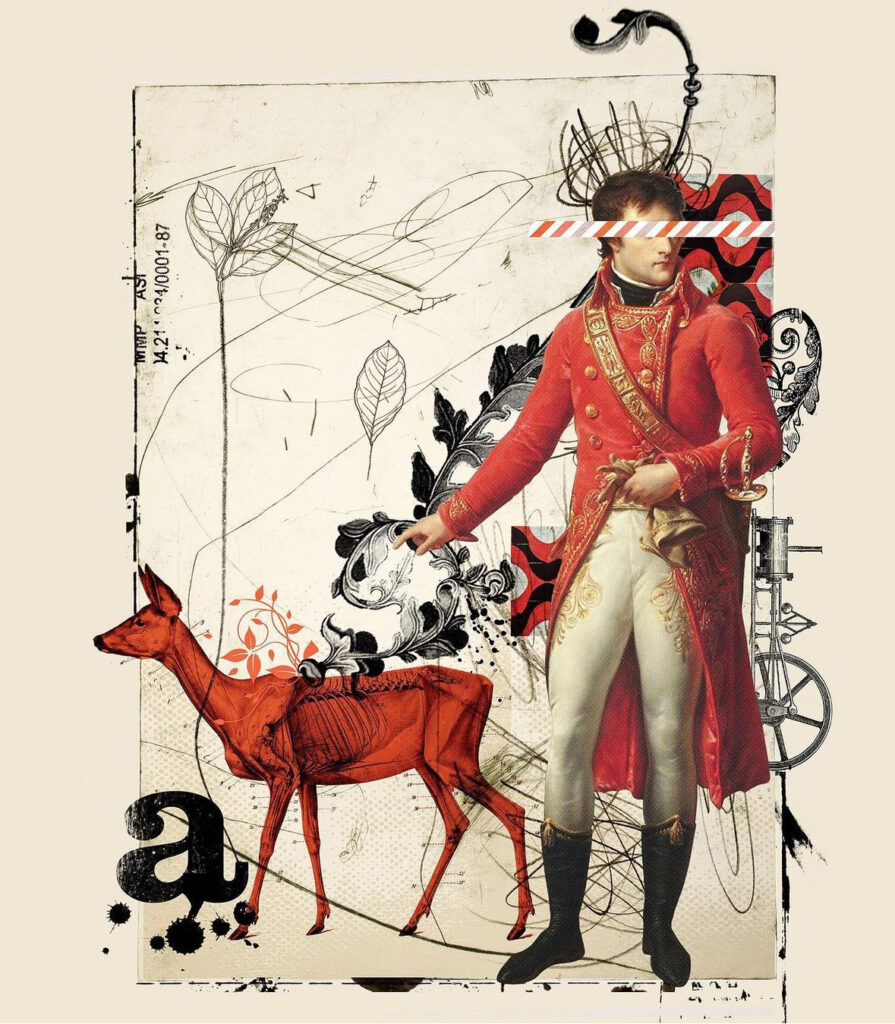
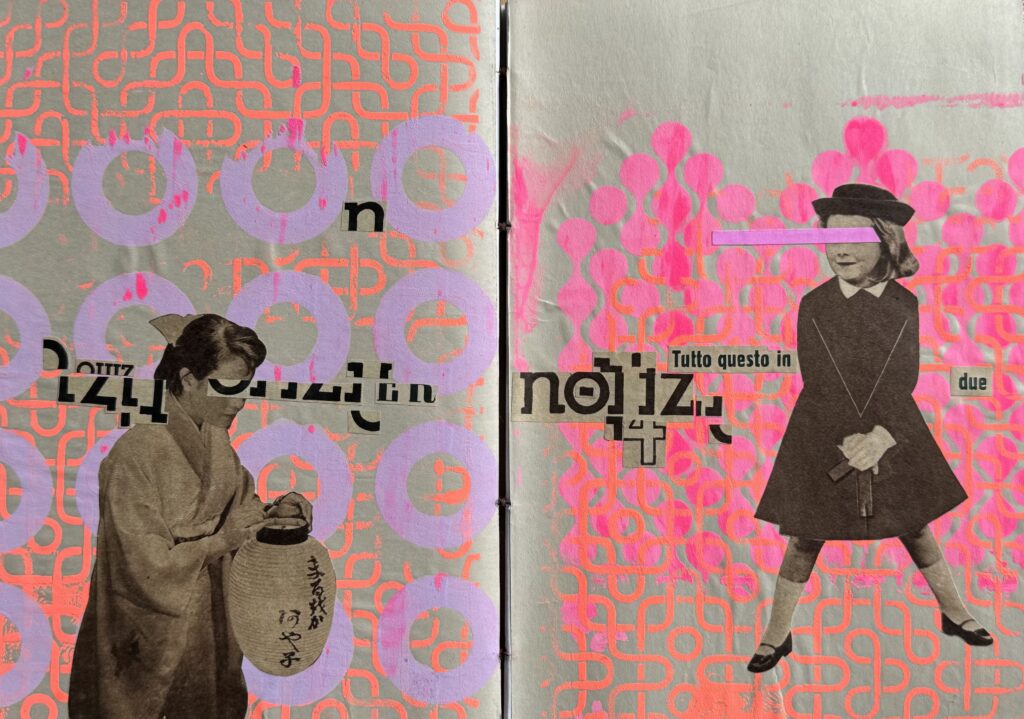
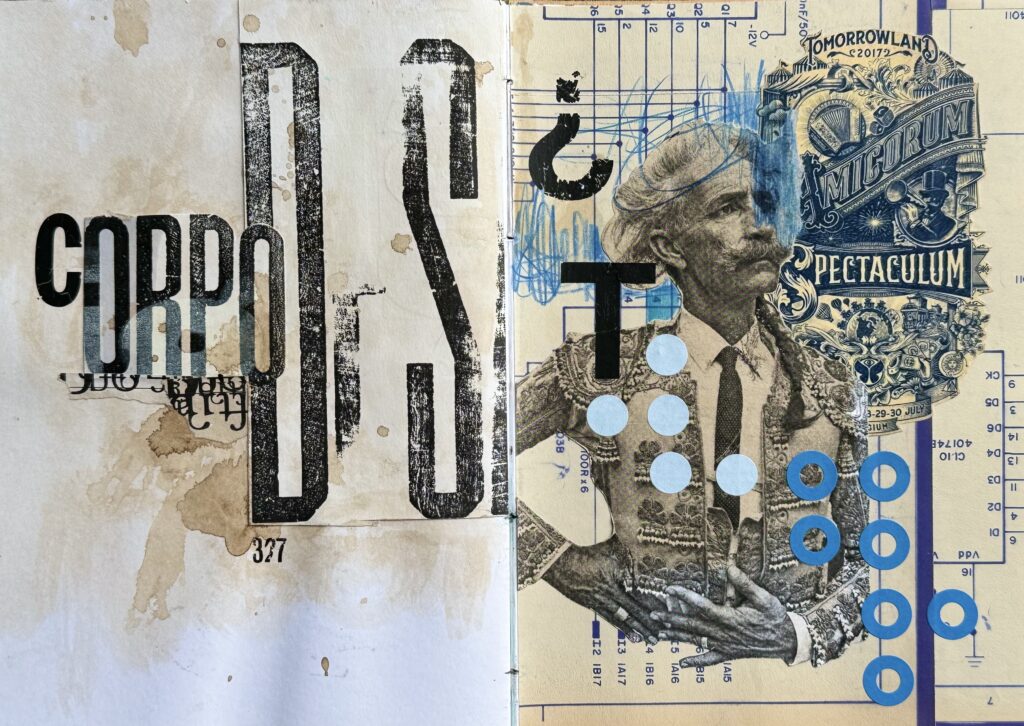
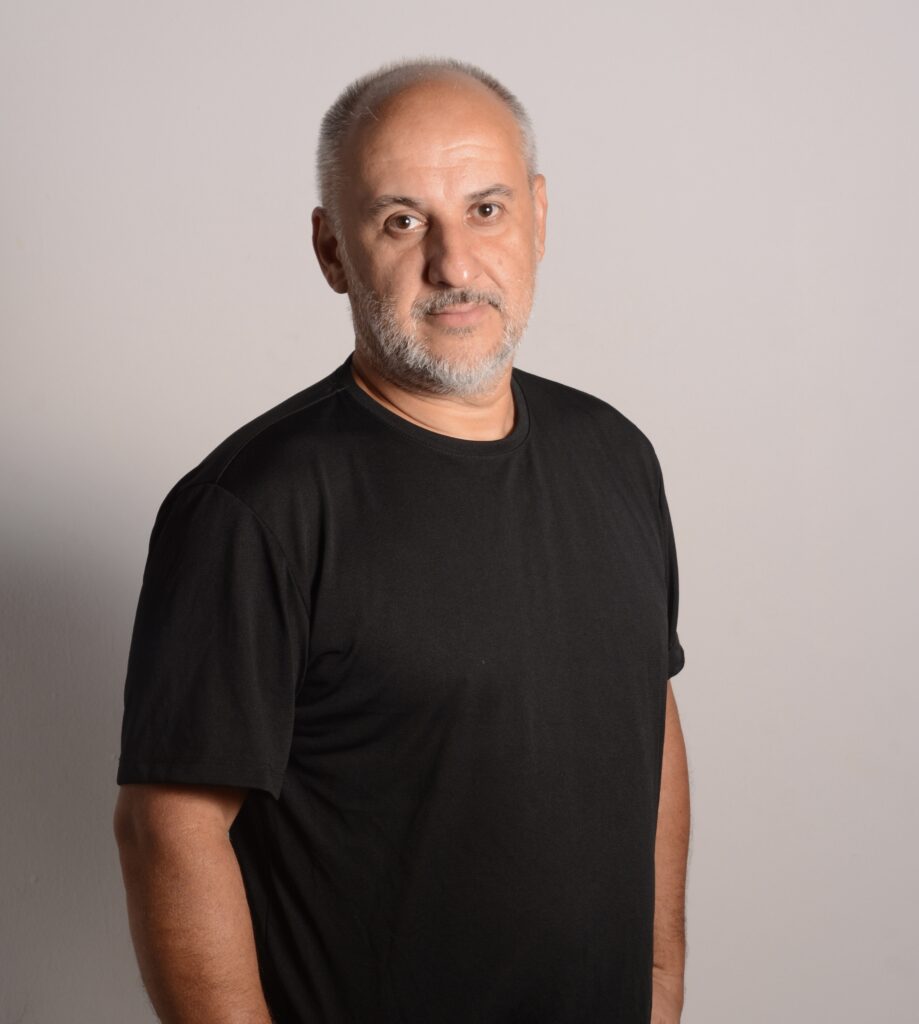
Samuel Eller is from Minas Gerais and resides in the Belo Horizonte metropolitan area. He is a graphic designer and design professor—a graphic artist and collagist who transforms all the media products of his time into fragments, a creative process that gives meaning to his way of thinking and making art. For Eller, the most attractive aspect of collage is knowing that his creative process follows no rules or prior planning; it happens through the spontaneity of encounters between fragments of letters/words and images. For him, the "becoming" of creation is a result of research: "it is necessary to research a lot, I love the investigative situation; it is through it that I can register, join, heap, and accumulate in excess everything that is given to me to see."
How did your journey into the art world begin?
In 1988, still a teenager, I began drawing for a screen-printing company. There, I started having contact with the universe of images—creation and image reproduction techniques. The passion for editorial graphic design that was awakening in me led me to study graphic design. After I graduated, I realized I needed my own exercise in creativity to improve my skills and put into practice the theoretical studies and discoveries I had been making. I needed to dedicate myself to personal demands that were a daily necessity of creation; it was from then on that I began creating process notebooks, using the language and technique of collage, where I experimented with a little bit of everything.
What is your creative process like?
I am a graphic artist and collagist with a "deformity" in my gaze—a guy who has a greed for seeing. I like to see everything; I have a magnifying-glass gaze. I am the type who lifts leaves, shards, and stones to see the minute. I like to bring to the surface all the things that are hidden or forgotten beneath or inside other things that were discarded, because they want me to care about them.
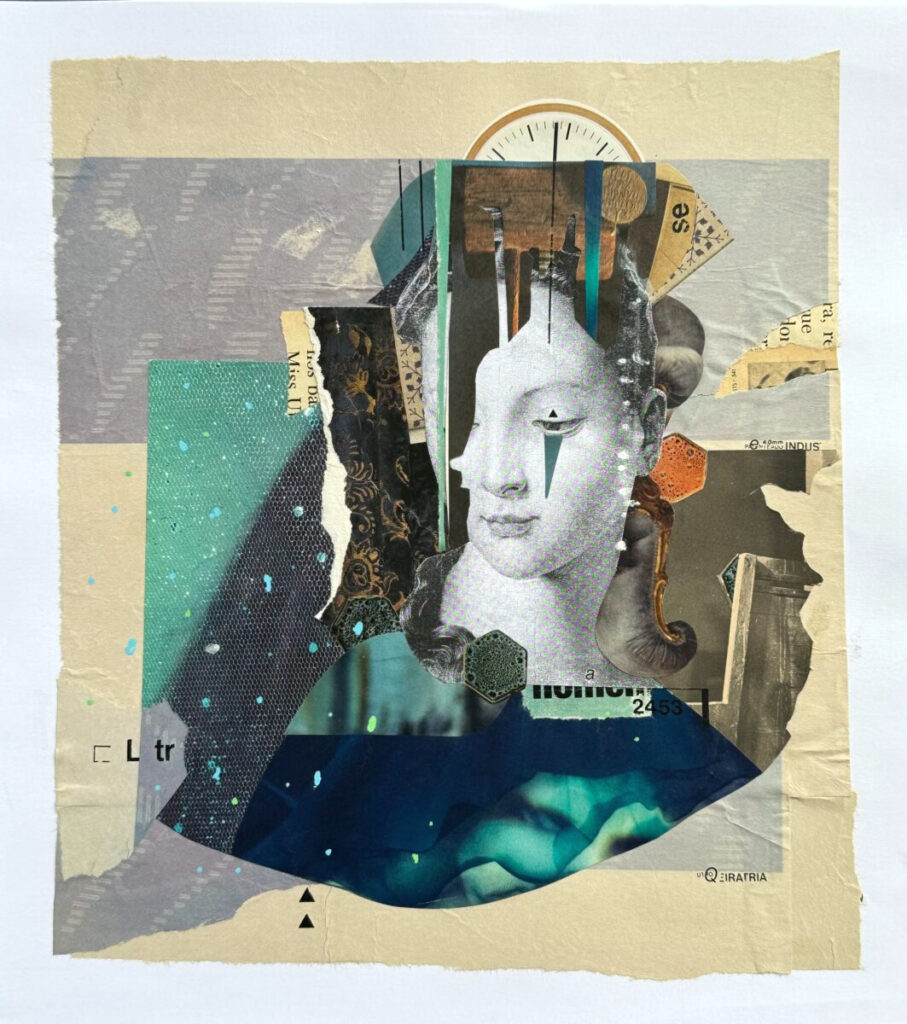
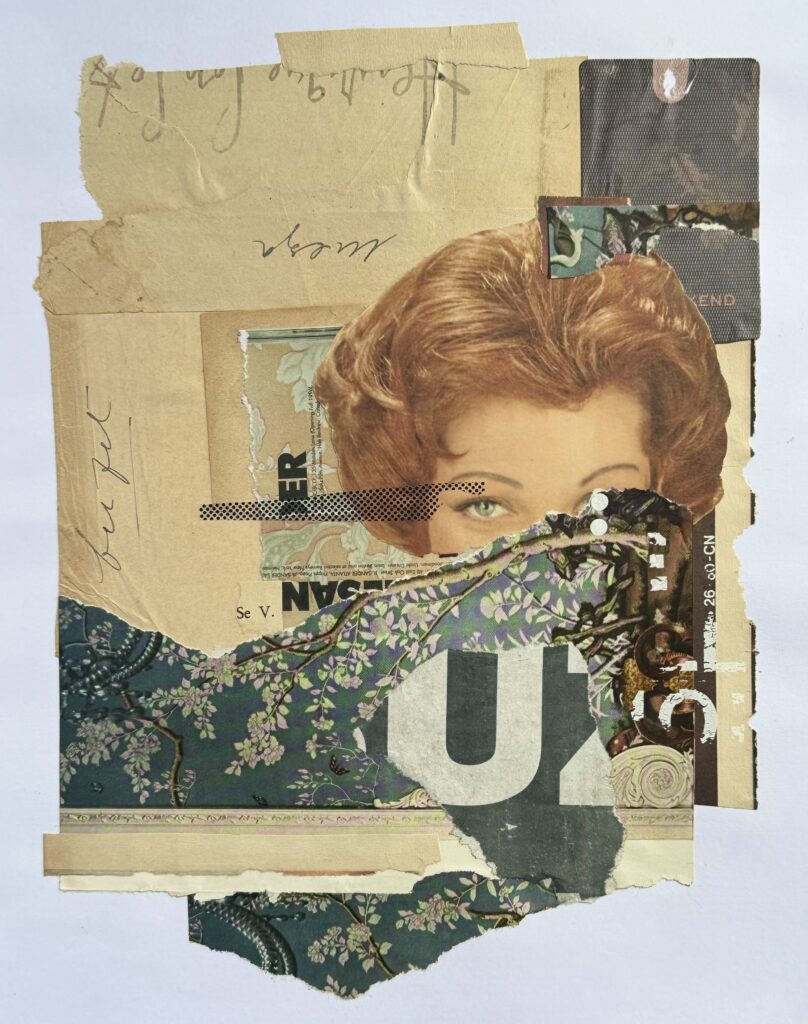
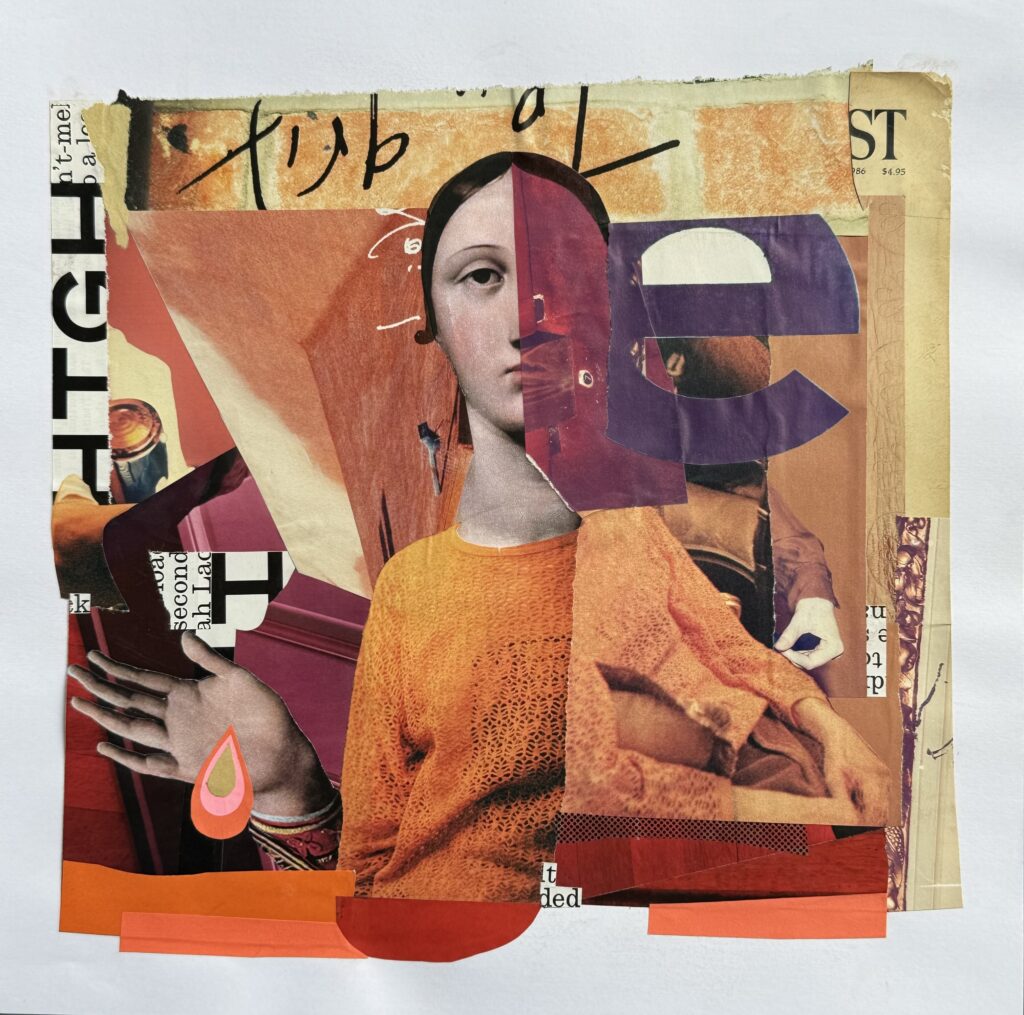
That is where my creative process begins: a passion for creating something using noise, dirt, fragments, leftovers of texts and images, converting them into a visual poem that completes or can be complemented by the meaning developed in the verbal or non-verbal text manifested in the collage. For me, this is how the poetic becoming of creation opens up. This is how the art of collage happens: when I manage to fuse collage and poetry on the same surface. When I bring together fragments of letters and words with fragments of images, for me, it results in a kind of phonetic system, or an analog syntax—an art full of cacophony, whispers, and babbling. Because of this, I perceive that in making collage, I am also creating visual poetry, where the message can be obtained in an unusual way.
What are your sources of inspiration?
I am hijacked into seeing things even when I don't want to. I feed my gaze on literature and poetry, cinema, photography, music, design, and advertising, among other places where I take my gaze for a walk. I am heavily influenced by the ideas of modernist and avant-garde artists, and also by the concept of the "uncanny" (estranhamento inquietante), the subversion and betrayal of images, and the distortions and displacements of meaning contained in the artistic production of that period.
Everything I have read, collected, and learned leads me to experiment, cut, tear, deconstruct, resignify, and turn all the media products of my time into fragments—just as the Futurists, Dadaists, Surrealists, and Constructivists did. They were my school of composition; they gave meaning to my way of thinking, being, and doing design and collage. Today, I make collage for the simple pleasure of exercising my creativity.
What materials and techniques do you use most often?
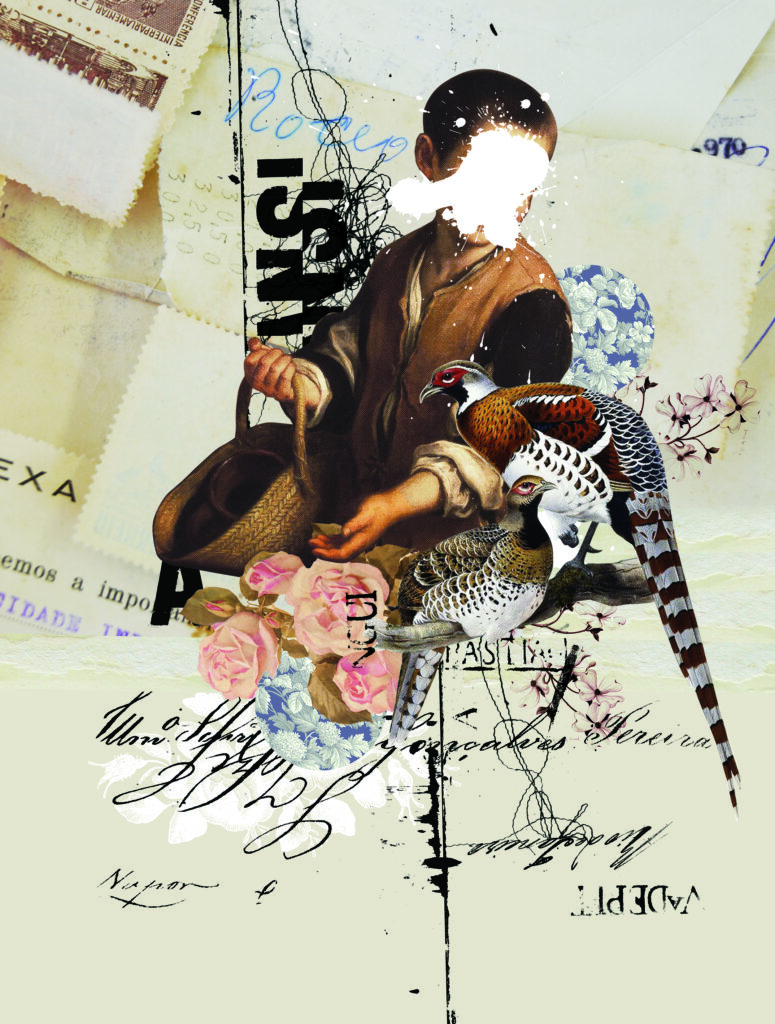
I like to use any type of printed material that no longer has a use; I look for all things that have been discarded. I really love to experiment, so in my collage, it is possible to see a great mixture of both analog and digital techniques. I seek to bring experiments with inks, monotypes, stamps, stains, dirt, and graphic noise into my creative processes, in addition to experiments with letterpress and screen printing.
I like the interferences that cause estrangement and visual discomfort. Some fragments I use in certain compositions didn't necessarily come from the prints I scout in shops selling old books and magazines; sometimes they are fragments I photographed or collected from prints pasted in urban spaces that have suffered natural or spontaneous degradation. The streets are full of great ideas, but they require contemplation.
Who are the artistic influences that have impacted your work?
I began studying the art of collage and, primarily, making collage in 1996 while still studying Graphic Design. When I studied the Futurists, I fell in love with the composition experiments they did with the use of movable type. Their motto Les mots en liberté ("Words in freedom") brought me closer to visual poetry, concrete poetry, and process-poem. From there comes the constant use of the letter/word as a fragment in my collages.
During the same period, I encountered the thoughts of Dadaist and Surrealist artists, who led me to perform subversions with images. Finally, I discovered the artist Kurt Schwitters; his thought and his art were perhaps my greatest school of creation and composition. My outlook on the things of the world changed completely after I approached his art.
What is the meaning of art in your life?
For me, art means "knowing how to see," as Paul Klee explains: "Art does not reproduce what we see; rather, it makes us see." Art, and everything associated with it, taught me to see and absorb the things of the world—to review and think about all the things I see—and then, in my creative processes, to be able to associate and displace them from their usual sense, transforming them into new things. The art of collage, specifically, allows me to distort everything I see.
What advice would you offer to artists just starting out?
Take your gaze for a walk. Be a flâneur. Go out gathering texts and images that compose the existence of everything that surrounds you. Experience the things of the world—taste them, feel the flavor of knowing. Be greedy with your gaze. Visit museums and second-hand bookstores, photograph landscapes, observe a trail of ants, travel, watch good movies, and read one poem a day—accompanied by a good wine or good company. Then, sit down and create something that synthesizes everything you saw and absorbed.
Have you participated in any notable exhibitions that you would like to share?
As a collagist, in 2019, I published an article and some of my collages in the Canadian magazine Kolaj Magazine (Issue #24). After this publication, I was invited to participate in numerous exhibitions and collective publications, such as: Strike A Light – Matchbox Open Call 2020, produced by the Edinburgh Collage Collective; the Sharp Hands Collage Latino-Americano online gallery; and I was one of three Brazilians selected for the International Collage Festival Rezh da Kley – “MY OWN GAME” in Russia. I also participated in the exhibition Hábitat, Una Sola Tierra at the Cultural Center of the University of Lima, Peru; was a guest artist for the Collage PeepShow at the De Vishal Gallery in Haarlem, Netherlands; and became a collaborating designer for 46PGs. Magazine in Croatia.