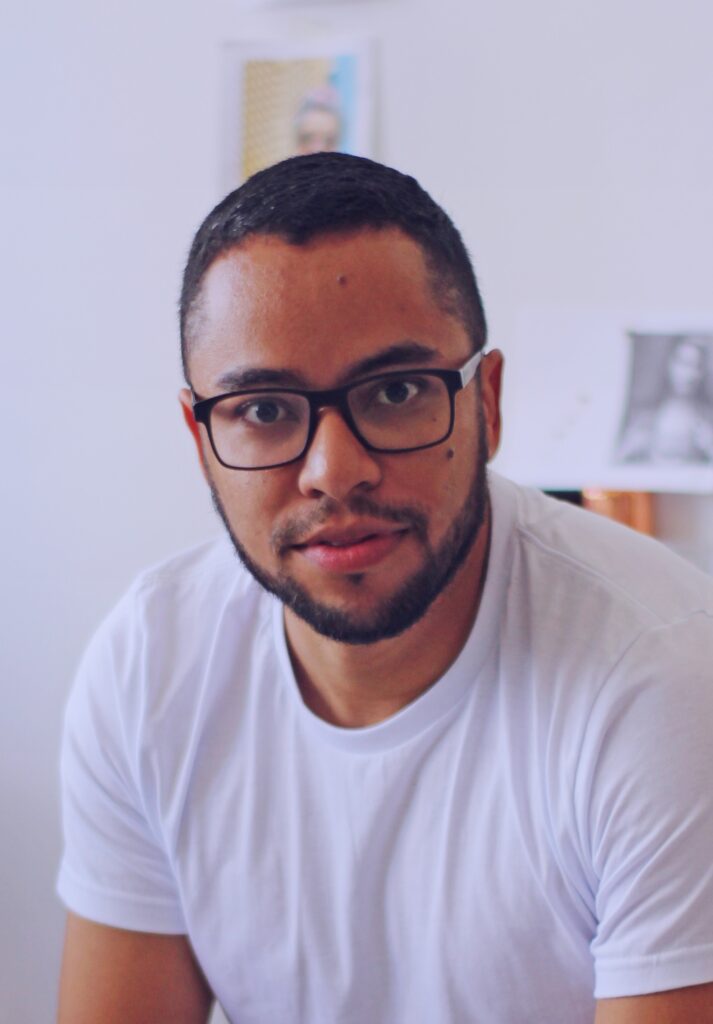
Paulo du’Sanctus is a native of Jundiaí, São Paulo (born 1982). He works within the language of visual arts, focusing primarily on painting across different supports. His research and production concentrate on themes related to raciality as a tribute to his origins.
His interest in the arts was sparked as a child. In 2000, at the age of 18, he began a free painting course in Campo Limpo Paulista. Since then, he has studied with renowned teachers such as Alexandre Reider, Maurício Takiguthi, and Gisele Ulisses, and has exhibited his work in São Paulo, Rio de Janeiro, Portugal, Spain, and Finland. Paulo du’Sanctus holds a degree in Journalism; he utilizes research, investigation, and data as the foundation for developing his series, which are born from an indignation toward historical, social, and cultural issues. His works tell and retell history while recording the present through art.
How did your journey into the art world begin?
Like most artists, I had a predisposition toward the arts since childhood, but it felt distant—an unknown and practically impossible path. I used to watch Professor Philip Hallawell’s drawing and painting classes on TV Cultura and tried to practice with whatever materials I had available. At 18, I started a painting course near my house and, from then on, I sought to learn and improve techniques and possibilities. I studied with great names in art and developed other careers in corporations, but I found my greatest strength in art. I could no longer neglect this calling; today, I dedicate myself 100% to artistic practice.
What themes do you prefer to explore in your works?
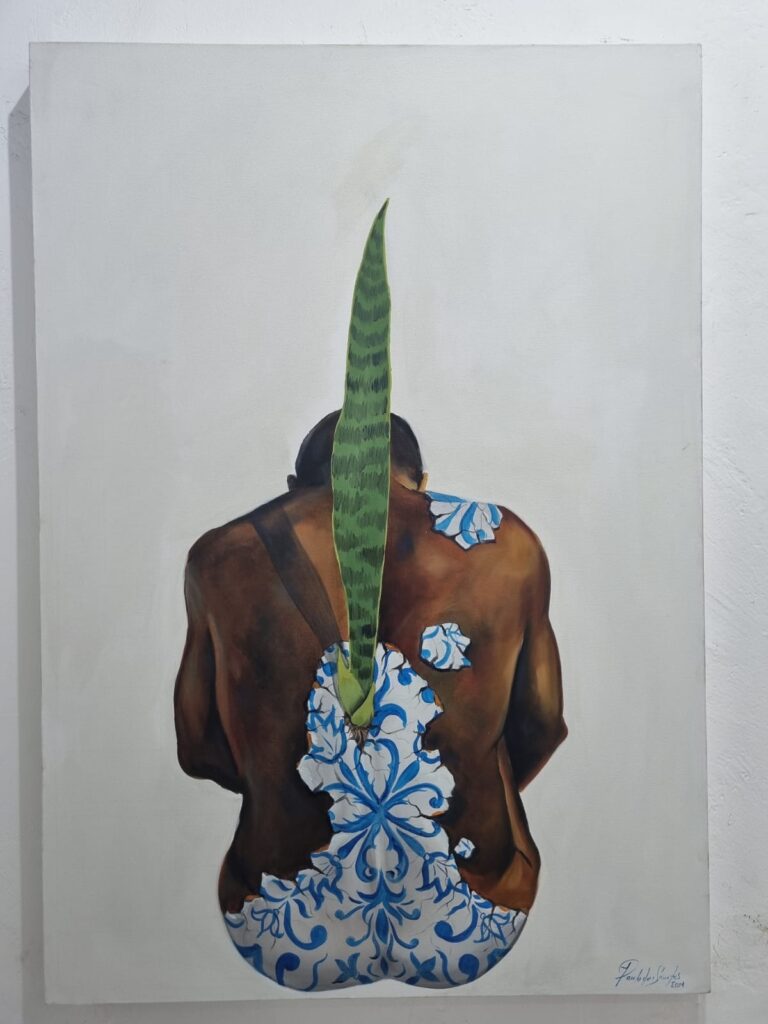
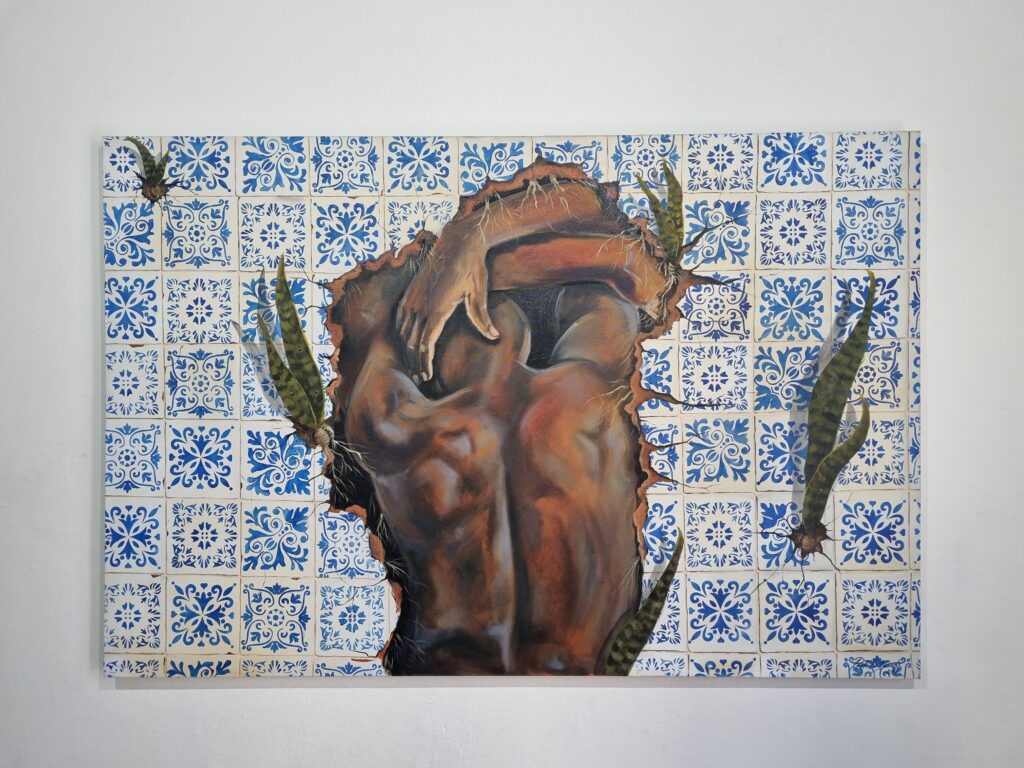
Raciality, the construction of Brazil, historical "fake news," and colonization are my preferred themes.
What is your creative process like?
My creative process is methodological; I work in series, developing a theme over a specific period. Usually, a story, a fact, or an event that leaves me with a sense of indignation and restlessness serves as the starting point for research. I use the journalistic "lead" to develop this investigation. First, I think about what I want to say—this stage takes the most time because it involves building the central concept. Then I think about the why, for whom, its relevance, the when, and finally, the how. After that, I develop the actual works, choosing materials that reinforce the concept and the technique. I make many sketches in notebooks, let creativity flow, select the best ones, and get to work.
What materials and techniques do you use most often?
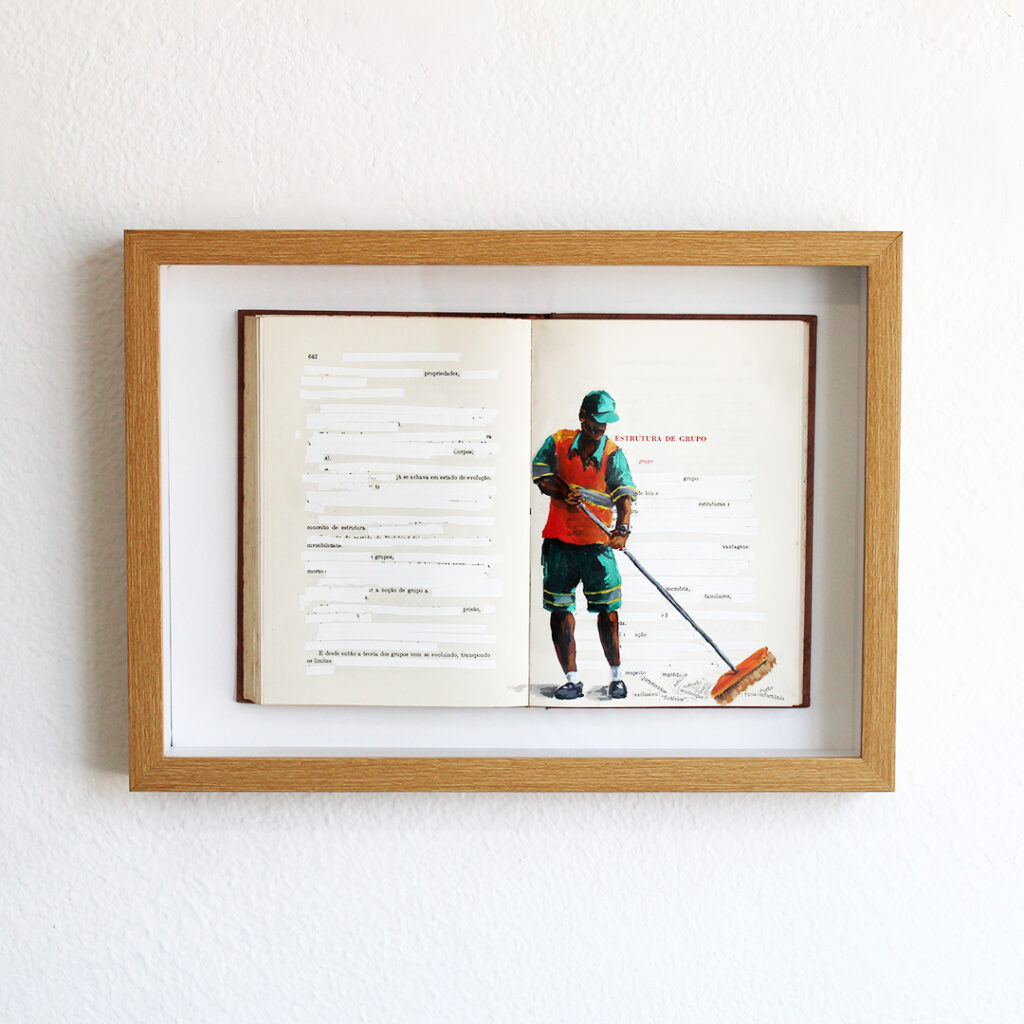
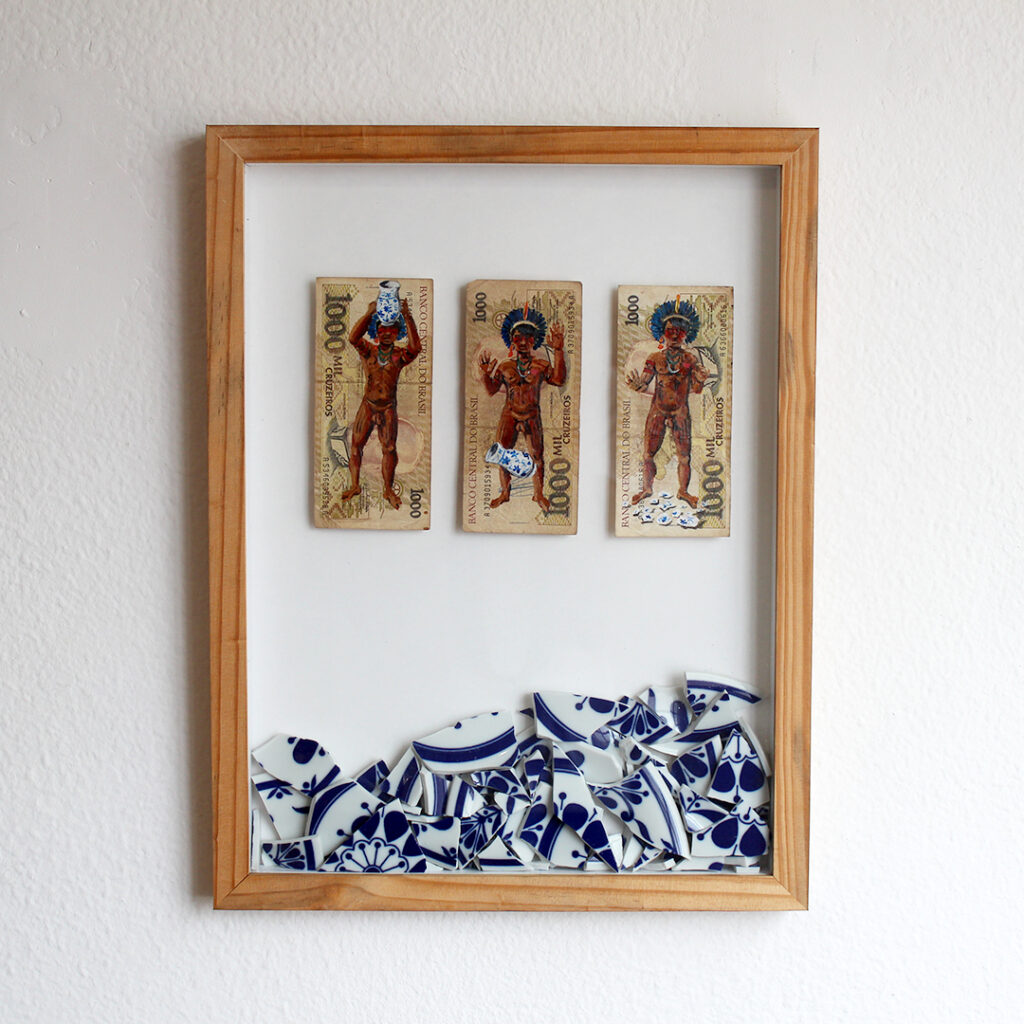
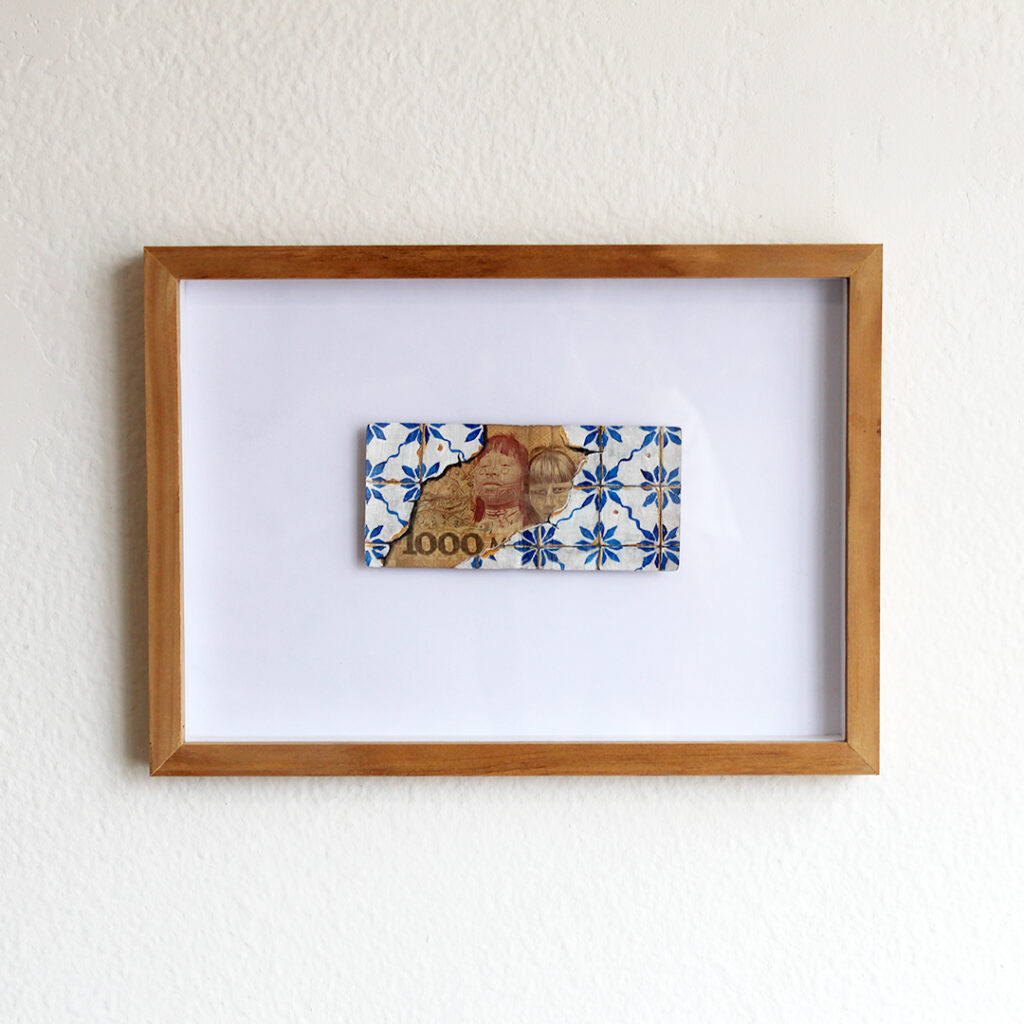
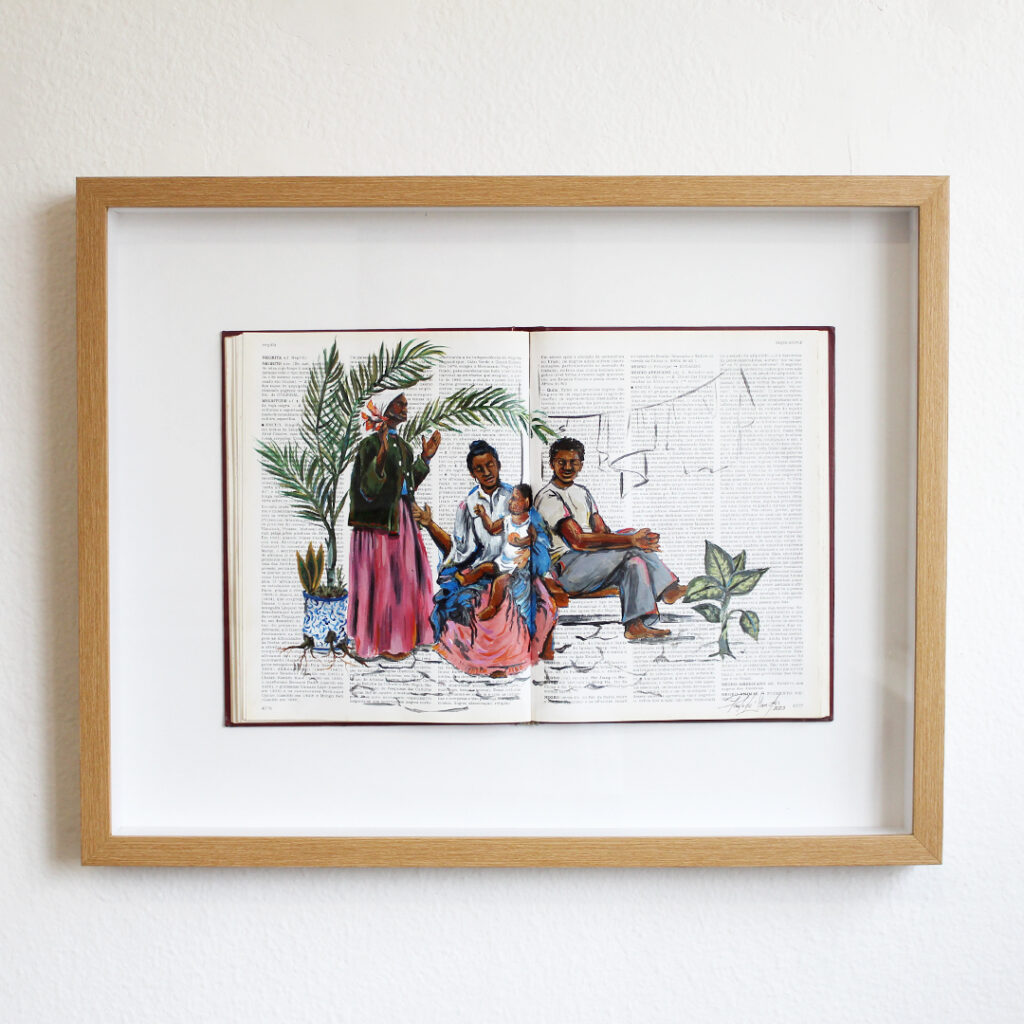
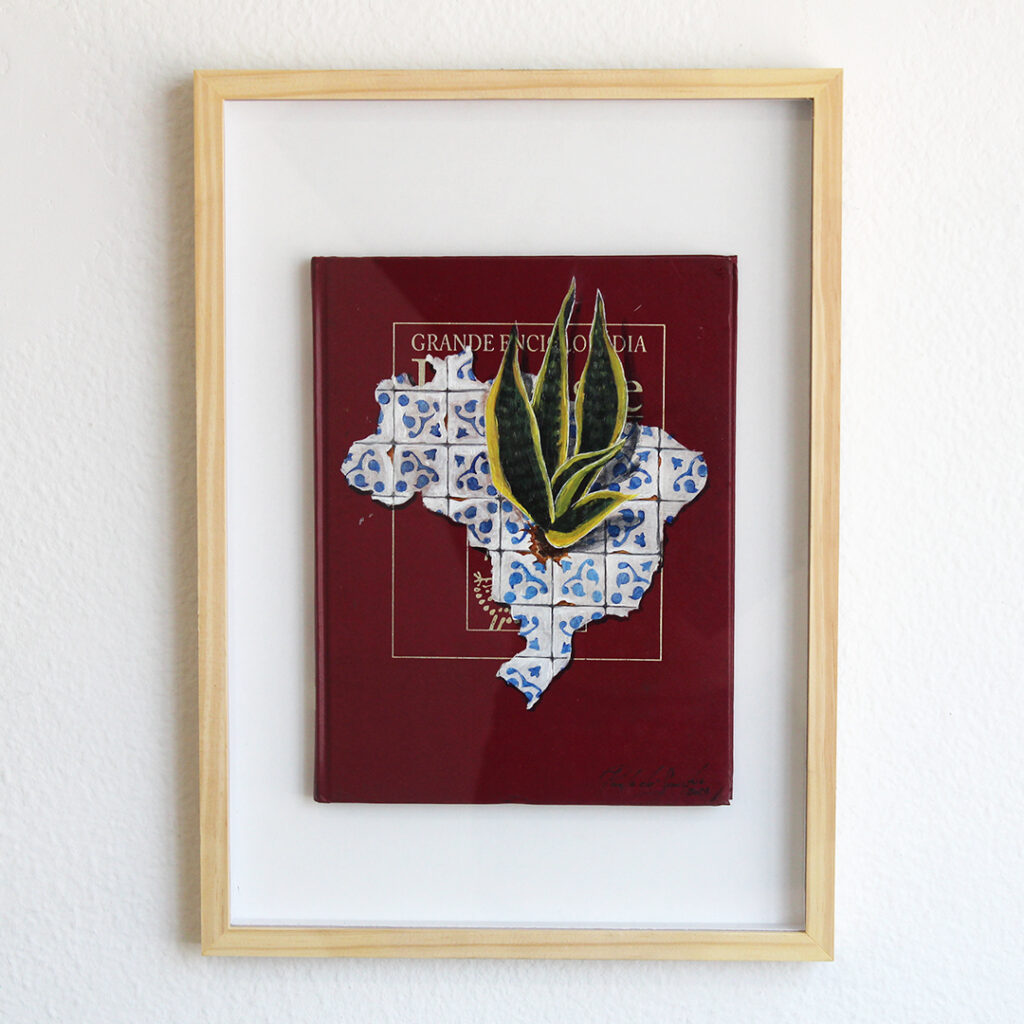
I like to use materials that help tell the story I am working on. For example, in my series Ressignificar (Resignify), I used actual currency as the support for the paintings. It was a form of reparation; looking at old Brazilian banknotes, I noticed the absence of women, Black people, and Indigenous people, so I did what official history failed to do. In my current series, I use books and encyclopedias as supports because they were the primary records of knowledge; by using them, I am simultaneously repairing that history and questioning it.
What is the meaning of art in your life?
For me, art is a calling and a vocation. Of course, this vocation doesn't exclude the need to "work hard" to develop it. Sometimes it looks easy, as if a light just turns on in your head and things happen, but it’s not quite like that—we need to study a lot.

What is the role of the artist in today's society?
The artist has the role of experiencing pains and joys, filtering them, transforming them, and presenting them to the public so they can recognize themselves in the work and in others, realizing they are not alone. We artists have a duty to teach—not through common teaching methods, but through the emotion that takes hold of us—so that others can also experience liberation through resignification. Ultimately, I think an artist is part philosopher, part therapist, part teacher, but above all, a communicator.