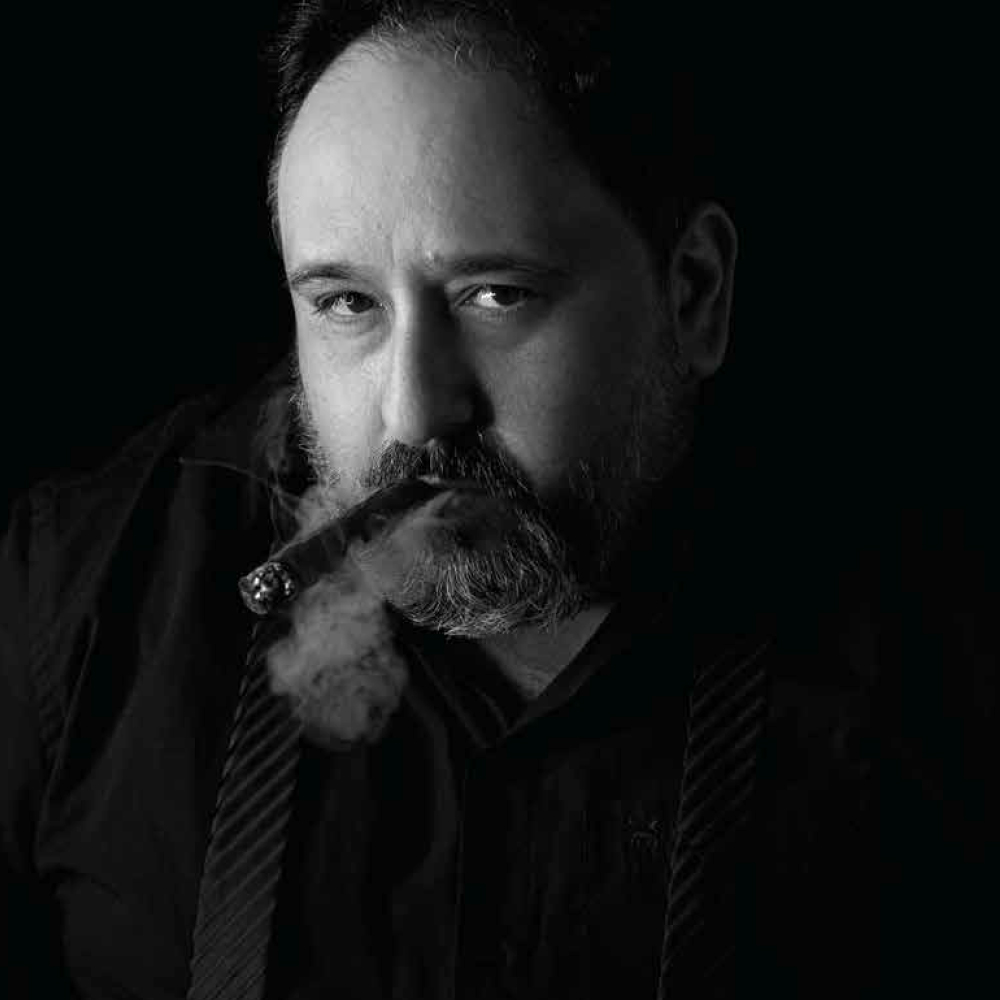
Roger Monteiro was born in Porto Alegre in the late 70s. He holds a degree in Letters and postgraduate degrees in Philosophy, Visual Arts, and the History of Art and Visual Culture. After a successful career as an art director and graphic designer, he has dedicated himself to non-commercial arts since 2013, exploring digital media in his artistic creation. His work addresses contemporary and urban themes, with influences from pop culture, rock 'n' roll, punk aesthetics, and industrial image production processes. His works have been exhibited in Brazil and in countries such as England, France, Italy, and Portugal. Recently, he began studying generative artificial intelligence and its interaction with art, experimenting and writing on the subject. He believes in doubt as a creative engine. He was a fencer for almost 25 years, is married to the beautiful Olívia, and rides an old motorcycle named Lady Luck.

How did your journey into the art world begin?
I was born in Porto Alegre in the late 70s, and my journey into the arts began almost clandestinely: scribbles in school notebooks and an unbridled curiosity for everything visual. Before taking on art as a career, I followed a solid path as a graphic designer and art director. I spent 25 years translating others' ideas into images—a beautiful exercise in creativity with a deadline. In 2013, I decided to flip the switch and dedicate myself to non-commercial arts. It wasn't a leap in the dark, but it felt like one. Leaving the comfort zone of design for the freedom (and uncertainties) of artistic creation required more than talent: it required courage and, I confess, a good dose of improvisation. I began to explore digital media, fascinated by the mixture of the artisanal and the technological, and found in pop culture, rock 'n' roll, and punk aesthetics the references that resonate with me today. My work orbits urban and contemporary themes, reflecting the organized chaos of the world around me. If before I drew certainties, now I prefer doubts: they move me, challenge me, and remind me that the moment I am 100% sure of something, it’s probably time to deconstruct and start again.
How would you describe your artistic style?
A punk playing polo on horseback.
What themes do you prefer to explore in your works?
My theme is the urban. My images are always anchored in the chaos of modern life, in the way the city shapes us, gives us meaning, and reveals us. It is not a critique, but rather a graphic comment on how the environment we live in defines us as individuals and as groups, and how, sometimes, these two aspects can be completely contradictory. I like to think that the inherent message of my work, if there is one, is always a question—the seed of doubt that leads the observer to contextualize themselves within this concrete jungle that, while dehumanizing us, is also a wonderful point of convergence. Sometimes, all this pushes us to the limit, but it is at that limit where self-knowledge hides. All art is a mirror for those who contemplate it. Mine is no different.
What is your creative process like?
I really don’t have a creative process. And I strive to keep it that way. In my work as a graphic designer, I have a process; as an artist, I don’t. Processes are dangerous things that quickly teach you to cheat, to take shortcuts, and it is in those shortcuts that your voice gets lost, where things gradually become pasteurized by the selfish goal of pleasing everyone, of gaining one more like, one more share, one more pat on the back. I like to put myself in uncomfortable situations as an artist. I like the gray areas. I often say that whenever I am 100% sure of something, I’m not doing my job right. Processes end up bringing those certainties. They lead you to a safe place; they are like the trail of breadcrumbs from Hansel and Gretel: when you know where to return to, there is no risk, only the illusion of risk. And without risk, art is born dead.
What are your sources of inspiration?
My inspiration always comes from a question: "What if?" This way of starting is probably a reflection of my work as a graphic designer. Designers answer a question, solve a problem, and are motivated by a provocation. This approach is very present when I conceive a new series. My art is quite self-referential; it deals with themes connected to the universe of Art itself, seeking to fill gaps that I perceive others before me ignored or simply chose not to address. Perhaps we could say it is a meta-art, Art talking about itself, dealing with its own issues in an almost narcissistic way. My work is not transcendent; it serves nothing beyond itself. On the rare occasions it addresses a sensitive theme, it always happens in an aesthetic way. This examination of Art is my inspiration. And it is inexhaustible.
Who are the artistic influences that have impacted your work?
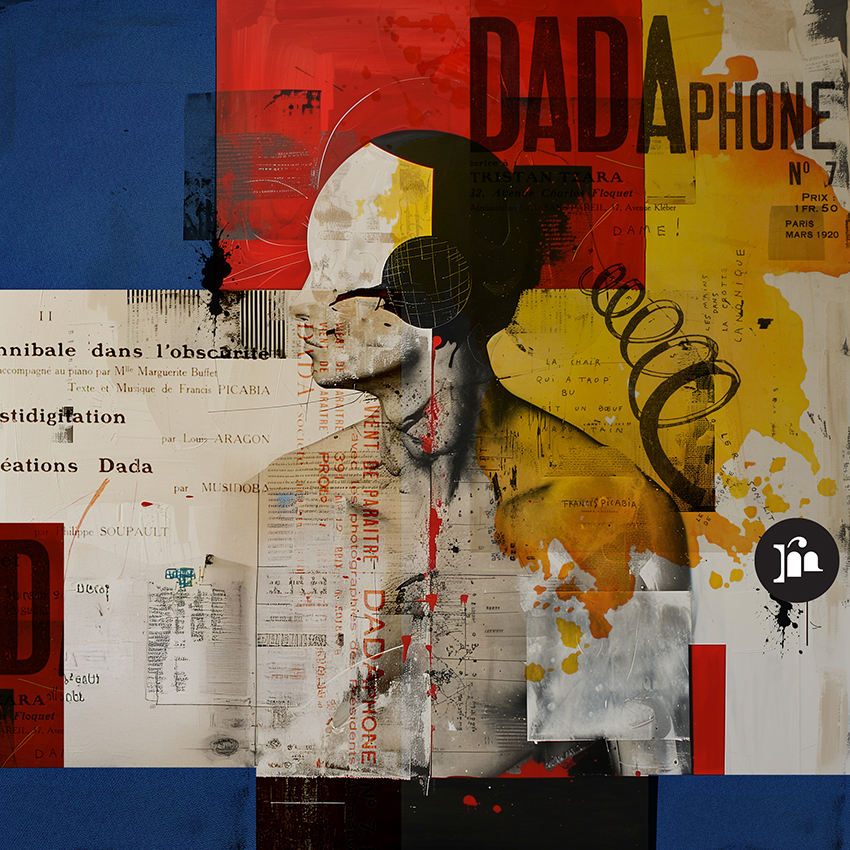
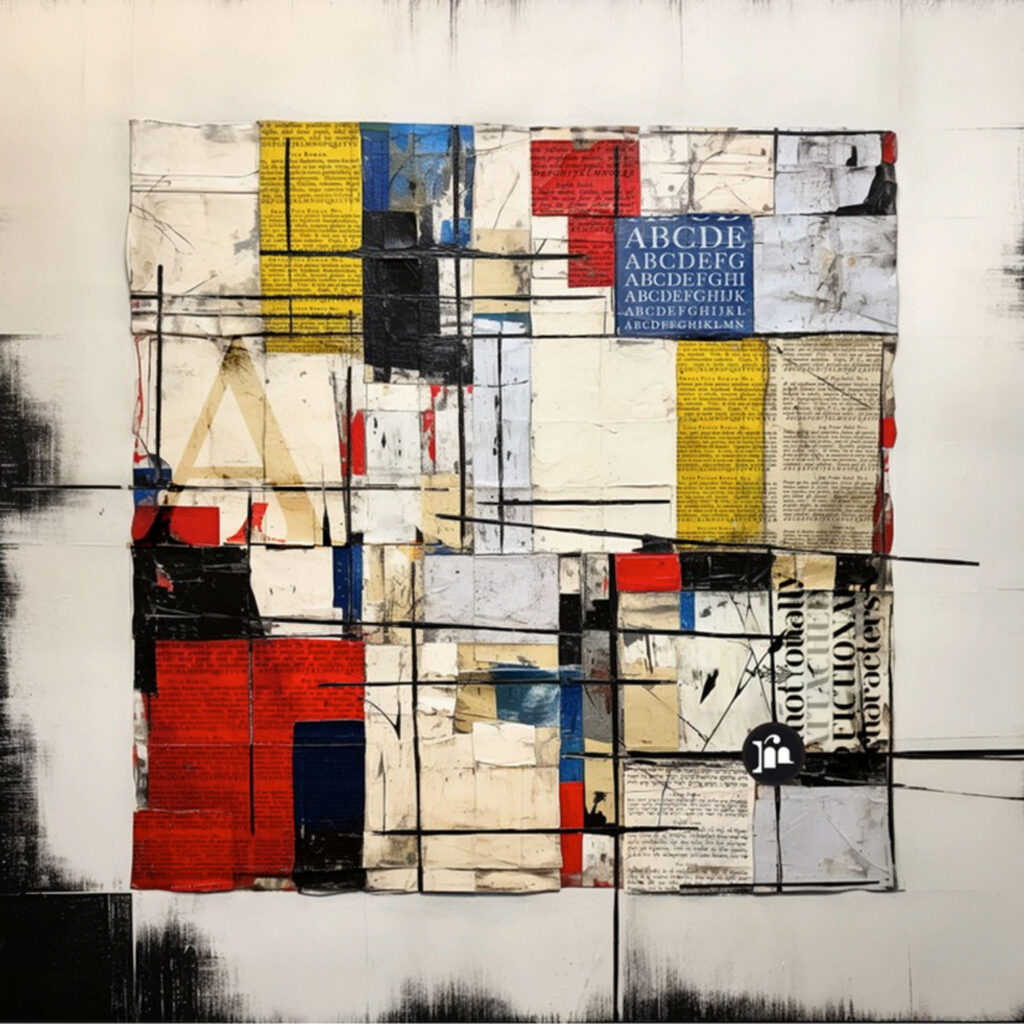
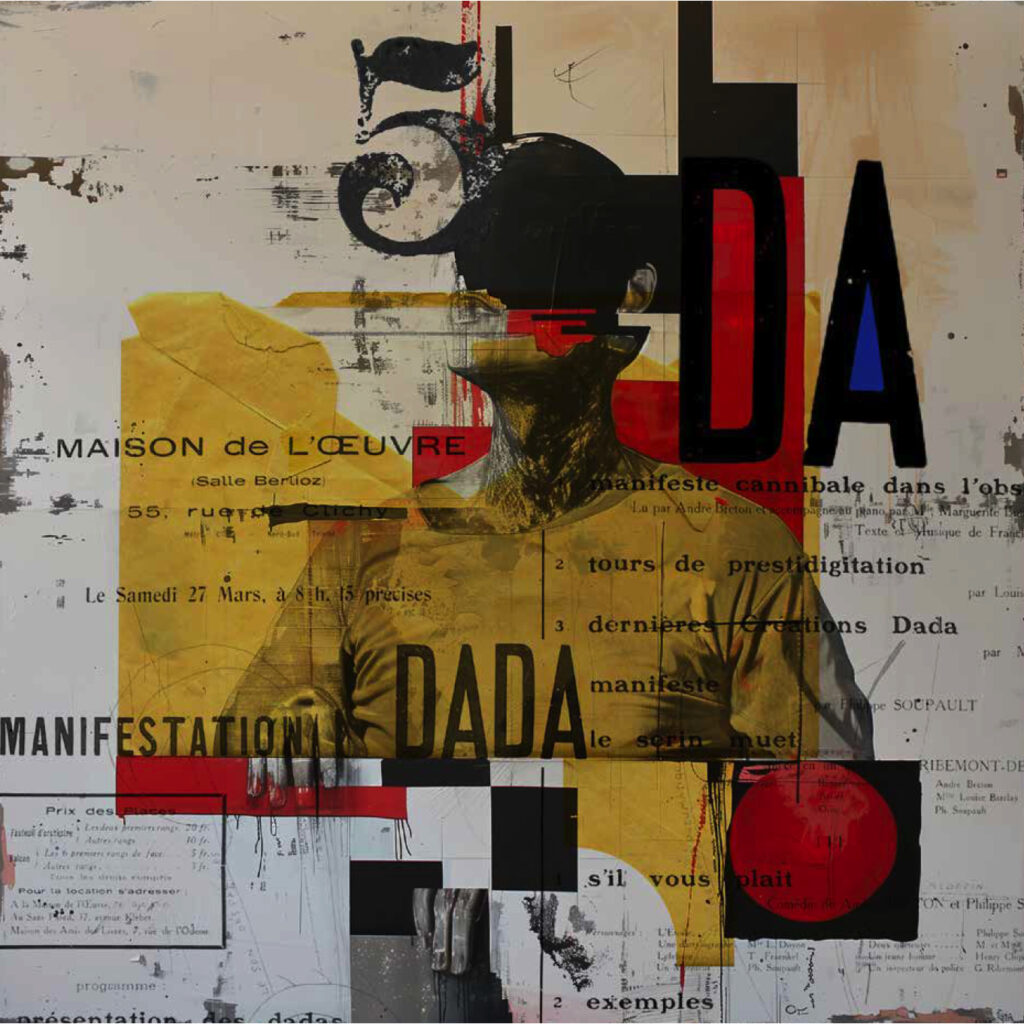
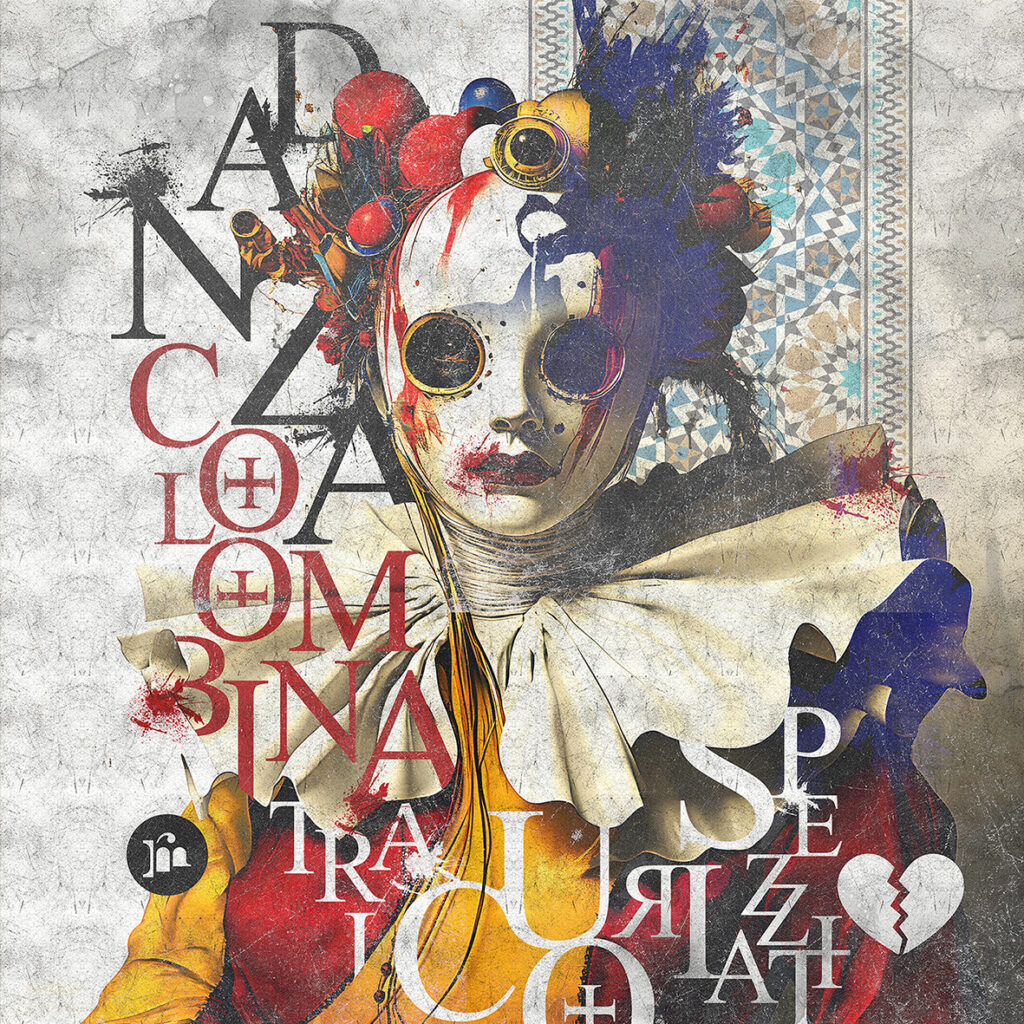
Although influences come and go, being a living part of an artistic journey and our own lives, my main artistic roots are, above all, in the 1990s, when I began to discover computer graphics and decided to use it to create non-applied art. Prominent graphic designers of the time, such as Neville Brody, Vaughan Oliver, and especially David Carson, formed the basis of my aesthetic education. After that, the De Stijl movement, by Mondrian, particularly for the use of color, and, going further back in art history, the European avant-gardes of the roaring 20s. I like to define myself as a poet of chaos, and all these elements merged in a melting pot to consolidate what I imagine to be my voice as an artist.
What advice would you offer to artists just starting out?
Stop. Now.
What is the role of the artist in today's society?
The role of the artist today is the same as our great-great-grandfather monkey who scratched the walls of his cave with a piece of charcoal: to make art. What society does with it says more about society itself than about the art. And it will always be that way.