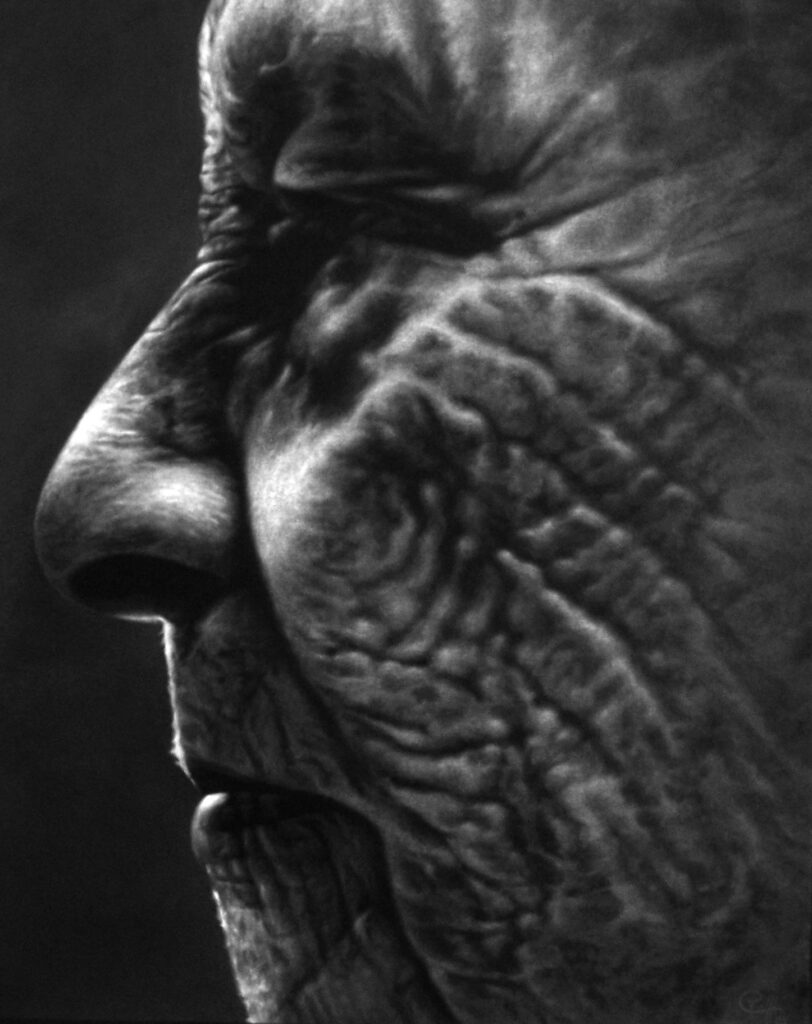
Ricardo Coelho (1974) is an artist whose work has been showcased in prestigious venues such as Casa das Rosas, Centro Cultural São Paulo, Funarte-SP, Fundação Bienal, and Centro Cultural Banco do Brasil (SP and RJ). He has also participated in the 2nd Sérgio Mota Cultural Award and Vídeo Brasil. He holds a Post-doctorate in Visual Arts from UNICAMP (2021) and a Doctorate in Arts from UNESP (2015), part of which was conducted at the Universitat de Barcelona (2014). He also works as an independent curator and exhibition designer. Since 2009, he has been part of the Department of Architecture, Urbanism, and Applied Arts at the Federal University of São João del-Rei. He is the author of the book “O que há de humano em nós” (2016) and several essays, including “Estrangeiros” (Visualidades Magazine, 2023) and “Lições de Anatomia: do corpo eterno à eternidade do corpo” (Ars Magazine – USP, 2020).
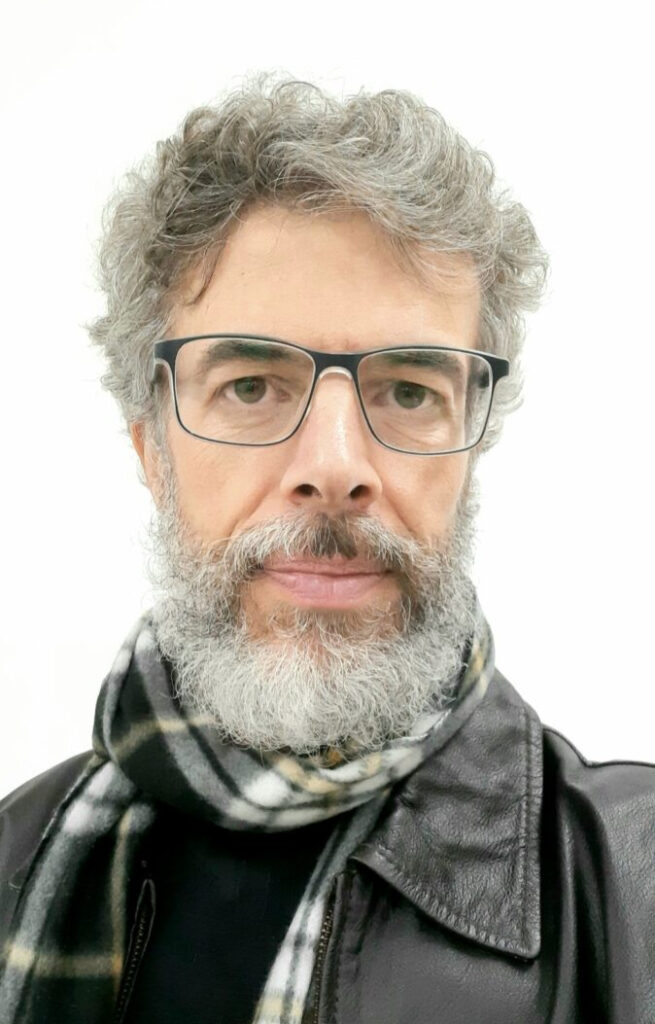
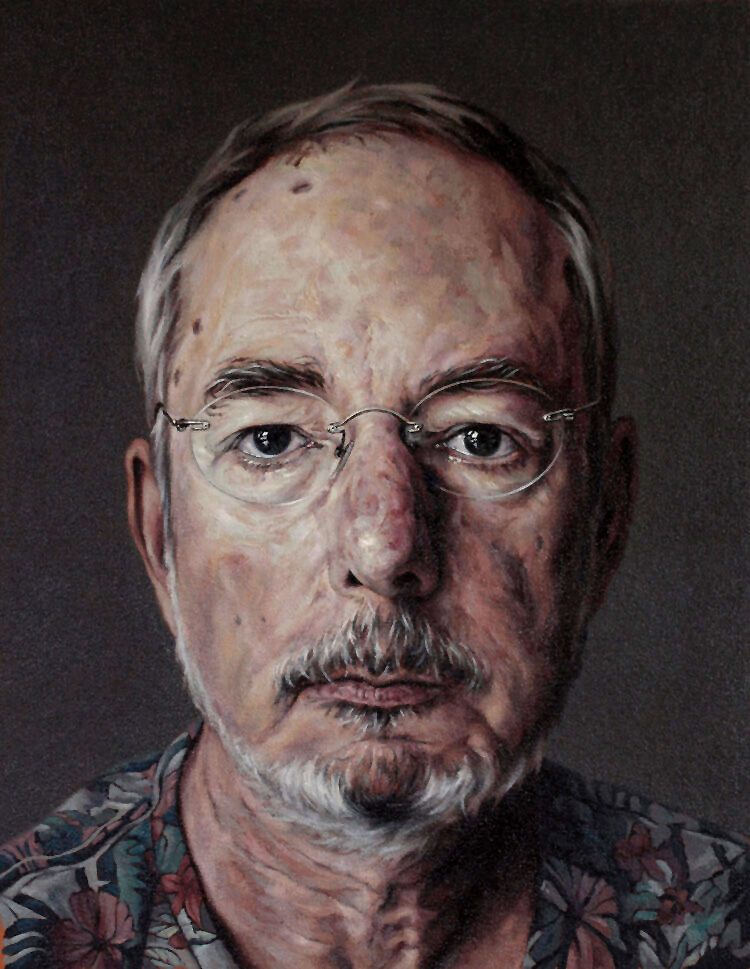
How did your journey into the art world begin?
I believe my journey began as it does for most artists—in childhood, within a family that provided me with expressive materials like pencils, crayons, and modeling clay. Much later, I understood that I was the heir to a very old manual tradition; my paternal grandfather’s family was essentially a professional workshop of great Portuguese cabinetmakers and carpenters.
I have taught arts for many years, including 15 years at the Federal University of São João Del-Rei. I am the son of an industrial maintenance electrician and a woman who used to be called a housewife—extraordinary parents who gave me much more than was necessary. I was born and raised free in the neighborhoods of the East Periphery of São Paulo. I was a very restless boy and lived with social inequality and difference from an early age, though my awareness of this exclusionary reality matured over time. My first contact with a professional artist, Professor Matheus José dos Santos, was at age 11 through a social project in Ermelino Matarazzo. Years later, I would become a teacher in a neighboring district, teaching art to children from the "Caixa d'água" favela daily for four and a half years.
What are your sources of inspiration?
My source of inspiration—or rather, my source of RESTLESSNESS, as I don't quite believe in the romantic term "inspiration"—has always been my own life. It is the things I saw during childhood and adulthood, the books I read, and the more than 2,000 exhibitions I visited while living and studying in São Paulo.
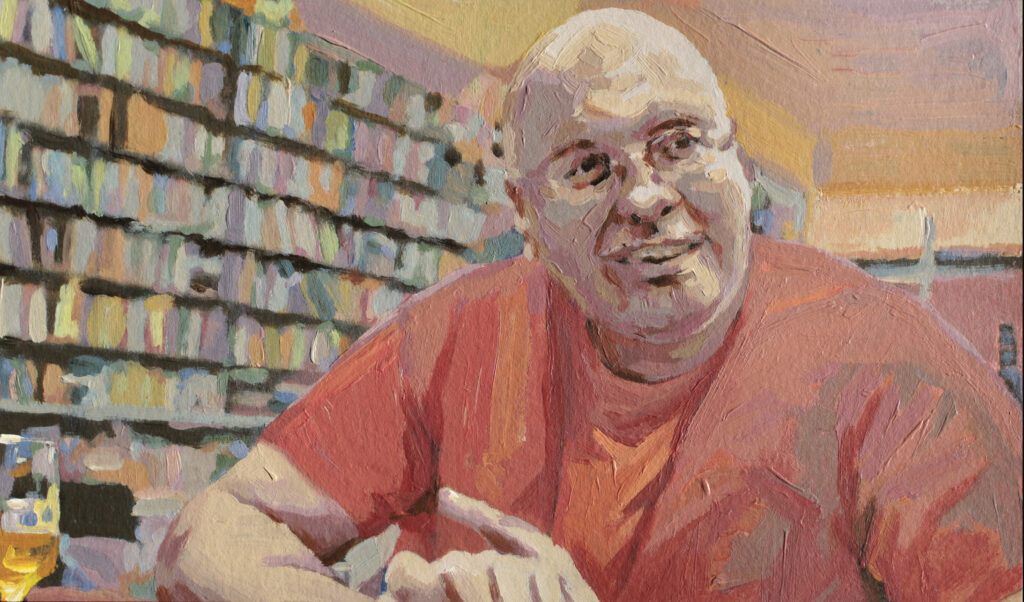
For example, in 2014, while in Barcelona for my doctorate, I experienced a situation with the local police where I was isolated and treated with hostility simply because I did not dominate the local language. For the first time, I felt racism on my own skin, used as an identity marker. I understood what it was to be a "foreigner," imagining the condition of thousands of refugees worldwide whose only home is the fragility of their own bodies. From this experience came the visual essay "Estrangeiros" (2016), which would later be violently censored by public officials in Uberaba during my solo exhibition in 2023.
Who are the artistic influences that have impacted your work?
As an Arts professor, I deal with a vast range of content, making it difficult to list just a few. However, some highlights include:
Drawing: Picasso and Egon Schiele (Schiele in particular).
Painting: Velázquez (specifically Las Meninas), Rembrandt, Vermeer, Lucian Freud, and Gottfried Helnwein.
Printmaking: Käthe Kollwitz (the artist who touched me most in this medium), Goya, and Oswaldo Goeldi.
Sculpture: Anonymous Romanesque sculptors, Michelangelo, Rodin, and Gerard Mas.
Installation/Video: Louise Bourgeois, Cildo Meirelles, Bill Viola, and Gary Hill.
What is the meaning of art in your life?
I think of art as a set of singular languages—a complex system of signs with strong communicative power. If, at 50, I continue to make and teach art, it is because I believe in this human need to communicate through symbols. Art is what gives meaning to my actions and thoughts, allowing me to see beyond the surface.
What advice would you offer to artists just starting out?
1. Practice continuously: Constant work in the languages that interest you is fundamental.
2. Seek specialization: Look for technical and conceptual guidance from qualified professionals, whether in universities or free courses.
3. Study History: Be attentive to contemporary production, preferably in person by visiting museums, galleries, and independent spaces.
4. Resilience: Do not let yourself be discouraged by negatives or criticism. Use them as a tool for growth.
How do you stay up to date on trends?
I do not think specifically about trends for a few very simple reasons:
a) the art market has its own rules, and these rules do not always take into account the aesthetic quality of the work;
b) the professional Brazilian art market—galleries, for example—is restricted to a small portion of the social elite, which, in general, excludes the vast majority of artists, some of whom are excellent;
c) according to Anne Cauquelin, either you are part of this information network or you are out; there are no alternatives, or at least, there were no alternatives...
Since the creation of so-called social media, particularly starting with Instagram, we have seen something unprecedented in the history of art: today, artists who find identification with a specific audience manage to live off their work without having to condition themselves to the rules of the aforementioned market. For example, I follow an excellent painter and draftsman who is also a teacher and who sells excellent quality work at very modest prices. I am talking about Nicolas Uribe. He has exceptional talent, was a standout student in the United States—the MECCA of artists—and could be in galleries all over the world, but it seems he chose a path of total freedom and independence.
I myself, who never had social media, from the moment I joined Instagram, managed to sell works that I never imagined commercializing. Of course, I don’t make professional investments in it, but it is an alternative.
What is the role of the artist in today's society?
I believe it is the same as always: to raise personal questions that touch others or to question established systems of rules, using all available means—from charcoal to Artificial Intelligence. The artist can point to something forgotten, the beauty of the everyday, or the presence of violence and abandonment. Art takes us out of the "commonplace" and the conditioning imposed by the system of production and consumption.
Have you participated in any notable exhibitions that you would like to share?
I have exhibited in many important places, sometimes alongside artists I admired and studied. In 2002, in the show "México Imaginário" at Casa das Rosas, I found myself exhibiting alongside names like Antônio Henrique Amaral and Siron Franco.
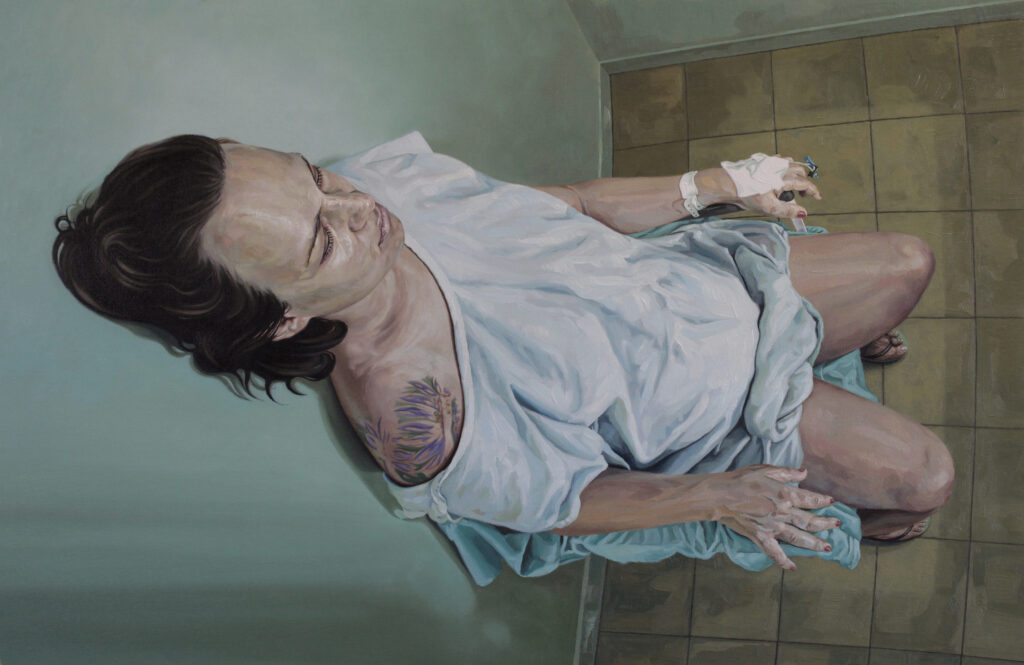
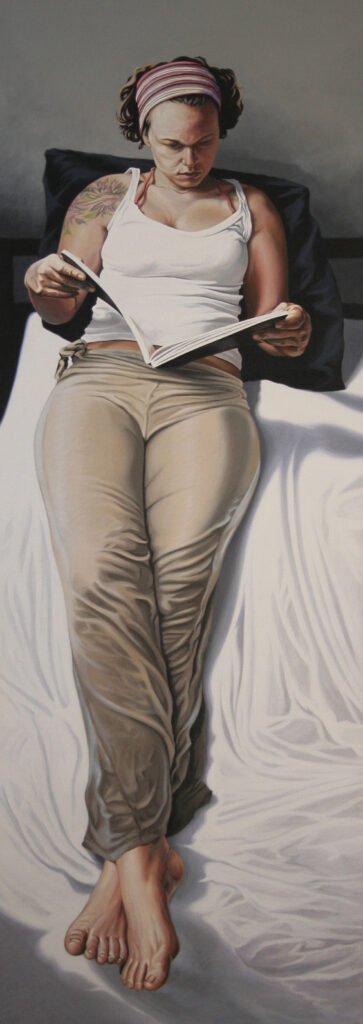
However, the most "notable" exhibition—unfortunately for the wrong reasons—was my recent solo show, "Meu corpo minha morada," in Uberaba. Two of my works were censored and removed by local authorities before the opening. It was devastating to see my work, which featured my own family, falsely associated with pedophilia and pornography when, by all indicative standards, it was classified as Artistic Work / Non-Erotic Nudity / For All Ages.