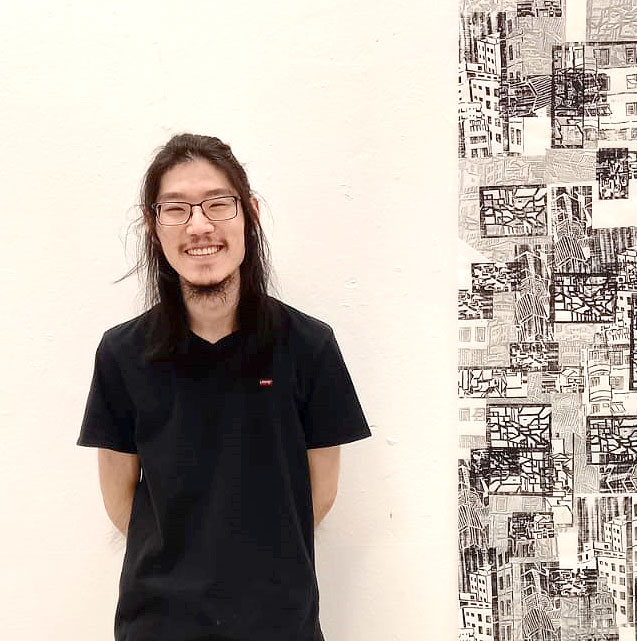
Lucas Sakai is a visual artist born in São Paulo, where he lives to this day. His most vivid lifelong memories are related to the portrayal of his surroundings. He explores the power of graphic language as a foundation for his creative process, linking it with other media such as drawing, painting, and sculpture. Furthermore, he seeks to capture a fragment of the human experience within the urban reality, appropriating picturesque and mundane scenarios to dialogue with the memory of the capital and the details present in daily life.
A graduate in Visual Arts from the Centro Universitário Belas Artes de SP (2023), he learned graphic languages under the guidance of professors Francisco Maringelli, Helena Freddi, and Paulo C. Penna, later continuing his production at the open printmaking studio of Sesc Pompeia.
What themes do you prefer to explore in your works?
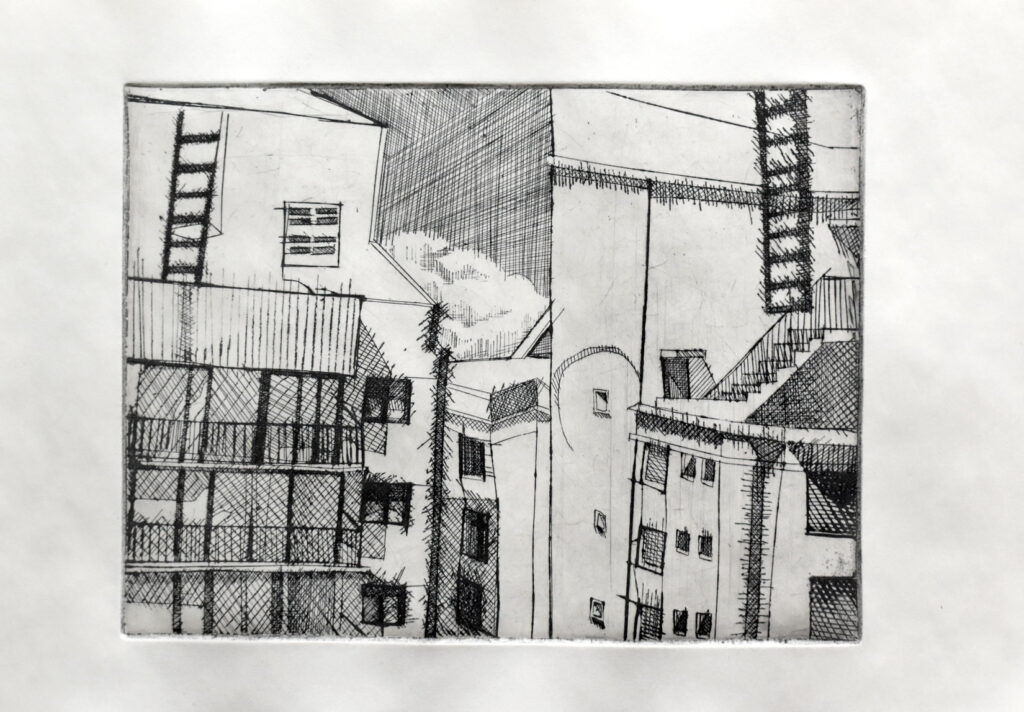
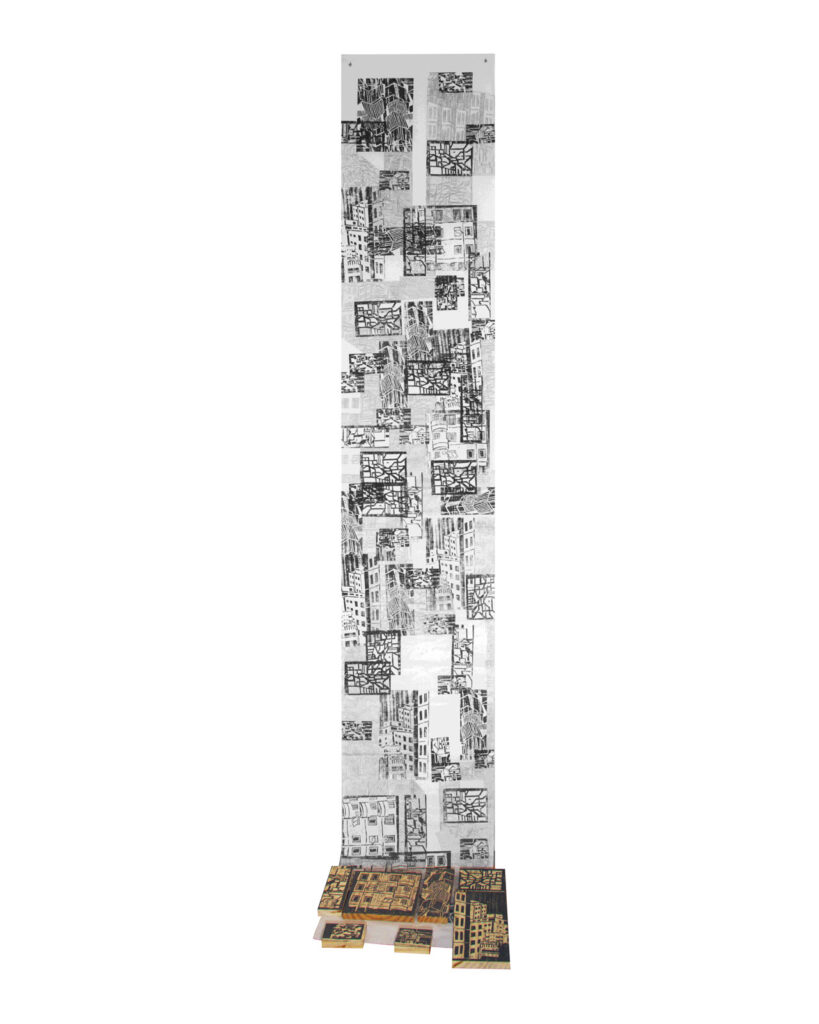
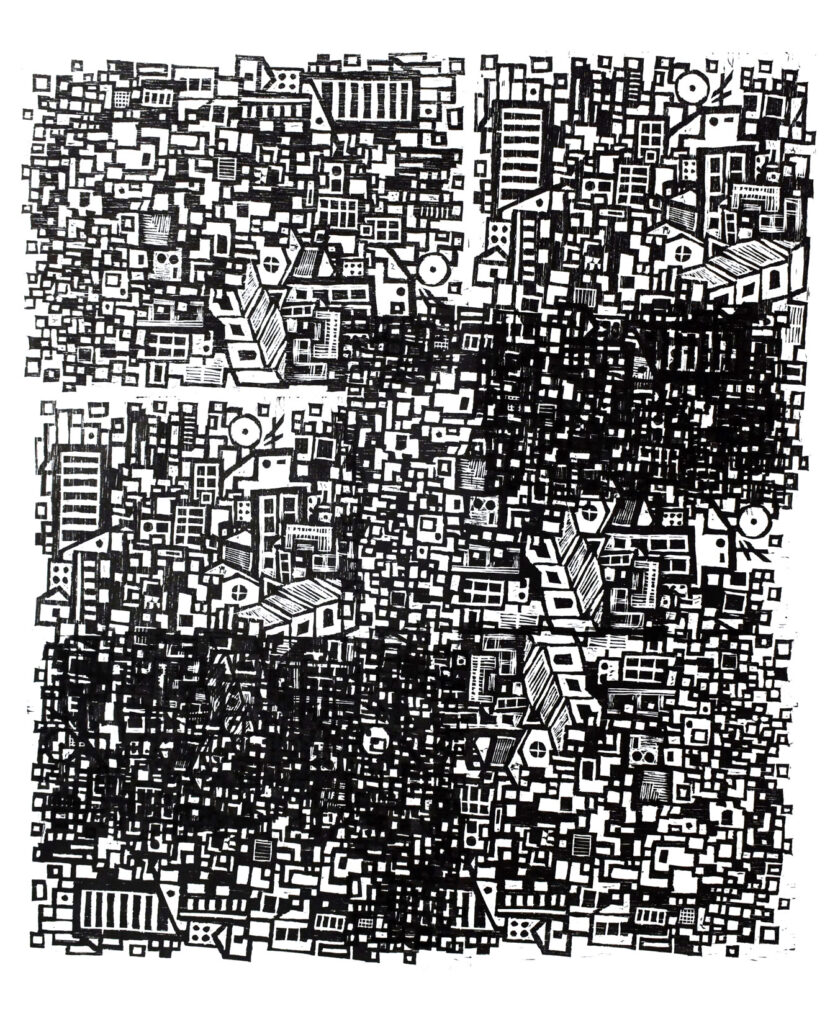
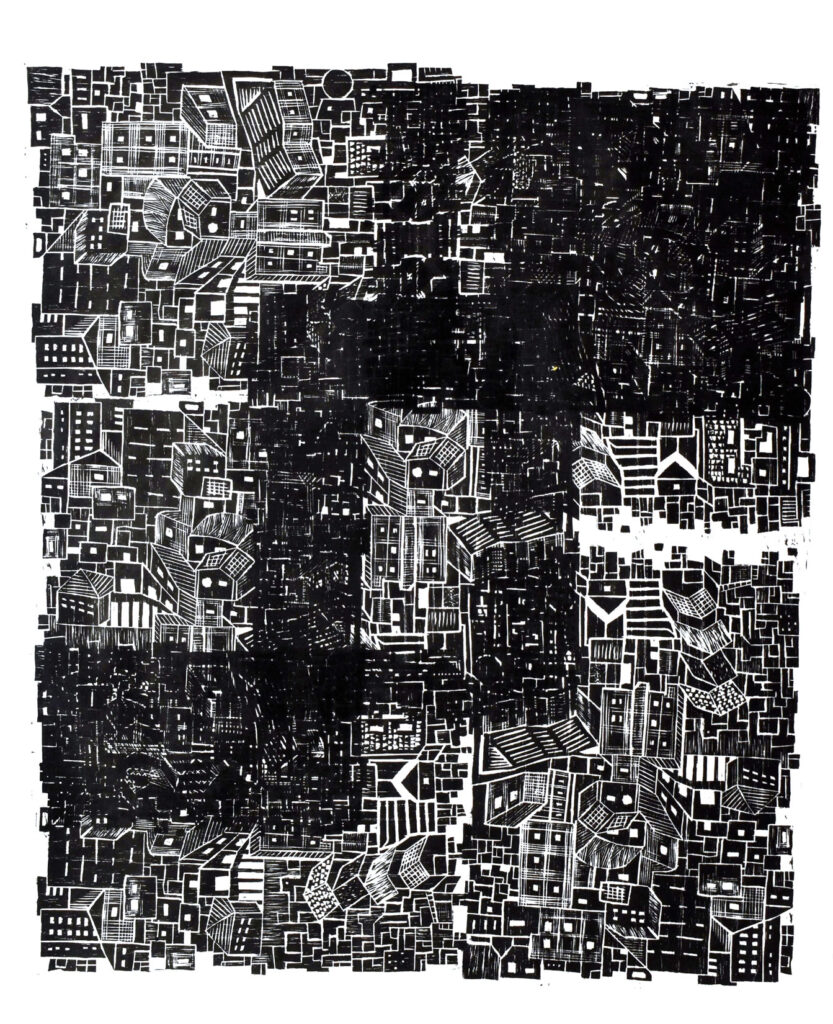
Thematically, the image of the city has always been my preferred subject for artistic creation. More specifically, I am inspired by the city of São Paulo as seen from a window—the architecture, buildings, and houses, whether commercial or residential. They are arranged on the support, overlapping and colliding, carrying history, feeling, and the minute details of restless, dispersed lives condensed into small living areas. This ensemble brings a sense of belonging and evokes the memory of those who inhabit it. It also demonstrates an intrinsic hybrid culture in Brazil, abundant in the city and manifested daily through constructions, streets, and passersby.
What is your creative process like?
My creative process involves graphic experimentation research starting from what I call "Title-theses"—proposals that name the works based on a simple word. This word is used to explore concepts and materialities, while also aiding the exercise of intuition in printmaking, always seeking questions beyond mere observation and representation of the city. I also aim to create an inventory of compositions and modular matrices that can externalize the experience of being inserted into the context of the São Paulo metropolis. Through repetition, I reaffirm the engraved image in a process of personal and reflective deepening of the multiplicative capacity of printmaking.
What are your sources of inspiration?
In addition to my own daily experiences and observations, my greatest inspirations come from literature—specifically science fiction works like Ray Bradbury's Fahrenheit 451 and George Orwell's 1984. Although they are categorized as fiction, they bring to light social, political, and cultural reflections on our reality. For me, existentialism and curiosity are extrapolated beyond imagined dystopias and utopias, contaminating my conceptual thought even if indirectly.
Other notable inspirations are two poems: Mude (Change) by Edson Marques, a reminder to detach oneself, even briefly, from daily constraints and routine automatisms; and Tabacaria (The Tobacco Shop) by Álvaro de Campos (one of Fernando Pessoa's heteronyms), which portrays the daily life of a modern, fast-paced, and constantly transforming urban setting. Its poetics are so precise that they easily relate to contemporary inquiries, even nearly a hundred years after it was written.
What materials and techniques do you use most often?
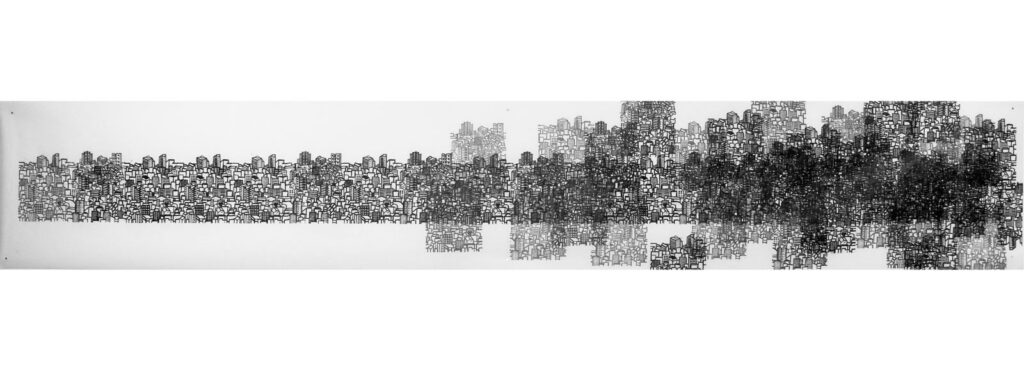
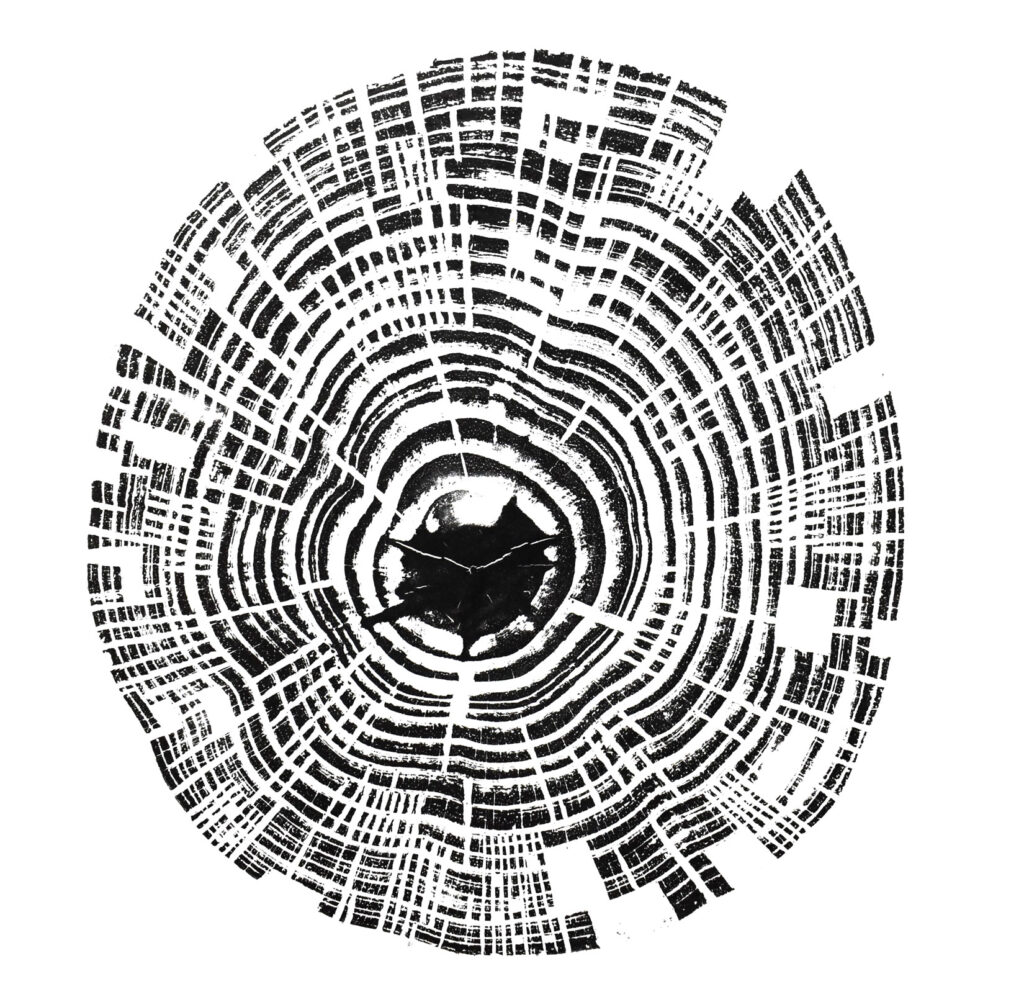
Currently, I have been producing many woodcuts, specifically using pink cedar (cedro rosa). Its hardness allows for precise incisions, and the wood grain appears very subtly in a print, adding small organic details to the carved composition. Additionally, I have a certain inclination toward paper as a support; its delicacy contrasts with urban landscapes, making them appear fleeting, transitory, and malleable. Through paper, I seek to bring an intimacy to the work that can resonate with the subjective experience of the city.
Who are the artistic influences that have impacted your work?
Maria Bonomi consolidated my education in printmaking, placing it within the possibilities of contemporary art. Whether through her works, interviews, documentaries, or the book by Patrícia Pedrosa (Maria Bonomi com a gravura: Do meio como fim ao meio como princípio), I was able to deeply understand the practice of engraving. Navigating the language and its characteristics feels like being face-to-face with her testimonies. She is an inspiration at every stage of production because research goes hand-in-hand with practice: while I carve the matrices, I recognize the materiality presented in Bonomi's discourse; as I assimilate texts and videos about her, I revisit my own work and the experience in its totality.
What is the role of the artist in today's society?
In my subjective view, art is like a living organism that accompanies changes in time and space. In other words, it is a materialization of different realities and thoughts, so intrinsically linked to the present moment that it becomes a transformative agent on its own, in a "mutualistic" relationship with society. The artist, therefore, is a mediator dedicated to selecting, assimilating, dissecting, and translating the set of information presented to them through the processes, techniques, and knowledge of life.