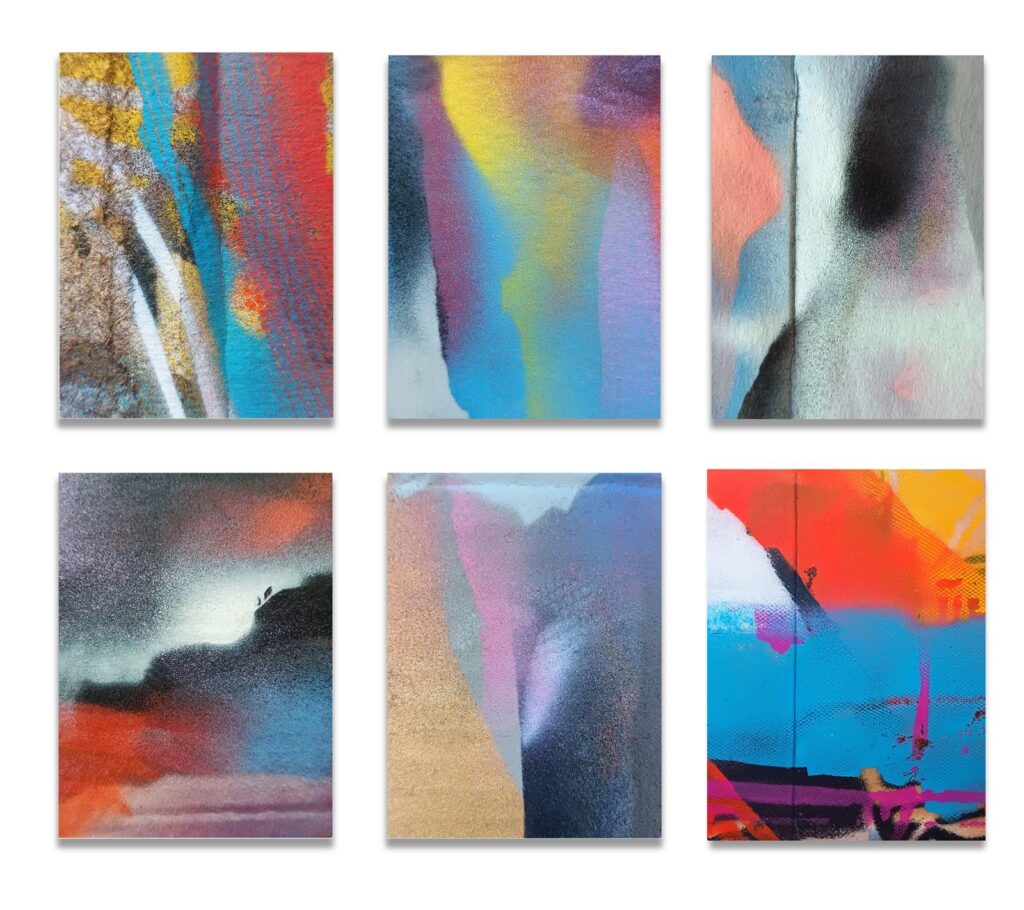
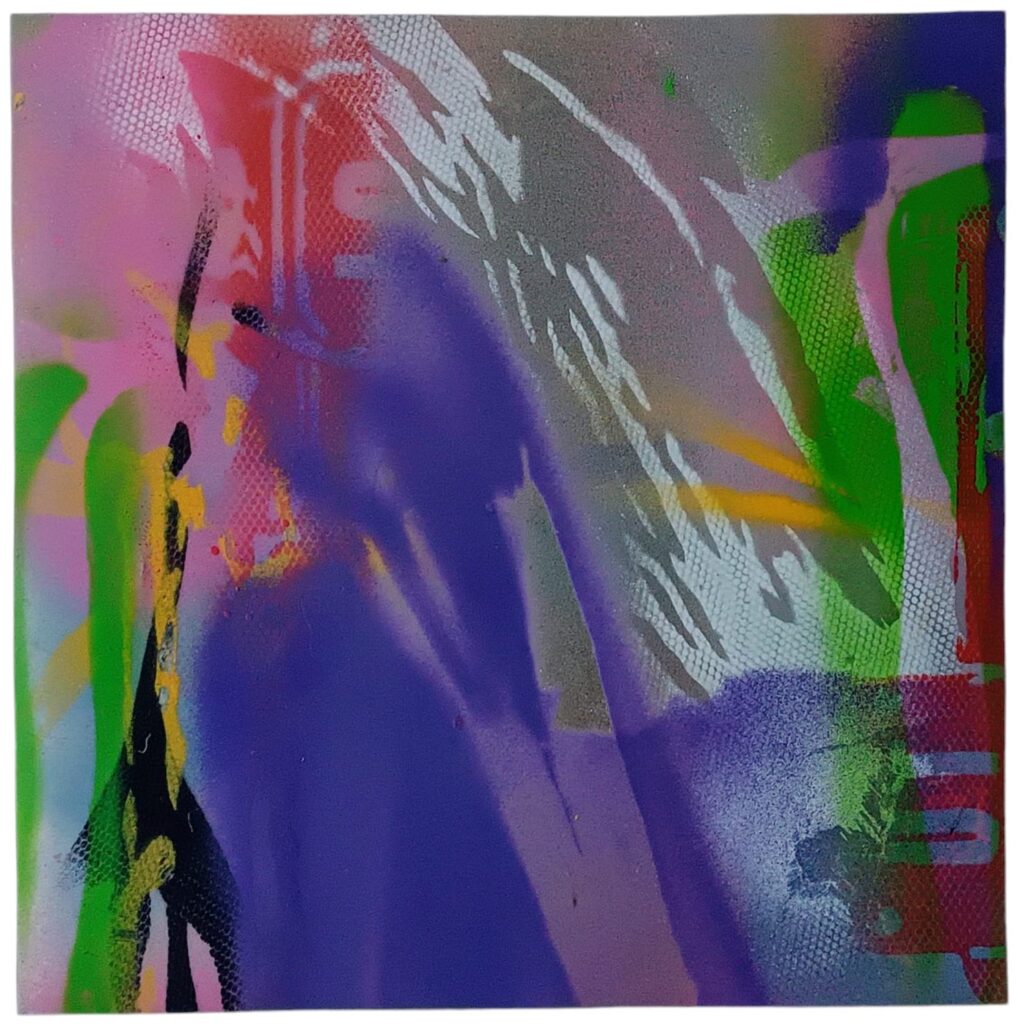
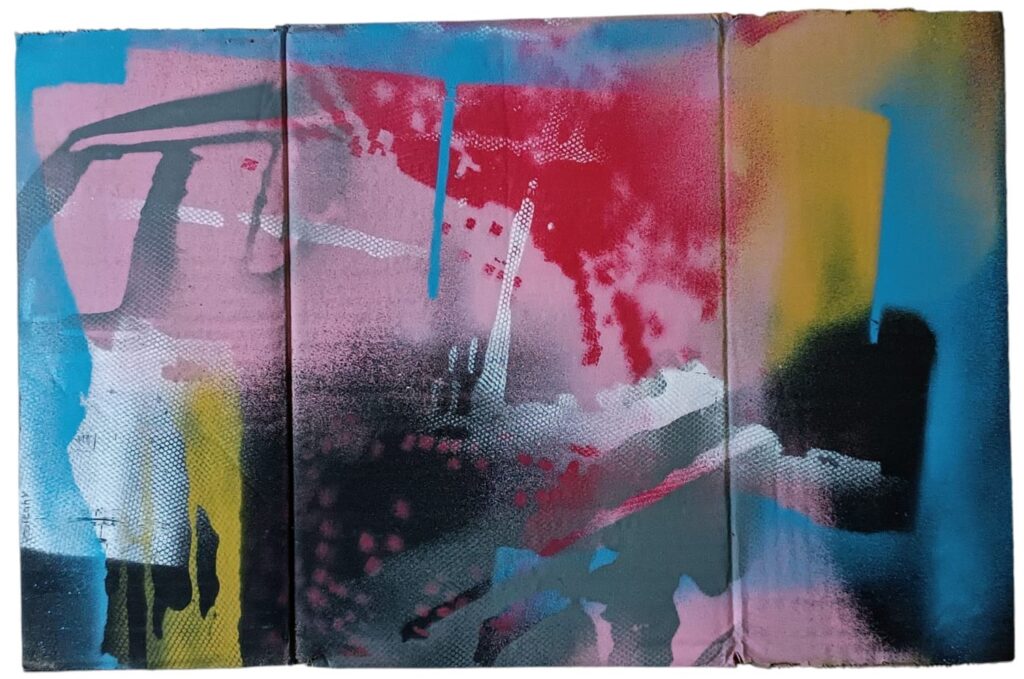
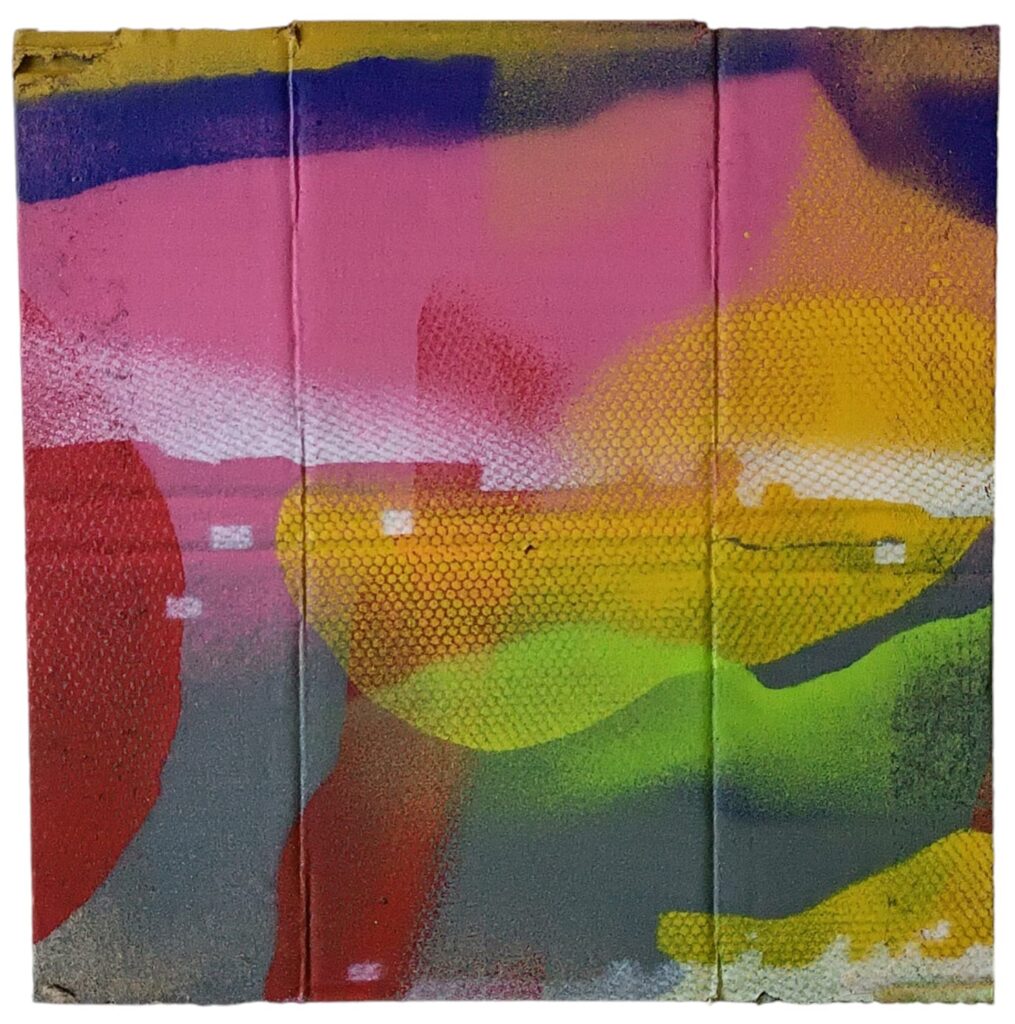
A Brazilian artist from São Paulo, Celso Gitahy graduated from the Centro Universitário Belas Artes de São Paulo and holds post-graduate degrees in Contemporary Art and Higher Education Teaching from Universidade Camilo Castelo Branco. He has participated in exhibitions both in Brazil and abroad. He is the author of "O que é Graffiti" (What is Graffiti) from the "Primeiros Passos" collection by editora Brasiliense and contributed a chapter to the book "O Graffiti na cidade de São Paulo e sua vertente no Brasil; 'Estéticas e estilos'" published by the USP Institute of Psychology. He also penned the article "Grafiteiros grafitistas rumo a virada do milênio" for the Revista do Patrimônio Histórico. In 2024, he released the art book Celso Gitahy - "UMA TIMELINE" (Afluente) and presented the exhibition "Extractum," which was awarded the PROAC visual arts grant at the Centro Cultural de São Paulo.
How did your journey into the art world begin?
Since I was a child, I showed a certain intimacy and appreciation not only for producing images—drawings, paintings, collages—but also for carefully observing everyday scenes. I loved watching ants, insects in general, cars in the street, and especially people. My mother noted that by age four, I was already using perspective in my drawings and combining colors effectively in my paintings.
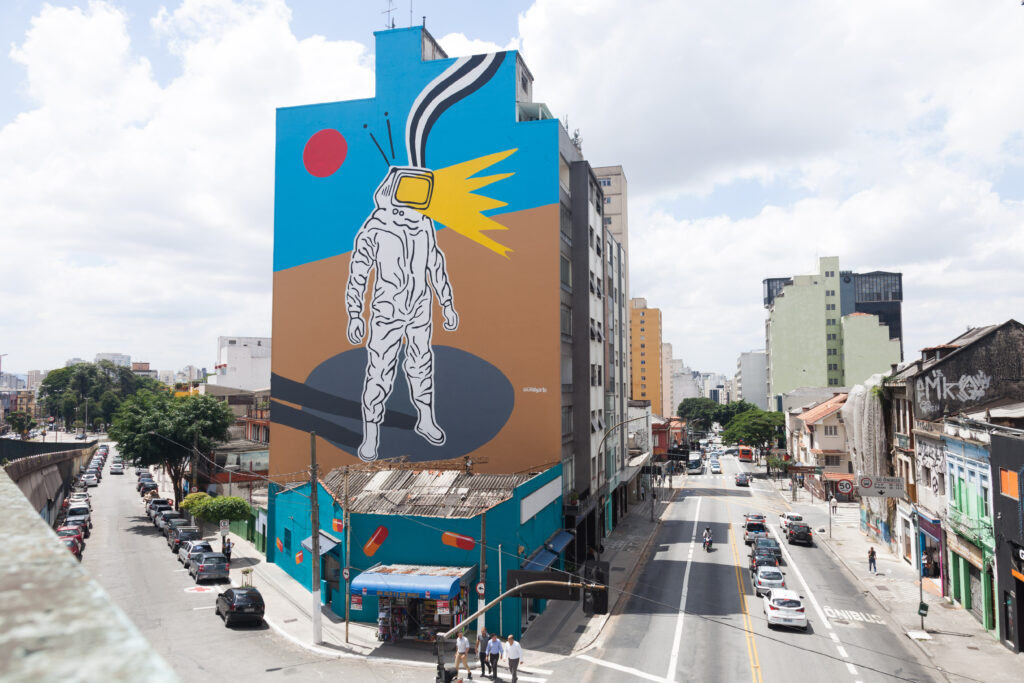
As a teenager, I immersed myself in the "punk" universe, using felt-tip markers to scrawl phrases and drawings related to the movement and its counter-culture ideological foundations. This was essentially the start of my expressive experiences with art in the streets. During my college years at Belas Artes, where I met many interesting artists and professors, I definitively launched my professional career as a visual artist. I have remained in the profession ever since, participating in institutional shows while still utilizing public space as a medium.

What themes do you prefer to explore in your works?
Coming from a punk background, I have always kept the flame of critical and ironic questioning alive through figurative images, using them to create visual metaphors.
What is your creative process like?
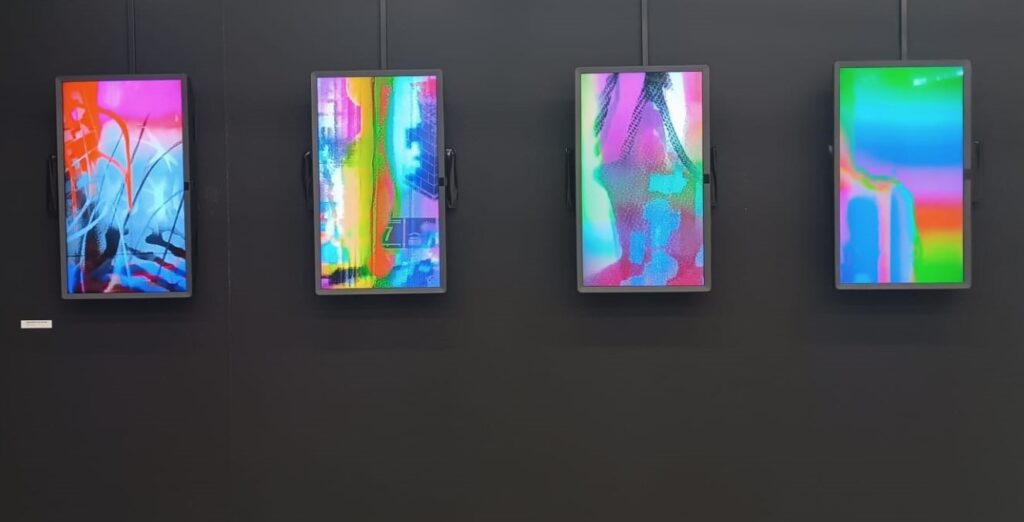
Everything I see ends up being transformed in my subconscious and returned as some type of image. After thirty years of producing figurative work, I arrived in 2022 at a series of abstract paintings called "Extractum"—so named because I reuse fragments of stencils (cutout molds) from previous phases to build abstractions extracted from old figurative drawings. I usually wake up and spend the day producing in the studio. At the end of the session, I photograph the entire production and observe it closely on my computer during the evening. The next day, I execute any adjustments I deem necessary until the work reaches its conclusion and I sign it.
What materials and techniques do you use most often?
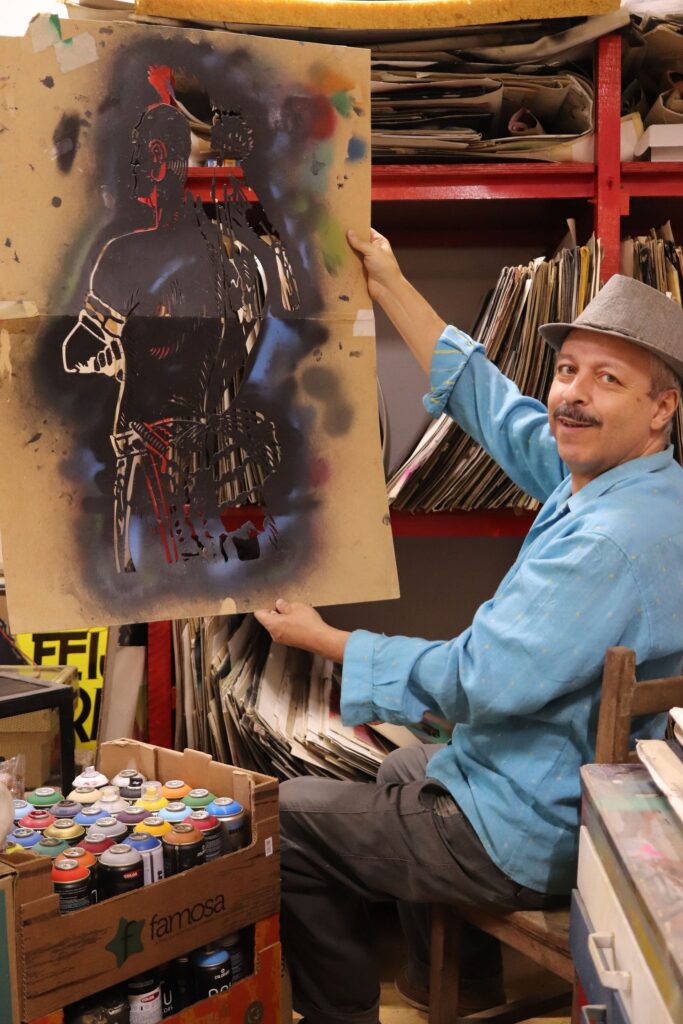
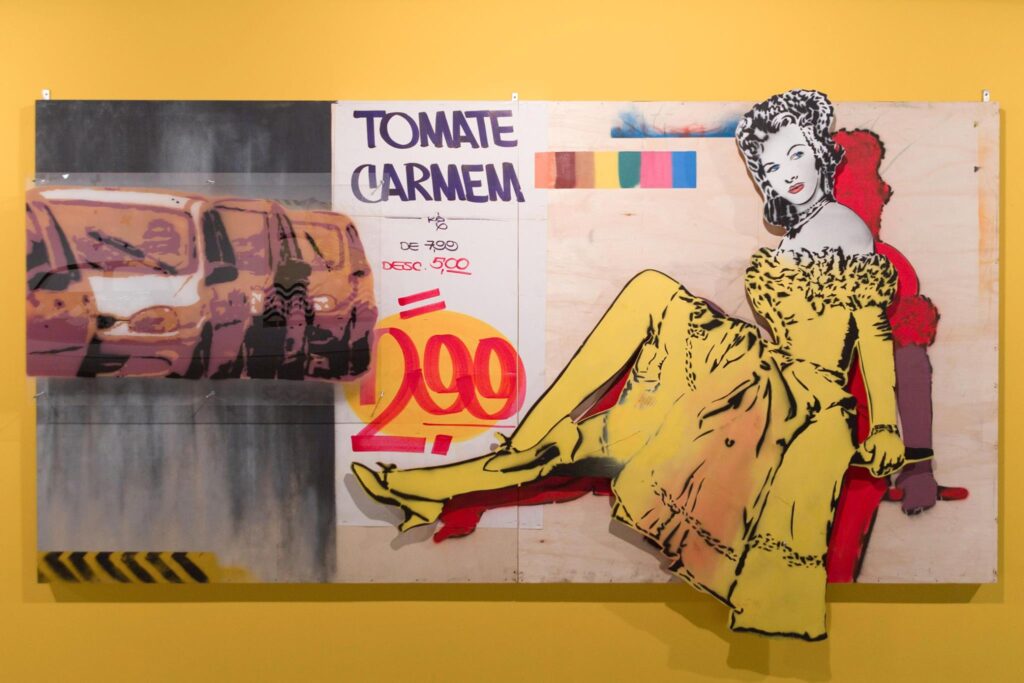
I have always had a strong connection with spray paint due to its practicality, speed of application, and pictorial results. I also use stencil matrices—which I spent many years producing—and everyday found materials like packaging, cardboard, iron, signage, wood, and various types of paper.
What advice would you offer to artists just starting out?
Above all, stimulate the pleasure of "seeing." Deeply understand the meaning of the word "enjoyment" (fruir). Produce a lot and tirelessly seek self-knowledge. Understand your own iconographic universe until you reach an original style that keeps you excited to continue without deviating from your own principles.
Have you participated in any notable exhibitions that you would like to share?
One definitively marked my career: "Pet Machine." It was actually two exhibitions. The first was in January 2009 in Melbourne, Australia, where the proposal was to stay on-site for three months producing until the opening. All the works were made from domestic materials I found on the streets of the city's outskirts—computers, washing machines, tables, refrigerator doors—which were transformed into art in a studio provided by a local artist. Later, in November of that same year, I presented the same exhibition in São Paulo with some adaptations and replacements at the Monica Filgueiras Art Gallery. Being hosted there was a milestone, as it was my first solo show in a major contemporary art gallery in Brazil.