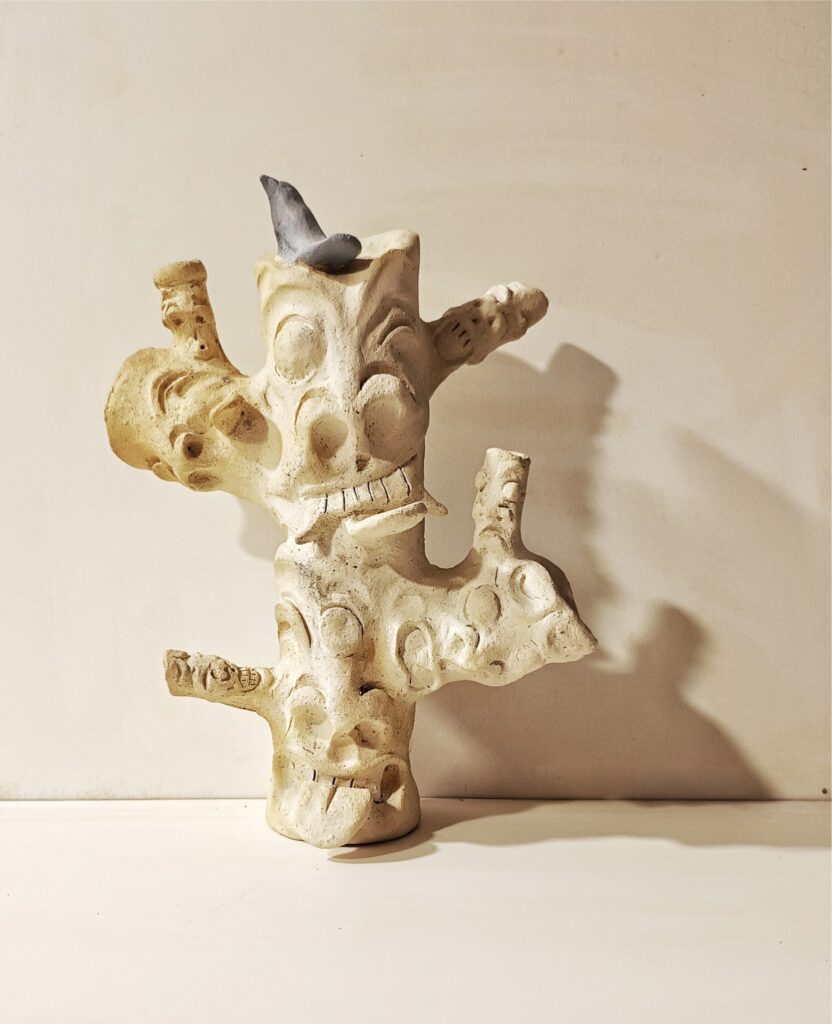
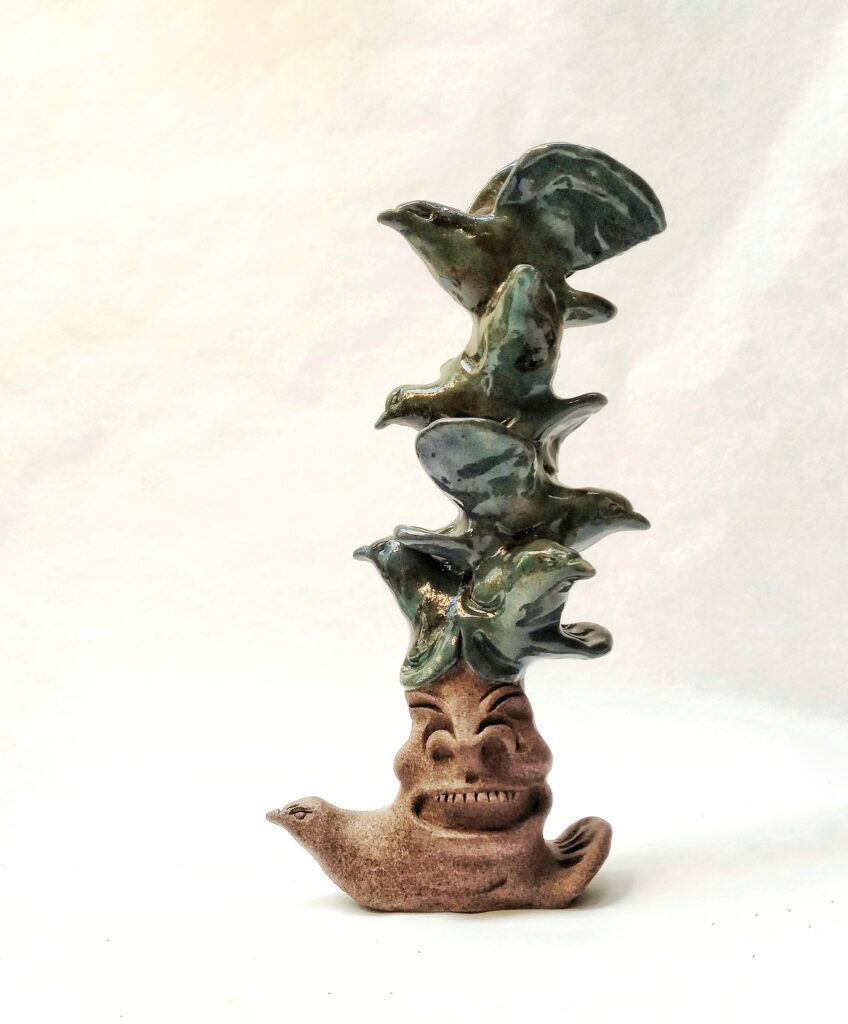
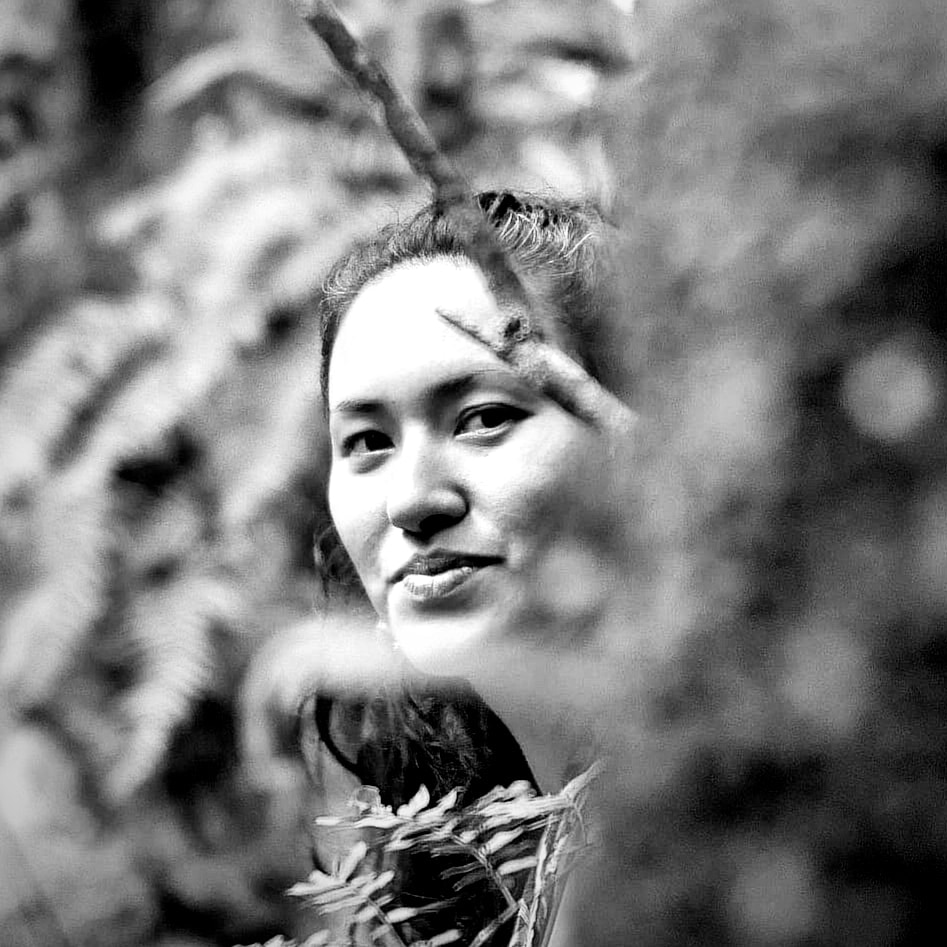
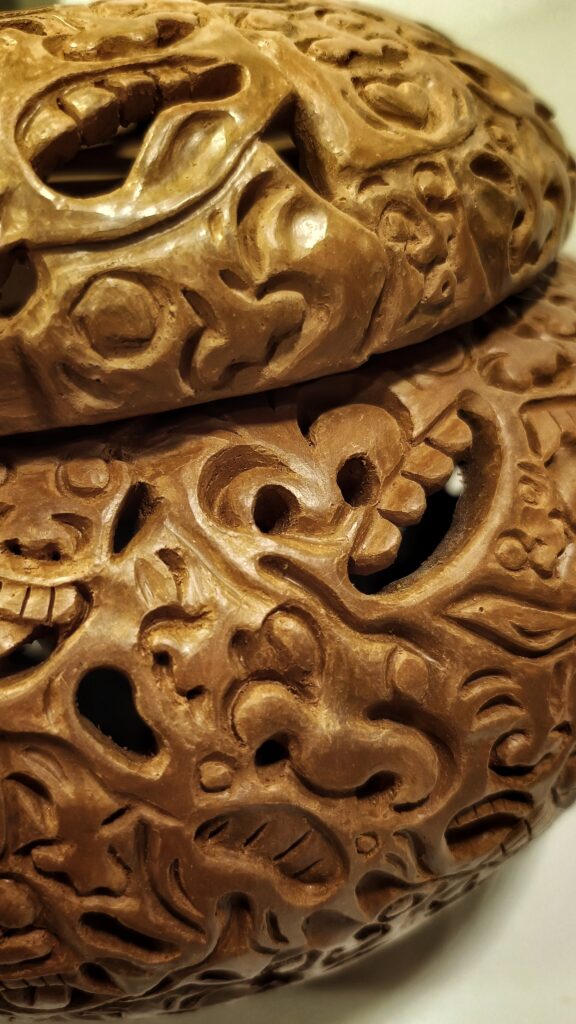
Beca Chang is a self-taught ceramicist and artist from São Paulo, where she currently lives and works. As a mixed-race artist of a Brazilian mother and a Korean immigrant father, her work reflects on her ancestry, reconnecting both cultures through elements of protection, fauna and flora, and Asian-Brazilian feminism. In 2015, she began her studies in manual ceramic techniques, but it was in 2019 that she pivoted toward sculpture and initiated her research into Jangseung (village guardians)—traditional Korean totems used to ward off evil spirits. She reinterprets these guardians by incorporating elements of the Americas, specifically the fauna of the Atlantic Forest. In 2021, she deepened her investigation into East Asian identity as a way to recognize herself as an Asian-Brazilian woman, taking courses in sculpture, Chinese calligraphy, and ink wash painting.
How did your journey into the art world begin?
I was a professional cook, and it was through restaurants that I first had access to ceramics. That was when I decided to change professions and dedicate myself to clay full-time. Ceramics completely changed my life; I had always loved visual arts but never saw it as a career path. During the pandemic, I had the chance to connect with myself and explore sculpture and painting more deeply. In 2019, I fell in love with Jangseung when a friend asked me to make some Korean-inspired cups for the restaurant where he worked, Komah. He asked for a reinterpretation of Hawaiian Tikis. Since I had no contact with my Korean family due to paternal abandonment, I was completely unfamiliar with the culture. It was at that moment that I began researching and was "found" by these totems. They became an obsession, coinciding with my own self-recognition as a yellow woman and my reflections on being mixed-race in Brazil.
What themes do you prefer to explore in your works?
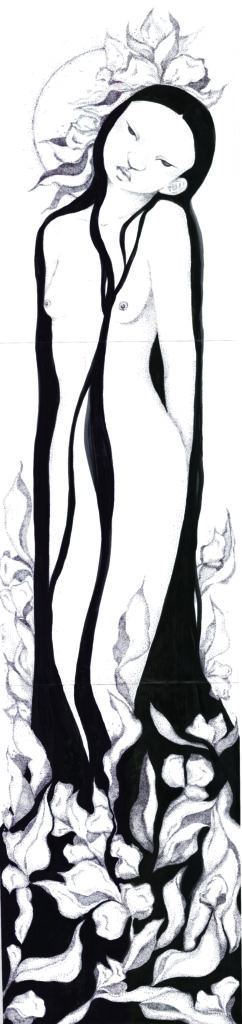
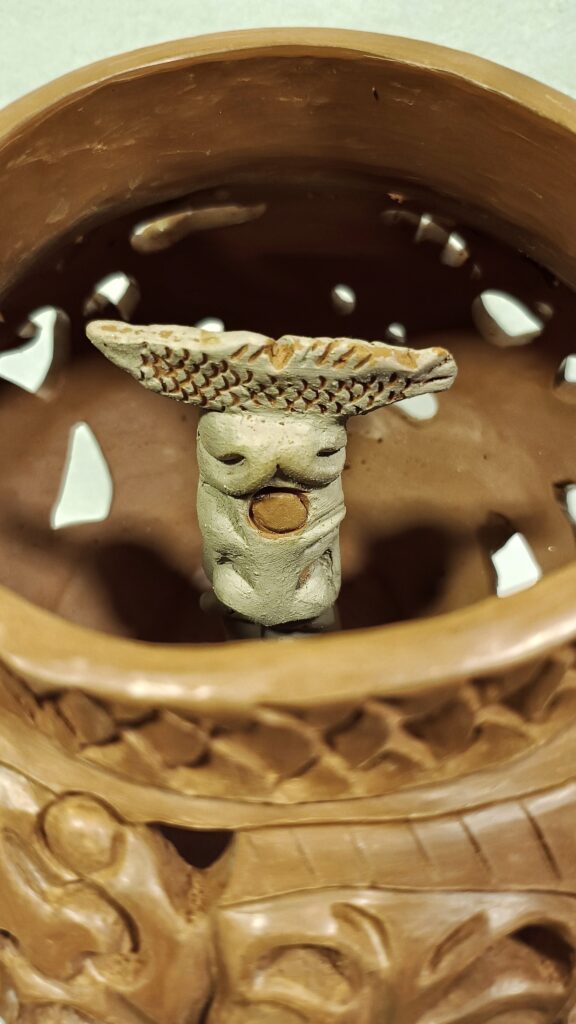
I prefer to explore the fauna and flora of Brazil because of its diversity, richness, and natural importance—as a way to raise awareness and offer protection. I often connect these with protection totems. My work frequently features the Pirarucu, a fish from the Amazon Basin, and the Azure-shouldered Tanager, a bird endemic to the Atlantic Forest that is threatened by habitat loss. I bring these themes together using an East Asian visual language, especially from Korea and China. I also enjoy exploring the figure of the Asian woman, literature, personal memories, and traditional ceramics from both Korea and Latin America.
What is your creative process like?
My process is very intuitive. As a self-taught artist, I explore ideas the moment they come to me until they are exhausted; I tend to work in series because I become obsessive with a specific material, shape, or animal. Part of this process stems from a desire to connect with my ancestors—I often feel as though they are guiding me and that I have done this before. When I took a Chinese calligraphy workshop, I later discovered that my paternal grandfather was a calligrapher who designed storefronts in the Liberdade neighborhood; he spoke Korean, Chinese, and Japanese, and was also a woodcarver.
What materials and techniques do you use most often?
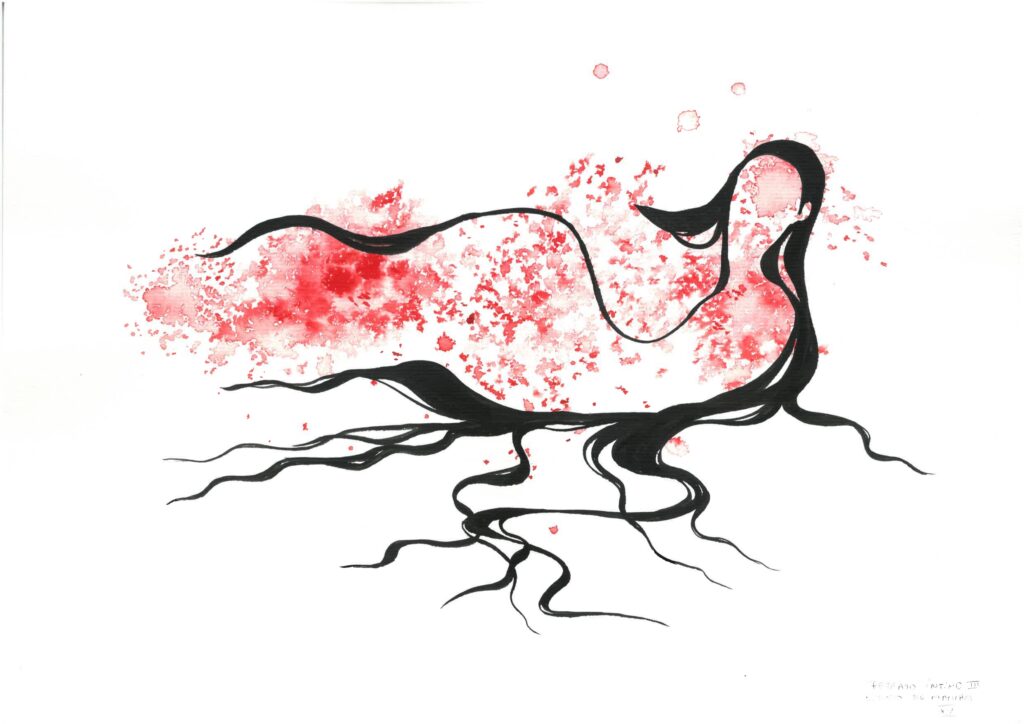
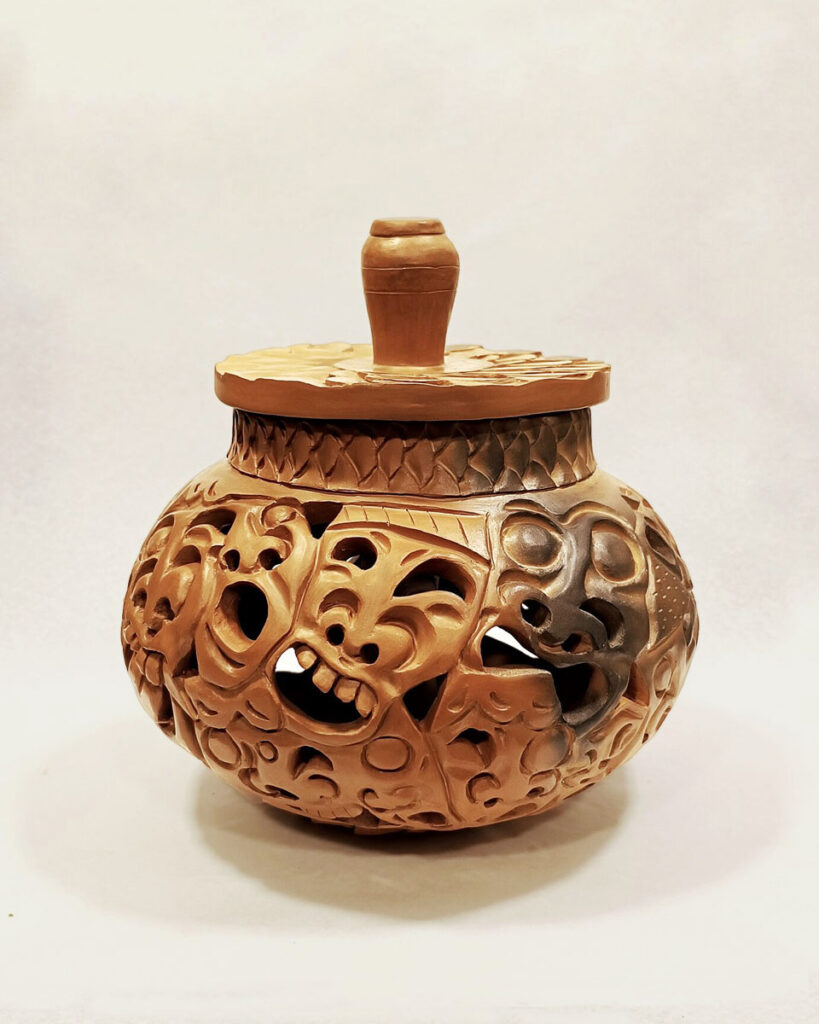
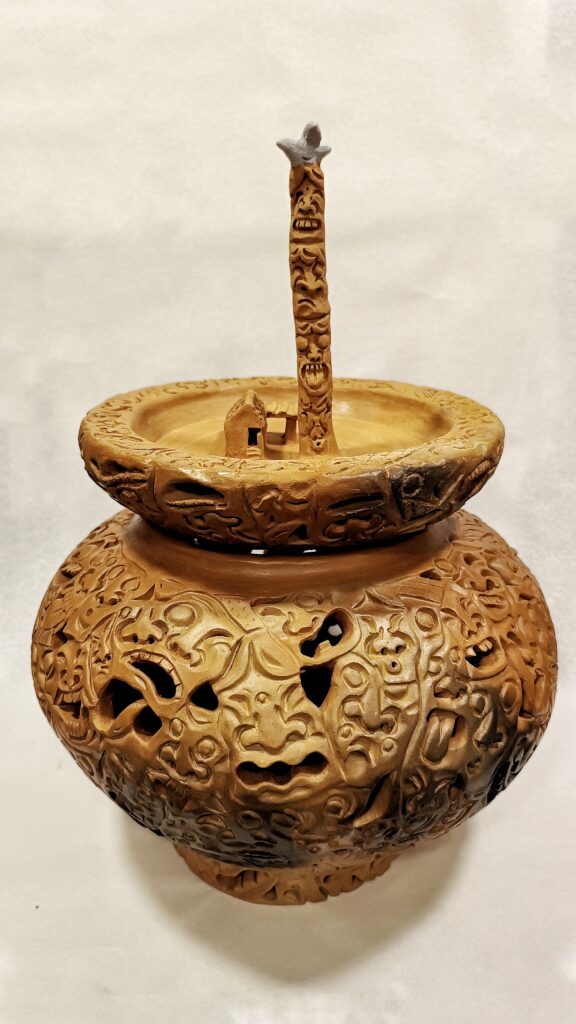
Ceramics are always present. I am constantly experimenting with different firing methods and forms. In 2023, I focused heavily on modular totems, creating pieces up to 2 meters tall. Lately, I’ve been drawn to fermentation vessels. I also use black, red, and white India ink (nanquim), and acrylic paint on canvas and paper. Recently, I discovered colored pencils and have been using them for illustrations.
Who are the artistic influences that have impacted your work?
My influences definitely include Korean, Chinese, and Japanese art, Jangseung, Eombawi, and Asian theater masks. I am also passionate about pointillism and learned a lot from observing Georges Seurat. Other influences include Rosana Paulino, Speto, Anita Malfatti, Remedios Varo, Frida Kahlo, Magritte, Hayao Miyazaki, and Tomie Ohtake.
What is the meaning of art in your life?
Art is how I connect with myself and my ancestors. It healed the trauma of my father's abandonment; it was the unconscious way I found to fill the void and reference the culture he wasn't there to show me. Art is a resignification of symbols, memories, and a way of being present.
What is the role of the artist in today's society?
An artist is an artist because they wouldn't know how to be anything else. Their role is to express an internal discomfort that reflects life, their time, and the world they inhabit. Through art, people are led to reflect and transcend the mundane. Making art is also a political act; since it is not democratized for society as a whole, the artist plays a political role by communicating and expressing social and environmental pains.
Have you participated in any notable exhibitions that you would like to share?
In 2024 I participated in the exhibition Nós (Us) at Galeria Diáspora. It featured Asian-Brazilian artists and focused on diversity and collective recognition. It was incredible to be among my peers. The gallery aims to rethink the presence of minorities who are often stereotyped or exoticized in the visual arts scene.