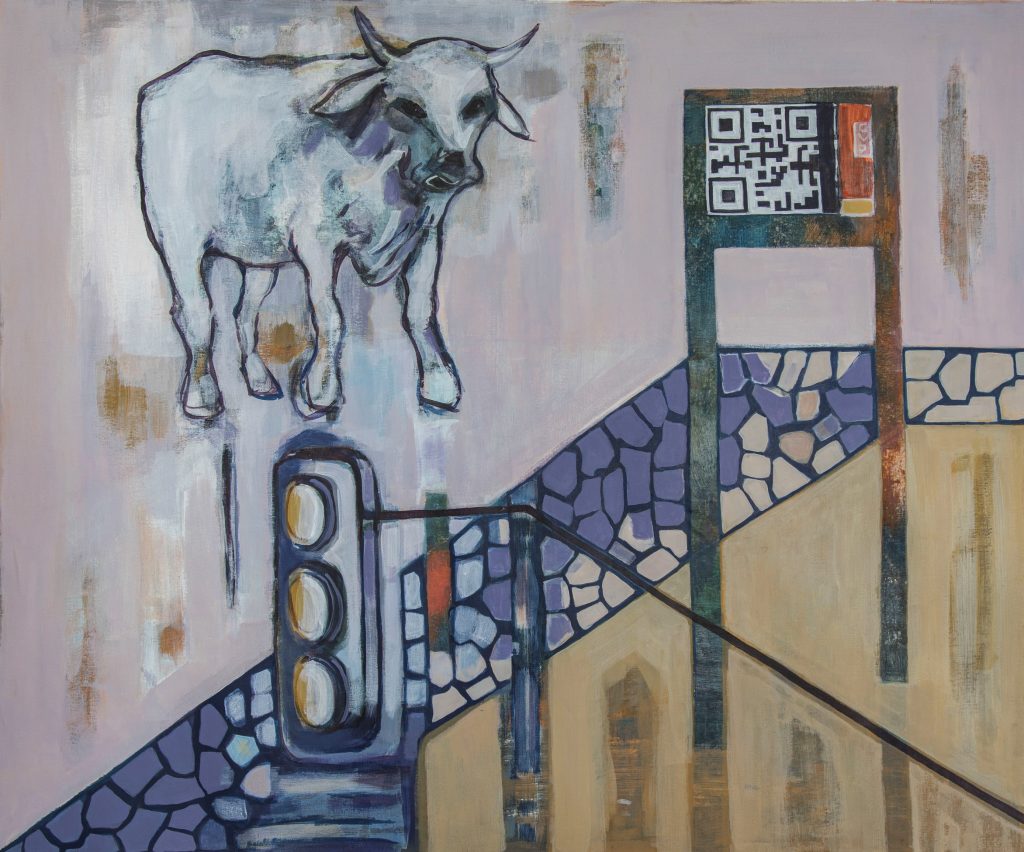
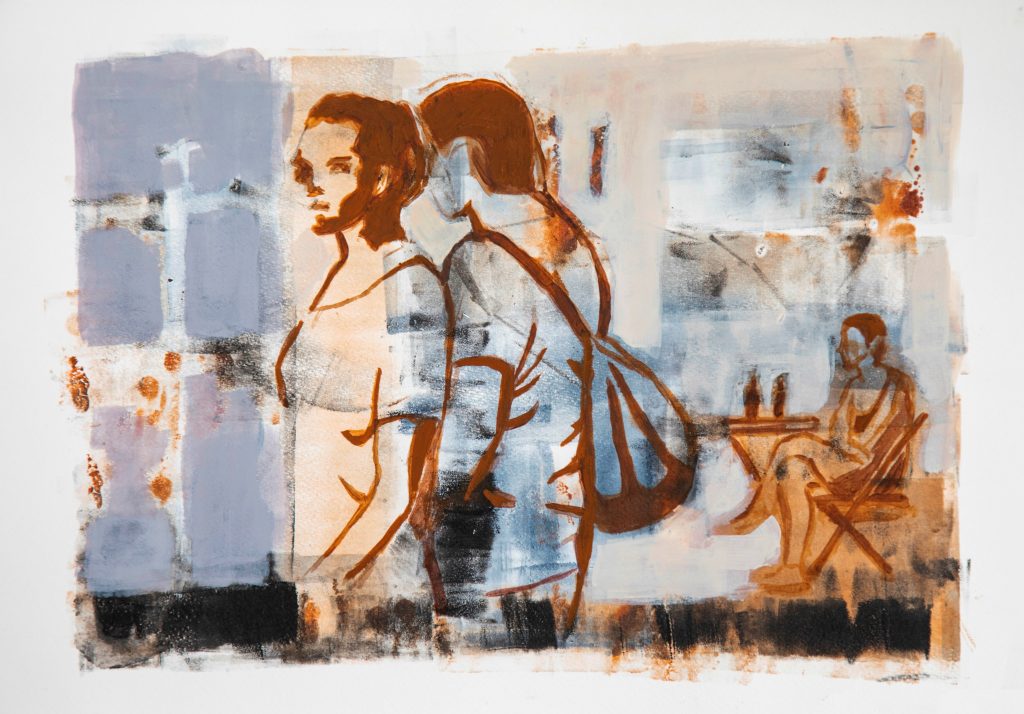
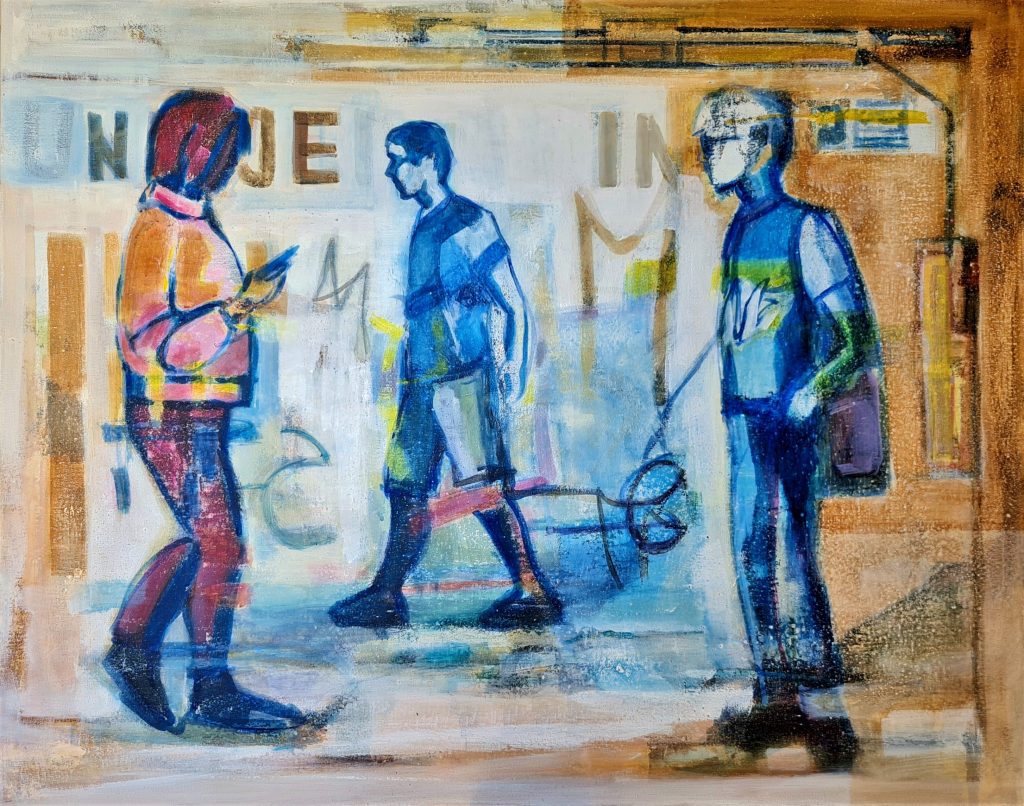
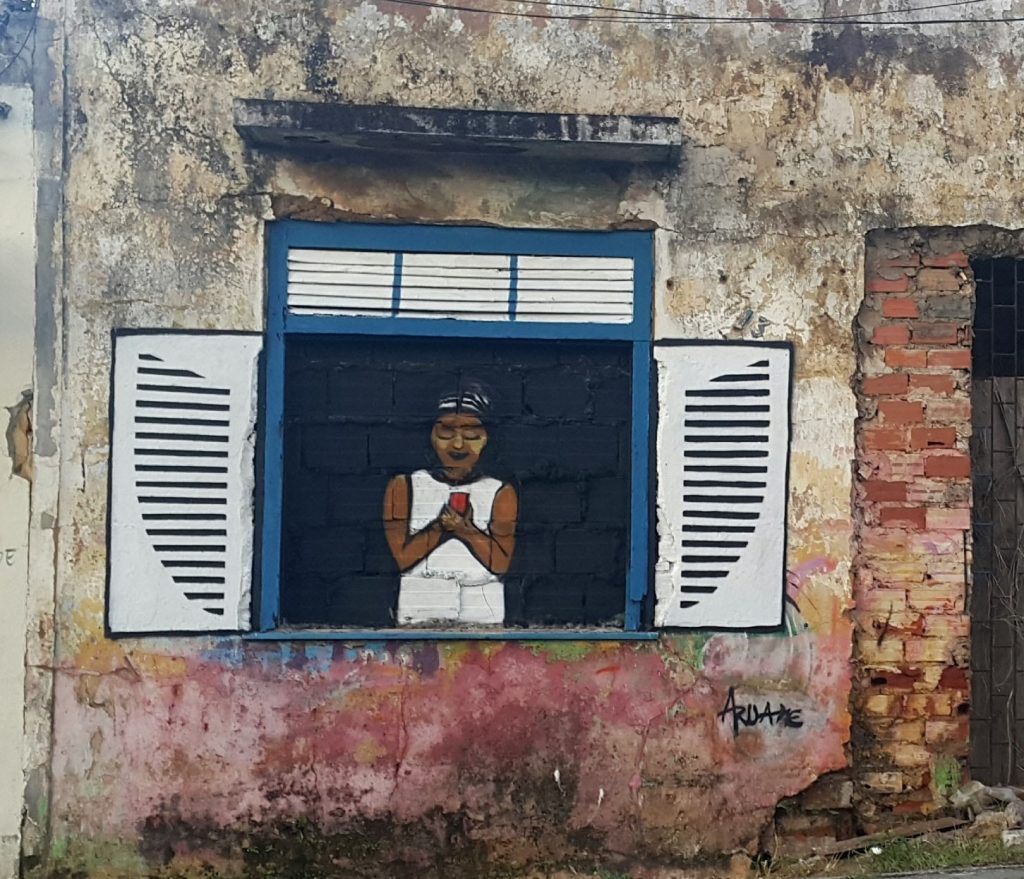
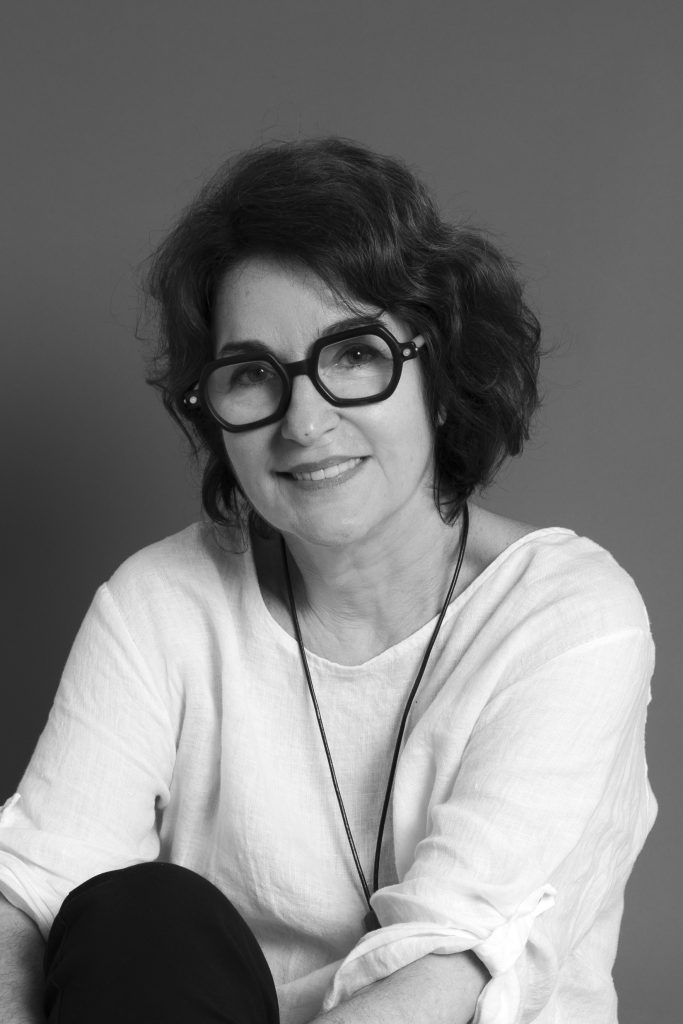
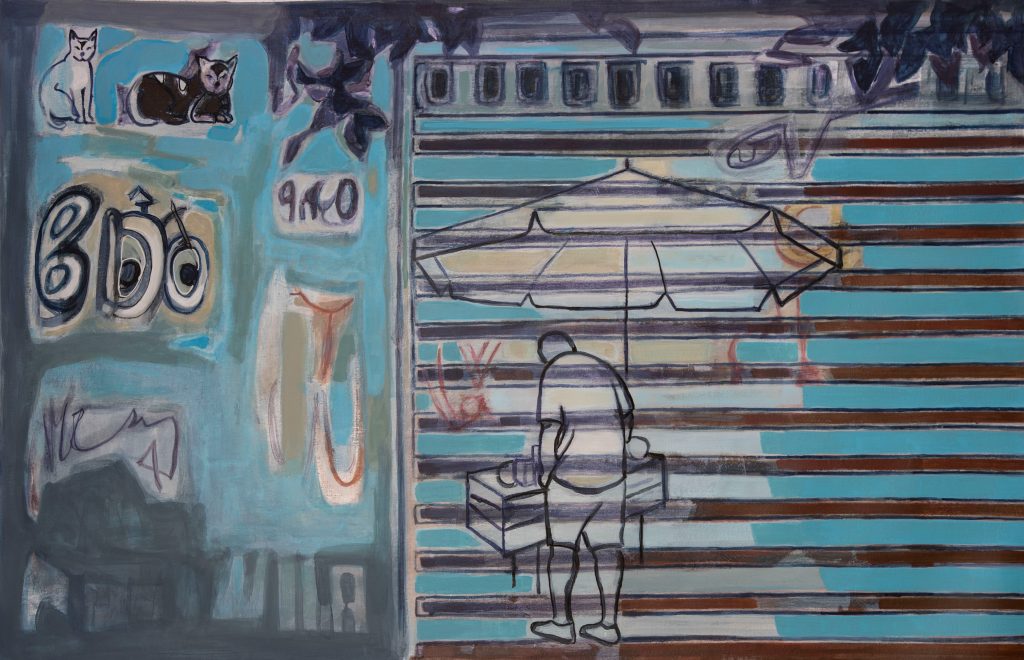
Aruane Garzedin lives in Salvador and holds a degree in Architecture, a Master’s in Urbanism from UFBA, and a PhD in Arts from the University of Barcelona. Through painting, which has always been present in her life, she explores the relationship between the subject and the environment, expressed through the body in its temporality and other formative aspects of subjectivity. The city remains an inspiration for her layered painting process; without hiding previous applications, her work performs a kind of mimesis of the ways urban walls are appropriated by various signs and messages. Since 2015, her artistic work has extended to the urban scale through graffiti and collage. With solo and collective exhibitions in Brazil and abroad, her latest solo show—held in Rio de Janeiro in 2024—is part of a current artistic project seeking new experiences in the relationship between the body and the city.
How would you describe your artistic style?
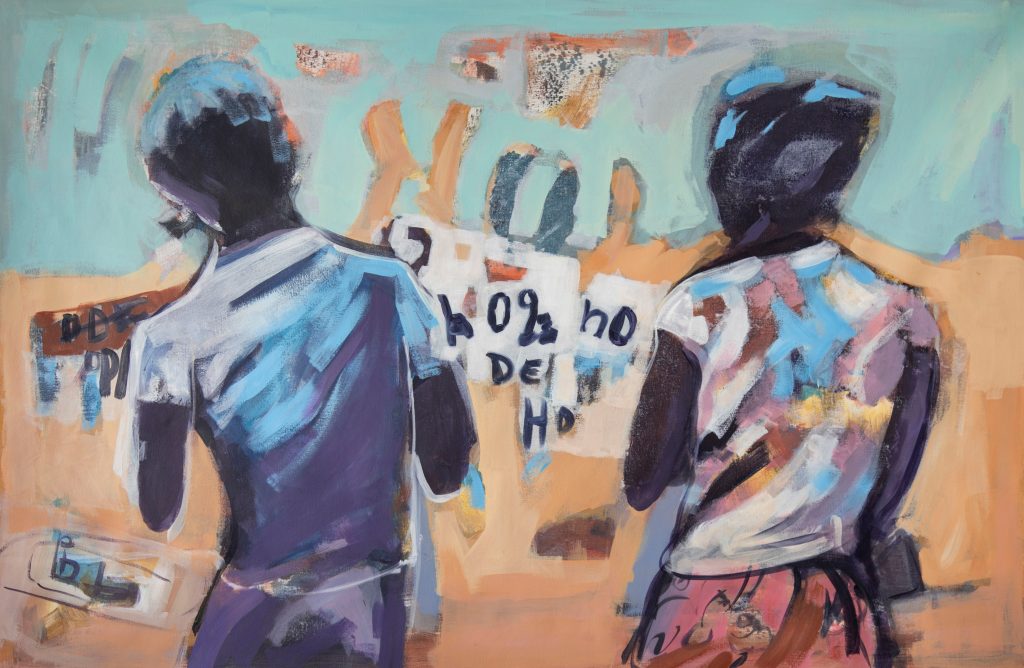
I can't classify my work as belonging to any specific field. I believe in a never-ending search and in experimentation that can lead to many paths. In my personal experience, I see that certain procedures and forms of expression seem to expire and give way to different ones. I like the gestures of the brushstrokes, the materiality of denser surfaces worked with additions and erasures, as well as the use of free-form lines and stains. My work has been figurative up until now, but without a realistic or narrative sense.
What themes do you prefer to explore in your works?
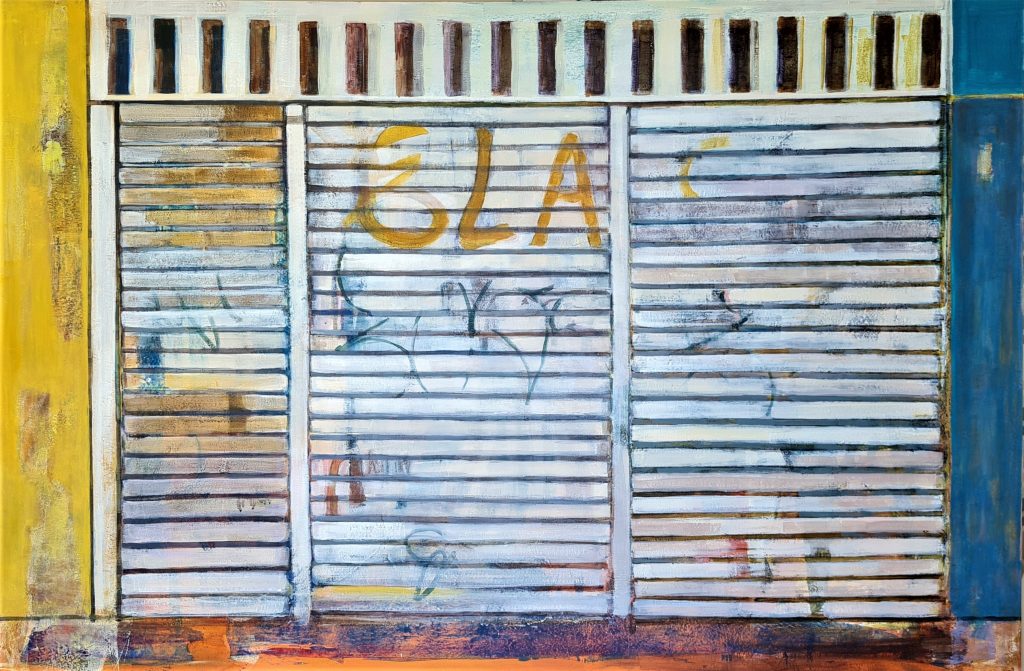
My thematic universe can be defined by the relationships between BODY x SPACE x TIME, through which keywords such as friction, borders, limits, overlaps, affections and memories, among others, gravitate. The breadth of this universe involves aspects of social reality, but also psychological aspects that configure unique realities, fleeting moments, gestures, silences and noises.
What is your creative process like?
My creative process doesn’t always begin in the studio, but in a notebook that I carry with me, recording people, scenes and situations, making notes that feed my curiosity. I would say that drawing helps me in the process of seeing, more than photography (which I also use), because it makes me stay longer on any image from everyday life. Then, when painting on canvas, for example, I can start with random layers in which I intuitively interfere until something emerges that seems to be something to be achieved and adjusted. There are also situations in which I start from an existing image and arrive at another, and there are also images that already appear ready to be worked on in painting.
What materials and techniques do you use most often?
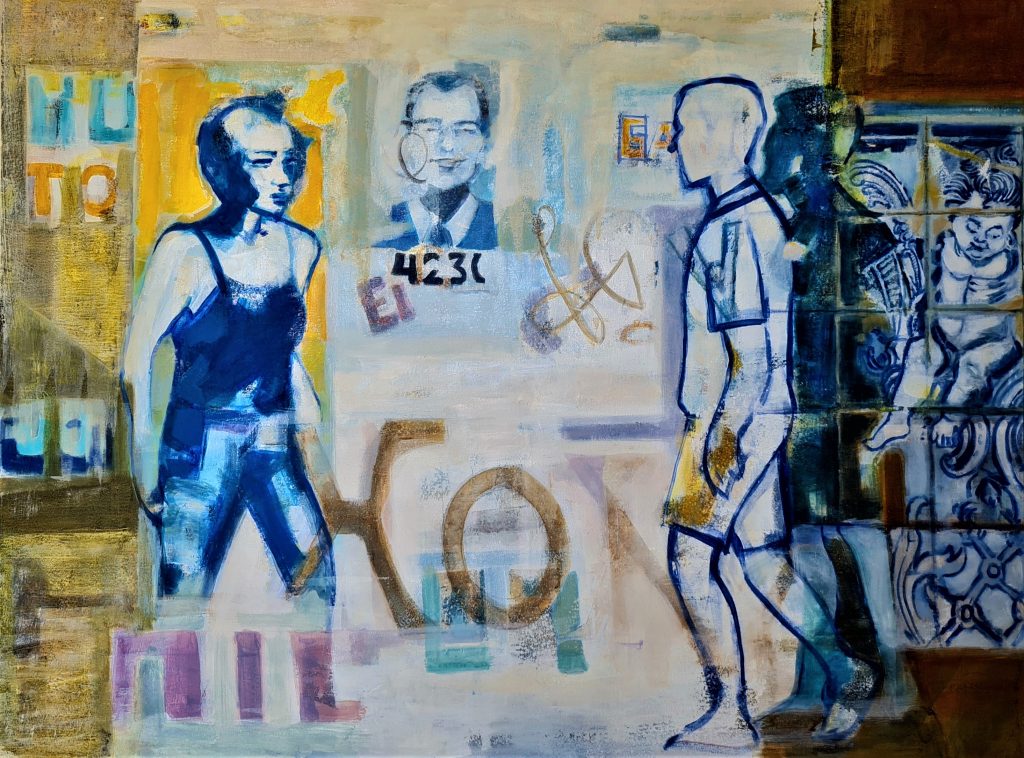
The characteristics of acrylic paint make it the most suitable for my painting process on canvas. I like the way it dries, which allows for quick gestures and overlays, and the transparency, which does not hide the traces of the process. Monotype on paper is a technique that has interested me more and more, due to the surprises, textures and expressive effects that refer to the effects of time on the material.
What is the meaning of art in your life?
Art is a form of sensitivity that I feel in my body as an artist, and that transcends to all spheres of life, with a way of seeing and interacting with the world. I feel that art is capable of challenging hegemonic ideas and narratives and leading me to a place, often lonely and uncomfortable, especially in times of crisis, but also a place where things and life itself acquire a broader and truer meaning.
What is the role of the artist in today's society?
The artist can help reveal aspects that are sometimes ignored by society, which, when brought to light through visual language, can provoke new interactions and reflections on reality. And this is increasingly necessary in the contemporary world, where technological development has contributed not only to changes in the space/time relationship, but also to the automation of gestures by capturing our attention.